

Last week the Labour government released news of their plans to cut back the Latin Excellence Programme, which was introduced under the Conservative Education Secretary Gavin Williamson, and dedicated £4m per annum to helping state school students learn Latin. There have been plenty of upset responses to this decision, and a particularly forceful and readable piece was published on the topic on Antigone a few days ago. Meanwhile, a few jubilant philistines on twitter (most of whom announced themselves in their profiles with dreary predictability as ‘CEO of XYZ’, or ‘lifelong socialist’ etc) welcomed the news.
A particularly regrettable feature of Labour’s plan to cut the programme is their decision to do so midway through an academic year, leaving a big group of pupils readying themselves for summer exams suddenly bereft of instruction. As with so much that the new Education Secretary, Bridget Phillipson, has overseen in the past few months, the plan smacks of busybody ideological interference rather than patient wheel greasing based on close familiarity with complex facts and fundamentals.
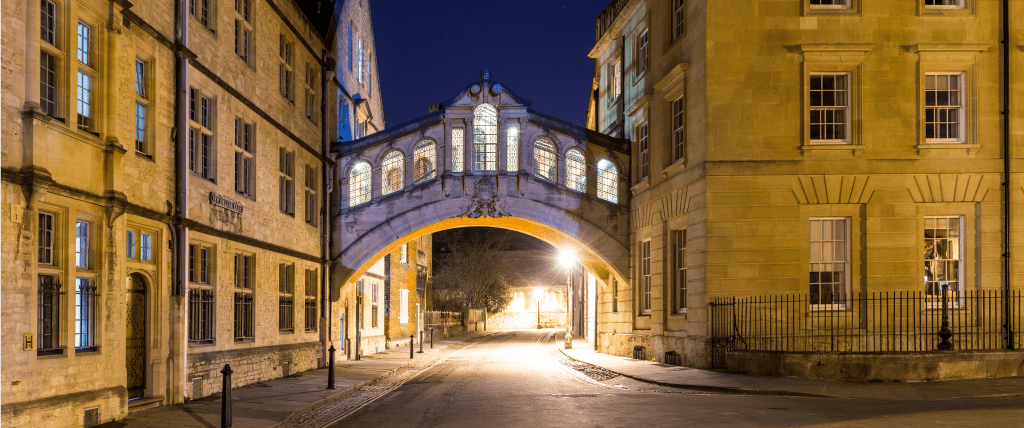
But for a clearer understanding of the Education Secretary’s matter-of-fact dismissal (and cutting) of the Latin Excellence Programme, it makes good sense to look at what happened to the Classics degree programme at Hertford College, Oxford while she herself was a student there. That programme had been overseen for many years by the formidable Stephanie West, wife of the late Oxford Classicist Martin West. Upon West’s retirement in 2005, Hertford elected not to appoint a replacement: Classics would no longer be taught at the college.
Similar things were happening at this time at certain other Oxford colleges: Keble and Lincoln, for example, had not replaced their retiring Classicists – a diminishing number of applicants for some years being one reason. Something similar had happened at my own college, Brasenose, in the 90s, with Theology. My internal DPhil examiner, now at Christ Church, wryly mentioned to me that he himself had been the last Director of Studies in Theology at Brasenose. The BNC governing body of the early 90s, apparently guided by Francis Fukuyama’s notion that history had indeed ended in their own contemporary age, decided that the victory of Liberal Democracy meant an end to the necessity of theological learning. Anything that had been worthwhile in Theology could be safely encountered in the context of an undergraduate History, Languages or Classics degree vel sim (or so the whiggish fellowship appear to have decided).
Anyway, back to Hertford. When Classics was jettisoned there back in 2005, Phillipson was resident at the college, studying for a BA in History and French. Doubtless she will have noted the discontinuation of Classics at the college. Perhaps she will even have welcomed the news as evidence that her college was ‘moving with the times’. I have no knowledge of what the atmosphere in the college was like at this time, nor of how the news itself was met.
What is plain enough, however, is that the governing body of Hertford College, Oxford (if you glance at the college’s statutes) have as their object the task of ‘advancing public learning by the provision of a college within the university of Oxford’. Does cutting Classics present a barrier to ‘advancing public learning’? Not, apparently, at Hertford. And so it seems not very difficult to imagine a ripple effect between the behaviour of this college’s governing body, on the one hand, and the behaviour of an Education secretary who, emerging from such a college, decides it is ‘progressive’ to withdraw funding from state school kids who wish to study Latin, on the other.
There’d be no honorary fellowship awaiting Phillipson if she’d tried this on at a Classics-proud Oxford college (or so I’d hope). Perhaps the same is true at her alma mater? The apple here, alas, has probably not fallen far from the tree.
 ad astra per mundum