RG Collingwood on Writer’s Block

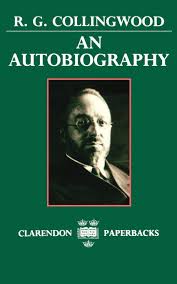
School holidays bring more than their usual fair share of activity for me these days, with a young family, a new house, and various admin jobs to complete over the break. So the usual habit of being able to slip away into the joys of reading and writing has had to take a back seat. Scrolling idly through twitter earlier in the summer break, I noticed a reference to RG Collingwood’s autobiography – a text I read many years ago now, and enjoyed.

As a graduate student, I had read several of Collingwood’s books, having been led to them by favourable references in the historian Quentin Skinner, whose writing I was also absorbing at that time. Anyway, coming across Collingwood again jolted me to revisit his autobiography, which tells the story of a figure who managed to rebel significantly against many of the leading ideas and orthodoxies of intellectual life in his time. And, luckily for him, to find some decent recognition and praise for doing so.

I have now reached chapter 5 of the autobiography and already several features of the text have jumped out and prompted reflection. Foremost among them: Collingwood notes how, so often in his own time, participants in major intellectual debates prefer to argue with caricature versions of their opponents’ positions, rather than reality. Collingwood reports on how it is easy enough to see where this is happening by simply looking up the arguments for oneself, and reading them, as set out, by their originators. This is a familiar feature of intellectual life, and indeed political life, in our own time.

Probably because of my own lack of productivity of late, I was struck also by Collingwood’s remarks in chapter 3 of the autobiography on ‘why people do not write books’. He knows, he says, of just two reasons: ‘either they are conscious that they have nothing to say, or they are conscious that they are unable to say it’. He adds: ‘if they give any other reason than these it is to throw dust in other people’s eyes or their own’.

Collingwood’s matter-of-fact plainspeak is refreshing at a time when fuzzy fake-warmth permeates so much of our written expression. The candour and precision of the judgment here reminds me of Orwell (among others). The passage made me wonder: in my recent inactivity, do I fall into one of these camps? If I tell myself I don’t, am I simply throwing dust into my eyes?

Having considered the question, I want to argue with Collingwood that feeling rested and well is an important condition for the production of good writing. One might be conscious of having things to say, or indeed conscious that they are still ruminating about how best to say it, without yet being in a position to sit down and write.

So I suppose I dissent from his position, as articulated here. This said, it is equally the case, I find, that, like much else in life, writing is a habit, and if one falls out of a habit, it is hard to pick it back up. On this note, look out for more blogposts from me on here soon. The habit of contributing regularly to adastrapermundum is one I miss and hope to revive.

Questions, Answers and the Teaching of History

What is it, above all, that a good teacher of history is aiming to do? Is it mainly a question of successfully imparting correct or relevant information? Most, I imagine, would say that more – much more – is at stake than this. Is it, then, primarily about developing in pupils a capacity to see patterns of cause and effect, thus enabling them to isolate the important influence or set of factors which lies behind a significant event or occurrence?

What, though, about the interrogation of source materials and the development of a sense of the shape of the surviving documentary record: is it a focus on this, and the development of a keen awareness of its nature, scope and deficiencies – together with an ability to probe and analyse the evidence – that should constitute the key focus of a good teacher’s activity? The chief aim of the teacher, from this point of view, might be to produce pupils with a keen eye for detail, and an ability to shoot down overly-ambitious theories which claim too much on the basis of what’s (not) there.

Maybe the good teacher will emphasise also that reconstruction is the historian’s primary goal. If so, then their main focus is likely be on developing pupils’ capacity to make excellent use of the medium of prose; on knowing what it is to communicate details about the past attractively and cogently, certainly; but with a sense also, perhaps, that a big aim of historical writing might be to perform something like a necromancy. For the historian as necromancer, successful writing will somehow manage to bring back into being for readers things that have died and disappeared. (Why, after all, should this be an aim only of historical novelists?).

But perhaps the truth is that history teaching that really hits the mark, and indeed much of the best historical writing too, will contain something of all of these elements.

I’ve been thinking about these issues over the last couple of days chiefly because I’ve been re-reading the autobiography of RG Collingwood. Collingwood was a renowned philosopher and Roman historian. His autobiography is a subtle and amiable account of its author’s experiences of learning, teaching and writing in Oxford in the first half of the twentieth century. Collingwood was fully aware of the idiosyncratic character of many of his philosophical views, as seen in contrast with prevailing trends among his philosophical and Oxford contemporaries. This only adds to the book’s interest.

autob

One area in which Collingwood’s views became well-known was his philosophy of history – an area of philosophical enquiry neglected by many of his colleagues.* And Collingwood is particularly interesting, I think, on the topic of historical method, on what it is that historians should try to do when they approach the past.

For Collingwood, it is all a matter of asking the right questions. In short, the idea is that dealing well with historical evidence – Collingwood uses the example of an archaeological dig – is all about refining the questions one poses in relation to it. At a dig, you might begin with a question like ‘was there a Flavian occupation on this site?’ That question can then be divided into sub-questions, like: ‘are these Flavian sherds and coins mere strays, or were they deposited in the period to which they belong?’ And so on.

idea

In Collingwood’s discussion, the intellectual activity of the historian in formulating problems and solutions is crucial: the historian must pose good questions, and refine them and answer them well, while making due allowance for any problems presented by the evidence, at the same time as they offer their argument.

What I particularly like about this way of seeing the business of historical research is that the onus is very much on the historian to generate their own avenues of approach, their own web of questions (and – hopefully good – answers). It is a way, that is, to cultivate subjectivity and a habit of free enquiry, informed by one’s own growing sense of how to approach the material.

This, I think, is what successful history teaching can be about. Pupils should find that they have been invited into a world of free-spirited debate and enquiry, in which individuals can begin to form and articulate their own ideas about matters of interest and substance. The centrality of posing, refining and answering one’s own questions in that process matters.

At the same time, Collingwood’s approach isn’t in the slightest complacently presentist, in the sense that it requires the historian actually to engage with the thoughts and ideas of past people seriously. The historian should try to see these ideas in context and make sense of them in their own right. It simply won’t do, he thinks, to dismiss past thoughts on the basis of contemporary opinion or prejudice and (thus) to rule out their importance for understanding past action and behaviour.

For Collingwood, then, doing history is a fundamentally dialogical activity. He sees the process of posing and refining questions in relation to the past as an important ongoing activity, not only for the writing of good history, but also for the ongoing development of the historian as a rational being. This is a point of principle I find myself happy to agree with.

*Many, though not all. Collingwood acknowledges the influence of the philosopher TH Green in this area. He mentions too how many of Green’s pupils – including politicians such as Asquith and the social reformer and historian Arnold Toynbee – made a point of applying the ideas they had learned from their university philosophy tutor in the context of their future careers. Green was known to many as a Hegelian, though Collingwood does not call him this. Collingwood does however describe the widespread opposition to Green’s work among Oxford philosophers of his own time (‘Hegelian’ ideas were, for the most part, successfully repelled at Oxford).  He also indicates his own more sympathetic view of Green and some of his disciples. These descriptions feel measured and patient, and perhaps overly so. I suspect Collingwood is culpable of characteristically English understatement at times.