The time is fast approaching when my third form (year 9) pupils will have to make their options choices for GCSE. Since Latin is no longer front and centre of the school curriculum in the school at which I work (as it was once upon a time), this means Latin will be up on the market as one among several options the pupils will decide between. And, for me, this means it will be a case of making a pitch for Latin, as a subject, which will enable it to compete with such alternatives as Art, Computer Science, Geography, History, Music, Spanish and plenty more besides.
In past years, my pitch for the subject has tended to focus on its broad-ranging fascination – at GCSE you get to study not just language and words, but interesting stories, and plenty of Roman literature and culture. I emphasise that pupils seldom regret choosing Latin; that it is particularly suitable for the academically capable and ambitious; that it allows you to gain access to another world far-removed from our own (yet eerily familiar) in a way few other subjects will. It is, in short, a subject for life, not just the classroom. This has usually gone down well, even if it doesn’t necessarily convince some among the hardline utilitarian or ‘relevance-obsessed’ 13 year olds I sometimes come across. At my current school, with its backdrop of neoclassical architecture and its stunning gardens, replete with classically-themed temples, grottos and sculptures, the ‘relevance’ of the Classics hardly features as a topic for debate, since its presence all around us makes it an obvious source of fascination.
In fact, I have made a point of taking all 40 or so third formers on short walks out to Dido’s Cave and the Temple of Venus (at the edge of the gardens). I have done this partly to ensure that the school’s topography and architecture is very much on their minds as they make their options choices, and partly to dovetail with their initial explorations of the story of Virgil’s Aeneid, in which both Venus and Dido feature prominently.
But the ‘new’ Latin pitch I refer to in this blogpost’s title refers not to these walks, but to a bolder line of approach I have started to adopt in advertising the merits of the classical subjects (not just Latin but Greek also) to students. This pitch aims to address the underlying utilitarian concerns pupils bring into play when weighing up classical study.
It runs something like this: every day of your lives, in whatever line of work you end up going into, and in the context of whatever relationships you go on to form, you are going to be reliant, most likely, on the English language, its use and manipulation, and on your powers of expression. Don’t underestimate the importance of this. Your use of this language will establish the contours of your most valued relationships – with colleagues, friends, family members, and in affairs of the heart. Skill with language – and the ability to see through others’ words – will also allow you to escape the thoughts and linguistic tricks of others when they are being cruel or manipulative. Being able to use language skilfully will be vital, both for enjoyment and success.
What could give you a better grounding in your use of language than a thorough grounding in Greek and Latin? You may think that these languages are incidental to modern life, but the lie of that will become apparent if you just look closely at the words of that very phrase. The fact is that you are already speaking and thinking in Latin and Greek, much of the time, whether you know it or not. Wouldn’t it be ‘useful’ to get to know better this central feature of your ‘toolkit’ for life? To see what’s really going on in your use of words? To enjoy getting to know better how many of these words were used – in their original form – by their most skilled ancient users?
Perhaps this all sounds a tad melodramatic or intense. I had not been in the habit of pitching about the attractions of Latin in this way before the past few months. But as time passes, and as the newspapers carry more and more stories about the gradual and horrifying dawn of a post-literate society, it seems right to turn the focus of any pitch for Classics onto the centrality of words in our lives, their power to enrich us, their charm and magic.
Postmodernity has tended to frown on ‘logocentricity’ (one of its uglier jargonistic neologisms meaning a fixation on the written word as a means of conveying truth) while developing a desperately ugly and unapproachable form of academese. While I take the point that the written word is not, and could never be, the sole measure of truth and meaning, the flight from great writing, and from the ennobling use of language more generally, over recent decades is one Classics teachers are particularly well-placed to start speaking up against.
Reading was nearly always my de facto leisure activity in the school (and university) holidays. The holidays have always represented a chance to escape deep into the pool of history and literature I have loved to soak myself in since childhood – and until recently only exceptional circumstances could change this.
Now, however, with three young children under the age of 7, I cannot count so readily on time to spare for my love of reading. Reading has to be squeezed in wherever possible; writing even more desperately so. As I type this, a 2 year old is trying to cover me with a blanket, while a 4 year olds is asking where she can find another biscuit. I break away from the screen to tell one to stop, the other that she can’t snack now as dinner will be ready soon. Back, now, to my screen.
As a tired parent of young children, I started early on to find that my capacity for sustained concentration on long sentences of text on page was substantially diminished. I would not – could not – turn to TV as a sort of substitute: I broke decisively with that medium as a vessel of entertainment way back in my early 20s. I still love movies – well, some – but TV I have for some time regarded as something like a cesspit in which I do not wish to spend any time. (As an aside, students I teach – who have often discovered this fact – question me with scrupulous zeal and disbelief when I reveal it; I do not know how successful are my attempts to convince them that life beyond TV is, in fact, rather worthwhile).
What medium, then, to seek when pages of text are too much to cope with after a long day, and the humdrum presentism of the TV screen seems too banal to contemplate? The answer, I have often found, lies in Art – and in my growing collection of Art books. It is a brilliantly relaxing activity to sit and take in great works of art, to glance across page after page of image and artistry, to be sucked into the worlds and scenes that great painters of the past have endeavoured to convey.
And, what’s more, this proves a very lovely opportunity for fun with toddlers (and older children too) – who love looking at the paintings, identifying what’s depicted, naming colours and characters they can spy. Earlier this evening my two year old flicked through 25 pages of Degas and 23 pages of Matisse (OK, not exactly an old master) with me and she delighted in much of what she saw, as did I. Not a bad way to relax after a day of work.
Every so often a thumping piece of music pops up on shuffle while I’m driving. Yesterday, it was the Gloria of Jean Langlais’ Messe Solennelle. I instantly turned up the volume and braced myself.
The Gloria forms the second main part of the sung Latin Mass. For most choral composers it offers a chance to produce a springy, upbeat melody in celebratory mood: a sequence of major chords and tunes which extol God in all his glory, with fulsome emphasis. ‘Laudamus te, benedicimus te, adoramus te, glorificamus te’, goes one early passage of the Latin text: we praise you, we bless you, we worship you, we glorify you. The mood of enthusiasm pulses through the words themselves; most composers recognise this by supplying happy, bright music to accompany them. This, is what you find in the Masses of Mozart, of Haydn, of Vaughan Williams, of Kodaly, of Beethoven – and many others besides.
Looking back into the annals of earlier choral music, music in a major key is at the heart of major earlier Masses by the greats of the 16th century: Palestrina, Vittoria, Byrd, Tallis. To sing ‘Glory to God in the highest, and peace on earth to men of good will’ is to chant happily, to eulogise, to make use of a lexicon which expresses the profoundest hope and optimism. A church service usually brightens, then, with a good Gloria.
This, at least, is the well-worn script. Langlais was the sort of rebel to tear it up. The French composer was richly but memorably described to me by a choirmaster at Winchester Cathedral more than 30 years ago: he was an eccentric genius, a brilliant and mercurial organist, quite blind, whose brilliance was thus all the more remarkable. Langlais, as he was described to me, was pre-eminent as an organist, a man to whom composition was very much a second string to his bow – though one at which he was plainly highly adept.
The Gloria in the Messe Solennelle is by turns electrifying, terrifying, dazzling, dark and moody – and exceptionally minor in its choice of key. To sing it, to listen to it, to be struck by it is immediately to be put in mind of the grandeur, the awesomeness, the immensity of a God who expresses himself in surprising ways. Excerpts of sonorous organ answer the choir. The noise of both choir and organ is… loud. There is an urgency to the melody. The different vocal parts burst into song in fugue-like succession. Langlais conveys a sense of glory which cannot be contained, cannot be simplified, cannot be captured neatly. The genius of this dark Gloria lies in how it dares to use such heavy and decisive tones, and all in the minor. Langlais switches through different keys in rapid succession. Each new expression about God seems to require a new modality. Again the organ chimes in. The pace quickens. And then: ‘Miserere nobis’. Slower now. And quiet. Before there is a rebuild toward a magnificent finale. And then, out of nowhere, a stunning major chord for the final ‘Amen’. I recommend the recording below to others (with volume turned up!).
As promised another post for the blog this summer – and further soon to come. This one broaches the subject of the Classics curriculum in my school in Buckinghamshire, where we offer Greek and Latin through GCSE and at A level. The school itself could not be a more natural (and stunning) environment for these subjects, grounded as it is amidst the most splendid classically inspired architecture, where the beauty and personality of ancient culture comes fascinatingly to life in all sorts of ways. Some pictures to illustrate below…
Nonetheless, numbers doing the subject in the school are not at an all time high, since we can no longer rely on the privilege – long ago lost – of being a compulsory subject. Now, Greek and Latin exist very much as an optional choice in the school curriculum, and this is the case from pupils’ first point of entry into the school at age 13. Gone, then, are the days, when a Richard Branson – one of the famous ex-pupils to attend the school – would face compulsory lessons in Greek and Latin as part of his curriculum. More on the changing face of schoolroom Classics and its place in the curriculum another time, no doubt.
My point in the present post is simply that a big aim of mine over the next year is going to be to inject life (and pupil numbers) into Classics at the school. To do this, I plan to tackle the issue of the year 9 curriculum: the first term of year 9 is the point where pupils choose whether they will continue with a classical subject up to GCSE. They need to have a great experience in that term, and to see that the subject(s) are for them. At present numbers are pretty low for Latin, but particularly so for Greek (only 2 or 3 per year). How, though, to fix this?
Well, two ideas. First, any plan to do so must reckon with the fact that pupils enter the school in year 9 with quite varied experiences of the language(s) from their previous schools. Some enter as complete beginners. Some enter having studied Latin (at least) for 3 or so years. So my plan is to create a two-tier experience for the pupils in the subject over my first year with them: for tier 1 pupils, offer a full introduction and grounding in the basics (tier 1 would include not just beginners but pupils who have studied the subject before); for tier 2 pupils, a compendium of additional translations and language work.
And this is where my second idea, which itself has two prongs, comes in: a) introducing them to Greek history/culture through Latin stories – and indeed b) to Greek language itself.
On a): the idea here is to use Latin as a basis to explore Greek stories and myths. Well, not exclusively Greek. What I really want to offer is a survey of some of the most interesting and absorbing short stories in Greek literature – from Herodotus to Thucydides to Xenophon to Homer and other poets. So there will be a booklet of stories which will allow just this. Pupils will build up a sense of how Greek writers tell fascinating stories – and would be even more fascinating to read in their own original language than in Latin. But starting by reading Greek stories in Latin is not a bad way to go. On b): pupils will have access to a basic Greek language booklet, which they can work through if they finish Latin tasks early in class.
On the basis of these experiences, I hope some will opt to take up Greek GCSE, in addition to Latin. We will see how it goes. The beauty of teaching Classics is that the material never fails to come alive: I am very much looking forward to reading lots of fun Greek stories (in Latin, at least initially) with my new pupils next term.
School holidays bring more than their usual fair share of activity for me these days, with a young family, a new house, and various admin jobs to complete over the break. So the usual habit of being able to slip away into the joys of reading and writing has had to take a back seat. Scrolling idly through twitter earlier in the summer break, I noticed a reference to RG Collingwood’s autobiography – a text I read many years ago now, and enjoyed.
As a graduate student, I had read several of Collingwood’s books, having been led to them by favourable references in the historian Quentin Skinner, whose writing I was also absorbing at that time. Anyway, coming across Collingwood again jolted me to revisit his autobiography, which tells the story of a figure who managed to rebel significantly against many of the leading ideas and orthodoxies of intellectual life in his time. And, luckily for him, to find some decent recognition and praise for doing so.
I have now reached chapter 5 of the autobiography and already several features of the text have jumped out and prompted reflection. Foremost among them: Collingwood notes how, so often in his own time, participants in major intellectual debates prefer to argue with caricature versions of their opponents’ positions, rather than reality. Collingwood reports on how it is easy enough to see where this is happening by simply looking up the arguments for oneself, and reading them, as set out, by their originators. This is a familiar feature of intellectual life, and indeed political life, in our own time.
Probably because of my own lack of productivity of late, I was struck also by Collingwood’s remarks in chapter 3 of the autobiography on ‘why people do not write books’. He knows, he says, of just two reasons: ‘either they are conscious that they have nothing to say, or they are conscious that they are unable to say it’. He adds: ‘if they give any other reason than these it is to throw dust in other people’s eyes or their own’.
Collingwood’s matter-of-fact plainspeak is refreshing at a time when fuzzy fake-warmth permeates so much of our written expression. The candour and precision of the judgment here reminds me of Orwell (among others). The passage made me wonder: in my recent inactivity, do I fall into one of these camps? If I tell myself I don’t, am I simply throwing dust into my eyes?
Having considered the question, I want to argue with Collingwood that feeling rested and well is an important condition for the production of good writing. One might be conscious of having things to say, or indeed conscious that they are still ruminating about how best to say it, without yet being in a position to sit down and write.
So I suppose I dissent from his position, as articulated here. This said, it is equally the case, I find, that, like much else in life, writing is a habit, and if one falls out of a habit, it is hard to pick it back up. On this note, look out for more blogposts from me on here soon. The habit of contributing regularly to adastrapermundum is one I miss and hope to revive.
Apparently a court case is taking place at the moment on the question of independent schools. More on that, perhaps, another time. In a dreamy moment of holiday-time distraction, I found myself reflecting today on the UK independent schools I’ve known well (6 as an employee, 3 as a pupil). Quite different places entirely, in my experience of them, even as they’re lumped together in the media under the simple umbrella term ‘private schools’.
There are, of course, independent schools and independent schools: some highly academic, some less so, some day, some boarding, some urban, some rural, some big, some small, some famous, some not-so-much.
But what really matters most, I think, when forming an assessment of a given school is something very simple: is it a happy place to be? Do human beings flourish within its walls? Or, at least, do the vast majority flourish (since, I guess, it would be unrealistic to imagine every single person could do so at a given point in time)?Everything else flows from that point of principle. Pupils thrive when they’re happy, genuinely so, and able to be themselves, find challenge, find recognition. And, as a wise colleague once commented to me: ‘everything in a school hinges on positive culture. Everything’.
This is where school websites can make things difficult. Every school website puts its own best foot forward. Glossy photos, lovely grounds, impressive-sounding achievements. But what school league table measures ‘culture’? What objective measure could there be of something so inherently nebulous? And why trust any website with the gall to champion anything so intangible? Positive culture, it is fair to say, must simply be lived out – and if it translates onto a website, then so be it.
But clues as to the presence of a really positive school culture may just be traceable, I believe, for those with eyes keen enough to do so. That, at least, is my argument here. So then: how might one identify a flourishing school culture, using a website alone?
Well, for one: does the website give a clear sense of a flourishing human community? All school websites single out exceptional achievements and events, as well as noteworthy occasions in the school calendar. But the best websites – and the best schools – do more. They give a sense of whole communities being enriched. Pupils from across different year groups joining together in shared activities and initiatives; staff linking up with students to join together in positive endeavours; elements of teamwork, creativity and fun being in clear evidence. And, above all, a sense that everyone is in some way involved: not just a small group, but a whole community. Culture, after all, is born of community.
Another (perhaps more-self centred) clue: does the website convey key information about subject teachers: who they are, what they’re about? Many school websites do little to nothing here. If the website is the public face of a school, why should it be interested in giving you only a small list of names, or – in some cases – the name of the headteacher, alone? Senior leaders spend relatively little time teaching and – although they are unquestionably important figures – most contact time for pupils will happen with subject teachers. If a school website doesn’t take the trouble to disclose the identities of its staff, it’s in my view a strange omission. The best websites give a sense of who the staff throughout the school are, and of what they’re contributing to the life of the place.
A further point. Does the website give a flavour of how pupils spend their time each day and week? Of what sort of life a pupil will lead in the school? Of how the school day is organised? Of how much time will be spent in lessons? Of what else will form part of the daily experience? Taking the trouble to spell this all out shows that careful thought has gone into what’s being delivered, and how, and that clarity about how things work, and clarity of communication with the world at large, counts. Those are good indicators of a positive culture.
Point number 4. Does the website pay more than mere lip-service to the idea that the school wants pupils to develop in the round, not just in terms of their capacity to pass public exams? What extra-curricular offerings are there? What sorts of choices do pupils have? How are they encouraged/celebrated in their non-academic pursuits? And what trouble is the school taking to ensure that each individual is known, nurtured and developed into a rounded human being? Good websites (and good schools) manage to convey answers to these questions, not simply a platitude or two about ‘wide-ranging extra-curriculars’.
A fifth point – and it seems strange to write it, but this feels an acutely important one. How is the school striving to develop individuals who think freely and openly? Does a sense come through on the website that individuality, and uniqueness of thought and perspective, and, for that matter, creativity, really matter? Schools have to do with human beings. They should therefore aim to excel in finding, nurturing and celebrating what makes human beings human – and, for that matter, humane. If, then, a school website resembles that of a bluechip corporation (on one hand), or that of an organisation for chippy activism (on the other), or some odd combination of both, then it’s perhaps questionable whether humanity, individuality, and liberality hold pride of place within that school’s walls. Doubtless there is a case for seeming businesslike, and a case for seeming alert to injustice. But if these things turn into a dominating ethos, which takes pride of place above (or to the exclusion of) academic values, the cart is preceding the horse.
And, perhaps more subtly, if the only place for the ‘Arts’ on a school website is as a sort of adornment, or occasional activity, then this too might provoke a sense of caution. The one time I went to see the Head to air a slightly critical thought in one of my previous jobs (at an excellent school) was to share the view that all pupils passing through the school ought to gain some experience of what it feels like to act on stage, at some point in their school career. It saddened me that that wasn’t (at that point) happening for a fair number. A school which recognises the vitality of the Arts for human flourishing is likely to be a flourishing place more generally, I think.
So, that’s it in this instalment of the dreamy ramblings of a career educator. I wonder what others will make of the above. Doubtless it betrays not a few prejudices. I am glad to report, though, that I write as a member of staff in a school which ticks all of the above boxes.
The bedtime story routine in recent weeks has become increasingly elaborate. First goes youngest daughter (age 1), who enjoys such classics as ‘Each Peach Pear Plum’ and ‘Peppa Pig goes to the Aquarium’. The older two sometimes sit and listen to these stories, which the little one enjoys hearing time after time, participating with special enthusiasm in the noises the animals make in the stories (among other sound effects). When her story is finished, she is carted off for a short feed, while the other two produce their own choice of stories for the evening.
Usually I accept their first choice, though I refuse to read Christmas stories at the wrong time of year, and occasionally I send them back to their rooms to choose again. I tend to refuse stories that are very long. A five to fifteen minute duration per child is the norm.
After we have finished the children’s choices of story, we move on finally to *my* book – and for the past few weeks, this has been a collection of short stories titled ‘Herodotus for young readers’. It reproduces – candidly, and in places even gorily, and often amusingly – various stories from the fifth century BC ‘Father of History writing’ himself. Most of the stories have enthralled the kids – though a few have caused them to lose interest. I have done my best to simplify the language of the stories in places as I have read, which enables the kids to follow better. Yesterday we completed this book, which touches on such varied topics as the Persian rulers Cyrus, Cambyses and Darius, Egyptian Pharaohs, the battle of Marathon and more.
My 4 year old daughter, in particular, has enjoyed the Herodotus stories: she has developed a habit of asking me earlier in the day: ‘Are we going to read a Herodotus story tonight? However, this evening she was in bed early, too tired for a story – and I was left reading only to my 6 year old son. Since we’d just finished the Herodotus book, I told him I was going to pick something new and different when it came to my story. So I went out and retrieved my copy of Chekhov’s Short Stories off the bookshelf outside my bedroom – before turning straight to a story called ‘Home’, in which a Russian lawyer holds a conversation with his 7 year old son, before telling him a bedtime story.
My son focussed intently on the story as I told it. He seemed to love especially Chekhov’s breaks from the main narrative of the story to depict the interior thoughts of the father as he discussed things with the little boy. ‘Focalisation’ is the clever-sounding literary term one might use to describe this technique. The father’s point in his conversation with his son is to admonish him for taking tobacco and smoking: throughout the conversation he reasons with himself about whether he is doing this effectively, and how he might take one approach or another in how he chooses to communicate with his son. He ends up inventing a bedtime story for his son, which, it seems, accomplishes the goal of conveying the message about the importance of not stealing and not smoking, effectively. This happens at the end of the story itself.
Chekhov’s lawyer father then muses to himself on the strangeness of the discussion he has just had with his young son, and on the strangeness of its apparent success:
“People would tell me it was the influence of beauty, artistic form,” he meditated. “It may be so, but that’s no comfort. It’s not the right way, all the same. . . . Why must morality and truth never be offered in their crude form, but only with embellishments, sweetened and gilded like pills? It’s not normal. . . . It’s falsification . . . deception . . . tricks . . . .” He thought of the jurymen to whom it was absolutely necessary to make a “speech,” of the general public who absorb history only from legends and historical novels, and of himself and how he had gathered an understanding of life not from sermons and laws, but from fables, novels, poems. “Medicine should be sweet, truth beautiful, and man has had this foolish habit since the days of Adam . . . though, indeed, perhaps it is all natural, and ought to be so. . . . There are many deceptions and delusions in nature that serve a purpose.” He set to work – but lazy, intimate thoughts still strayed through his mind for a good while”.
To be introduced in childhood to the writing of a profound author is perhaps a bit like being stung by an imperceptible wound, of which one’s contemporaries are none the wiser. An introduction to penetrative writing naturally enough causes wonder, even as it invites depth of contemplation, while opening the self to doubt and depth. Is it in some sense cruel to cause such a wound? My son’s tired eyes indeed swelled with wonder and tenderness at the end of the story. He had told me he was excited to read a new book when I picked this one off the shelf. The story had lived up to his expectations.
In a world which does so little to reward the sort of sensitivity and insight which exposure to beautiful literature can engender, to carry a love of stories can nonetheless somehow be a very rich blessing to those who love them. I know I am going to be asked to read some more Chekhov soon.
As pupils begin to develop their fluency in Latin reading and unseen translation, and begin to dig into the writing of some of the trickier Roman prose authors who form part of their Sixth Form syllabuses, they start to have to translate long sentences. Usually they find this difficult. No other Latin sentence is as lengthy as the 279 words of the longest sentence we have on record in Classical Latin (from Cicero’s De Oratore, 202-5), but many sentences in e.g. Livy do stretch on, covering several lines of a modern edition.
Short Latin sentences can often be read fluently and without much pause for thought. Long sentences, however, often require thorough and painstaking treatment. Breaking them down into their essential elements is wise, especially when you’re making your first attempts at dealing with them.
Here below I offer 5 (now 8 – after an edit) small suggestions on how to tackle the task of translating longer prose sentences when you’re first starting out. The suggestions are intended chiefly for my students – but maybe others will also find them useful. I would be very happy for others to add further suggestions in the comments!
Use every clue the modern editor of your text offers you in the form of commas and inverted commas. Commas often separate off clauses from one another and this can enable you to break down a long sentence into smaller units of meaning which you can treat independently. Watch out, however: bad editing of a text may involve the insertion of commas in unhelpful locations (a rare, but not entirely unheard of, problem) and this can generate entirely avoidable confusion.
Use conjunctions to your advantage. Conjunctions do important work in long sentences; they can help you break it down, especially if they separate off clauses from one another or indicate that a new main verb has taken over the action. It is often helpful, therefore, to underline conjunctions as you aim to think about the sort of work they’re doing where they appear in long sentences.
Find all/any main verbs in a sentence, underline them, and work out whether they’re part of a subordinate clause (e.g. a relative clause), or part of the main clause.
Locate any ablative absolutes and ensure you deal with them as discrete elements in your translation.
Underline any vocabulary you’re unsure of or do not know. Build your translation up with a clear sense of what the ‘known unknowns’ (in the form of these words you do not know) look like. Having built up your picture of the rest of the sentence, try to parse/identify anything you can about words you don’t know, so that you can make a best possible educated guess at a successful translation when the time comes to do so.
If there really is no way to make the sentence ‘work’ in English, try adding additional punctuation of your own – such as commas, or – if desperate, semi-colons or colons.
Watch out for indirect statements which continue over several lines and/or beyond a colon. They can rely on just one opening verb, but be spun out across several infinitives which may appear on the far side of a colon! You will of course need to supply a ‘that’ when dealing with these.
Once you’ve finished your translation, make sure that it makes sense in English. It is easy to lose sight of what a long sentence is saying when you’re working hard at translating it. If necessary, finesse phrasing in order to smooth any rough edges.
Last week the Labour government released news of their plans to cut back the Latin Excellence Programme, which was introduced under the Conservative Education Secretary Gavin Williamson, and dedicated £4m per annum to helping state school students learn Latin. There have been plenty of upset responses to this decision, and a particularly forceful and readable piece was published on the topic on Antigone a few days ago. Meanwhile, a few jubilant philistines on twitter (most of whom announced themselves in their profiles with dreary predictability as ‘CEO of XYZ’, or ‘lifelong socialist’ etc) welcomed the news.
A particularly regrettable feature of Labour’s plan to cut the programme is their decision to do so midway through an academic year, leaving a big group of pupils readying themselves for summer exams suddenly bereft of instruction. As with so much that the new Education Secretary, Bridget Phillipson, has overseen in the past few months, the plan smacks of busybody ideological interference rather than patient wheel greasing based on close familiarity with complex facts and fundamentals.
But for a clearer understanding of the Education Secretary’s matter-of-fact dismissal (and cutting) of the Latin Excellence Programme, it makes good sense to look at what happened to the Classics degree programme at Hertford College, Oxford while she herself was a student there. That programme had been overseen for many years by the formidable Stephanie West, wife of the late Oxford Classicist Martin West. Upon West’s retirement in 2005, Hertford elected not to appoint a replacement: Classics would no longer be taught at the college.
Similar things were happening at this time at certain other Oxford colleges: Keble and Lincoln, for example, had not replaced their retiring Classicists – a diminishing number of applicants for some years being one reason. Something similar had happened at my own college, Brasenose, in the 90s, with Theology. My internal DPhil examiner, now at Christ Church, wryly mentioned to me that he himself had been the last Director of Studies in Theology at Brasenose. The BNC governing body of the early 90s, apparently guided by Francis Fukuyama’s notion that history had indeed ended in their own contemporary age, decided that the victory of Liberal Democracy meant an end to the necessity of theological learning. Anything that had been worthwhile in Theology could be safely encountered in the context of an undergraduate History, Languages or Classics degree vel sim (or so the whiggish fellowship appear to have decided).
Anyway, back to Hertford. When Classics was jettisoned there back in 2005, Phillipson was resident at the college, studying for a BA in History and French. Doubtless she will have noted the discontinuation of Classics at the college. Perhaps she will even have welcomed the news as evidence that her college was ‘moving with the times’. I have no knowledge of what the atmosphere in the college was like at this time, nor of how the news itself was met.
What is plain enough, however, is that the governing body of Hertford College, Oxford (if you glance at the college’s statutes) have as their object the task of ‘advancing public learning by the provision of a college within the university of Oxford’. Does cutting Classics present a barrier to ‘advancing public learning’? Not, apparently, at Hertford. And so it seems not very difficult to imagine a ripple effect between the behaviour of this college’s governing body, on the one hand, and the behaviour of an Education secretary who, emerging from such a college, decides it is ‘progressive’ to withdraw funding from state school kids who wish to study Latin, on the other.
There’d be no honorary fellowship awaiting Phillipson if she’d tried this on at a Classics-proud Oxford college (or so I’d hope). Perhaps the same is true at her alma mater? The apple here, alas, has probably not fallen far from the tree.
Below is the text of an article I recently wrote for our school languages magazine. Much of the factual content of the article is based on reading I did in the OCD (Oxford Classical Dictionary), and it may be that certain sentences feature a misunderstanding or two, since I am no expert philologist. Nonetheless I thought readers of this blog might enjoy reading it.
Greek and Latin are today the best-known languages of ancient Europe – and there are good reasons for this. First, the speakers of these two languages produced literature and inscriptions which survive to us in large quantities far exceeding what we possess from most other ancient linguistic traditions; second, both languages were widely used, not just in a narrow geographical zone, but throughout the ancient Mediterranean, over many centuries; and third – both languages have enjoyed an amazing afterlife. They form a big part of the basis of the most commonly-spoken European languages today (English, French, Italian, Romanian, Spanish etc). And, equally crucially, the culture and literature of the original speakers of Latin and Greek have exercised a dramatic and influential impact on subsequent literary and cultural history.
The prominence of Latin and Greek is a reminder of how language connects with power. It was early Greek colonisation, and the later empire of Alexander the Great, which successfully spread the ancient Greek language across the ancient Mediterranean and beyond. And it was Roman military conquest which resulted in the spread of the Latin language – first, as Rome conquered Italy, throughout the Italian peninsula; later, as Rome expanded her borders, throughout the ancient Mediterranean, into France, Spain, North Africa, and beyond – even to that far corner of the empire, Britain. Latin and Greek, then, are languages of empire, not just literature and culture – and their ancient (and modern) prominence reflects this.
In spite of this background, I often pause to wonder, as a teacher of Classics, about the other languages of the ancient world – the ones we know less about; the ones we hardly know at all; the ones of which no trace whatsoever survives. In particular, since much of my day is consumed with the Romans and their Latin language, I find myself wondering about the other languages of ancient Italy.
As the Romans spread from their home city of Rome to complete their conquest of Italy in the late centuries BC, they inevitably brought their own language (Latin) along with them into the areas they conquered. It is clear enough that Latin became quickly established throughout Italy as a language of politics, diplomacy and trade. But what happened then to the languages of the conquered peoples? One broadbrush comment we can make here is that these other languages continued to be used. They did not just vanish once Latin appeared on the scene. But what broad features of the languages and their use can we identify beyond this?
To start off with, we must register that we can say almost nothing at all about many of the languages in question. Of Paelignian, Marrucinian, Volscian, Marsian and Aequian, for example, all languages of ancient Italy, we know almost nothing beyond the fact that they existed and were spoken. About other languages we can say more than this. Take the closely related languages of Oscan and Umbrian, both of which were spoken in southern Italy.
Umbrian is known chiefly from a collection of bronze tablets which survive from the 2nd century BC and from a collection of short inscriptions from c. 400 BC. As with Umbrian, our best evidence for Oscan comes from an early period (pre-Roman conquest). Oscan was clearly widely spoken in South Italy. It was the language of the Samnites, the tribe who took over the region of Campania in the 5th century BC. The Romans called speakers of Oscan ‘Sabelli’. The Oscan alphabet is known to us: there are coin legends, building inscriptions, texts painted on walls at Pompeii, curses, funerary inscriptions and more. Users of Oscan were not afraid to use the language flexibly: we have evidence of its being transcribed into the Greek, and later the Latin, alphabets, for example. In terms of their linguistic relationship, Oscan and Umbrian have a close relationship to one another, moreover.
Another important language of ancient Italy was Greek. Greek colonies were established very early in ancient Italy and down into Sicily – and the Greek language found a home in these settlements. The geographical zone in which Greek was used has been known as ‘Magna Graecia’ (‘Great Greece’!). One impact of the use of Greek in this area is the drift of Greek loanwords into other Italian languages – including Latin. Greek continued to be an important language in Italy after the Romans conquered the peninsula. For example, when St Paul addressed a community of Christians in Rome itself in the first century AD in a text which came to form part of the New Testament, he wrote to them in Greek. And Greek remained an important language for Christianity at Rome.
Fleeting glimpses of other noteworthy ancient languages appear in our evidence. A form of the Celtic language known as Lepontic was also used in ancient Italy, for instance: inscriptions found in North West Italy give evidence of its presence. Meanwhile, down in Sicily, we have evidence of the use of the important North African language Punic.
The Etruscans, and their Etruscan language, represent a major topic in their own right. Our historical record is patchy but it seems the Etruscans flourished especially as a major power across Italy in the 8th and 7th centuries BC. Inevitably their political strength is reflected in the spread of their language. The Etruscan language is interesting especially because it seems to have almost no obvious linguistic relationship to other languages we know about. This has made it particularly challenging for historians to decode the 9000 or so surviving Etruscan inscriptions, most of which are found in Etruria in central Italy.
There is something haunting about considering the use of these ancient languages. Once at the heartbeat of their respective towns, cities and societies, they are now known to us only dimly through small scattered evidence. Yet their traces remind us of the remorseless sweep of history, and of the fact that, in time, even the languages of great powers – such as Etruria, or Rome herself, or – dare we say it? – of the great powers of 21st century modernity – disappear or develop into something new.
Further Reading: The Oxford Classical Dictionary – articles on ‘Languages of Italy’, ‘Oscan’, ‘Sabellian’, ‘Etruscan Language’.
Armand D’Angour published an interesting short post yesterday (link here) on the topic of education. The post touched on a couple of points which ring familiar and true – the sense that some pupils (the very best, at any rate) don’t require a great deal of instruction; the notion that the best sort of education involves the (successful) cultivation of habits of mind, rather than the imparting of specific information.
The first point clashes with some of the familiar depictions of education in popular culture: as Armand writes, ‘popular films like Dead Poets’ Society, The History Boys, and most recently The Holdovers present the experiences of schoolteacher and students, emphasising the effect of instructors (inspiring or otherwise) on young minds’. In some of these settings, educators are depicted as heroes, as figures of inspiration, who command the wonder of their students. This is something, perhaps, which good teachers might consciously guard against.
That they should is something which is explicitly flagged, for instance, by one of the great pioneers of girls’ education in the Victorian period – Frances Mary Buss. Although she aimed to have an energising impact on her pupils, Buss was entirely opposed to ‘hero-worship’ (something she thought might nevertheless happen naturally enough in children). To this end she offered the following common sense advice to a young teacher who was struggling to deal with being idolised by a pupil: ‘the quickest way to stop that sort of behaviour’, she counselled, ‘is to let the girls get to know you. Once they see you as you really are, they will stop idolising you’. Pupils don’t need idols, one might surmise. What they do benefit from, though, is real life, down-to-earth role models who can help them imagine themselves into the adult world.
The sense that, as an educator, you are providing not just an academic training but a training in what it is (and might soon be, for pupils) to live as an adult was something that struck me powerfully (and that surprised me) when I first started working in schools. The ‘socialising’ role of the educator had been something I had more or less overlooked. Perhaps I had been entirely taken in by the utilitarian spirit of our age, in that my governing assumption had been that teachers – and lecturers – are there to impart skills and information. I had not given much thought to the question how, if at all, they might accomplish these tasks in a way much dissimilar from how a robot might.
As the years have gone by, I have become a bit more reflective. I have thought a lot – in particular – about some of my own teachers. Most recently, I have thought especially about two of my Sixth Form teachers – Gill Hall, who was Head of Classics at my school as well as my Sixth Form tutor, and Rupert Smith, who came in to replace her when she was diagnosed with (what turned out to be terminal) cancer. My mind has turned to these figures precisely because of the tragedies they both faced when I knew them in the classroom – and of how, in each case, their handling of this provided a certain sort of quiet inspiration.
It cannot have been at all easy, in Mrs Hall’s case, to come in to teach a full timetable of classes when facing a serious cancer diagnosis. The summer before she stopped teaching our Latin class, she was busy happily commending to our small A level set the pleasures and rewards of studying Classics at university. I was particularly moved that she saw potential in me that year, as I had notably underperformed in our summer exams across the board, having succumbed to the temptations of football, football and more football outside school in the weeks before the exam. I had given my teachers very little evidence that I was a high calibre student. Mrs Hall nonetheless thrust a copy of an Oxford prospectus into my hand, and even signed me up for an open day at the college she herself had attended, while telling me that I had the makings of a good Classicist. She had seen something in me that I had not seen in myself. And she was, without doubt, the only teacher who showed any optimism whatsoever about my academic potential that summer. That faith galvanised me – and I worked very hard over the next year (and beyond) to try to repay it. Alas, though, her illness worsened, and she tragically passed away later that very year at a terribly young age. It was an awful loss for all who knew her. I remember being speechless with grief and shock on hearing the news. Because of her untimely passing, I was never able to thank her for her belief in me at a particularly low academic ebb. But I have thought often of our interactions that summer – and of how, in the midst of what was certainly a time of increasingly acute suffering for her, she was still looking to bring the best out of others, including me – and to show faith in the potential of those who might not deserve it all that much.
When Mr Smith came in to replace Mrs Hall the following term, he immediately struck a chord. Immaculately turned out, with a polished and polite demeanour, he came across more as country gent than seasoned classroom practitioner. I still remember his brown suede boots: I had not seen another teacher in our ex-grammar wear shoes like those. Mr Smith was a part-time fixed term appointment, and I knew nothing about the circumstances of his being at the school – save one: he was now the sole parent of a young daughter, as he had recently lost his wife. Mr Smith’s job was to teach us to translate Latin prose authors – especially Caesar – and he did it with a smooth confidence and gentleness. He was utterly unflappable, in fact, and when the typical mischief of missed or incomplete homework surfaced in our lessons, he was smilingly pragmatic about what to do about it. I believe he went on to work at a nearby school in Winchester, and I heard reports of his being much loved there.
I have thought a lot about Mrs Hall and Mr Smith – their bravery, their devotion to their subject, their smiles in the classroom even in times of horrific adversity – in recent months. Both of them have been with me as silent companions as I have taught my own classes at a time of grave personal loss and turmoil. They are not ‘heroes’ in the sense of being awe-inspiring educational gurus, though both were excellent teachers – but as quiet yet resplendent role models for their humanity.
In a noisy and often rather shallow world, where ‘impacts’ and ‘objective measures’ are the order for the day in educational settings, it is the unmeasurable humanity of real teachers, simply acting as good human beings in (for instance) their handling of adversity, moving ahead with their lives in spite of the presence of darkness, which can give a sense of what can matter most in an educational encounter. The best schools, I think, know this, and know that they have to try to fill their classrooms with the likes of Mrs Hall and Mr Smith.
My supervisor’s book had just come out and had been reviewed that week in the TLS. It had been a mixed review. The reviewer had been Fergus Millar, Professor of Ancient History and a major name in the field. Chippy Masters student that I was, I asked my supervisor what he thought of the review. Typical of the supervisor in question, whom I remember as an excellent teacher and mentor, he offered what seemed an honest response. Somewhat surprised by the question, he remarked tersely and directly: ‘Fergus doesn’t understand power’ (the book’s topic had been the workings of power in the bureaucratic class of the later Roman empire). He explained no further – and I did not ask for detail. Nearly twenty years later, I still remember this comment and I still wonder about it. Did Fergus Millar really ‘not understand power’?
There are figures in life whom we get to know well, and who touch us on a personal basis – for their kindness, for their warmth, perhaps. There are other figures who might guide or influence us professionally and have a real say over our careers – for whose input or influence we might be profoundly grateful. Fergus Millar wasn’t exactly either of these things to me – although I did indeed benefit in a small way from his kindness, and he did in some small sense have an influence on me. Or maybe, in fact, this influence wasn’t all that small.
Many people have written about Fergus Millar since he passed away in 2019. I am probably the least well-equipped to do so of anyone who has – so I should put everything I will go on to write in this post very firmly into the category of the (very) limited impressions of a passing, and very junior, acquaintance of a great scholar. And yet something compels me to write. Perhaps it can be interesting for a passing acquaintance, not just a great companion, of an interesting or important figure to set out some thoughts?
I think of Fergus Millar as someone who embodied a tradition of learning and thinking which has real intellectual integrity, depth and power. It is a sadness that this tradition is one which seems to have to struggle for air in contemporary educational institutions, even top ones – even ones which should know better. It is a tradition I try to keep in mind in what I do as a teacher, but also in how I live and respond to the world.
Mary Beard has written admiringly of how Fergus Millar, when a recent victim of a trenchant review of his largest and perhaps his boldest book, ‘The Emperor in the Roman World’, had engaged in robust conversation with his reviewer (Professor Keith Hopkins) in a memorable intellectual exchange. When it was all over, having expressed some profound disagreements, they headed to the bar together and shared a drink. What an example for the young people present (including Beard herself), she reflected. And this in spite of the fact that the review Hopkins had written had at times overcooked its pudding: it is ‘as though a sea-voyager had painfully constructed a Rolls–Royce motor car in order to cross the Atlantic Ocean’, Hopkins wrote of Millar’s modus operandi in the book. Others might have given him the cold shoulder for far less a statement than this.
An unflinching approach to intellectual exchange, combined with a respect for those with whom you argue (so long as they do indeed wish to argue, rather than assert or crush), even as you maintain, refine and negotiate your position, is indeed an attractive modus operandi. In the world at large, conversational exchange doesn’t always function like this (to say the least): considerations of power, wealth, status, etiquette and other things (no doubt) do crush out of the picture the possibility of robust yet fruitful conversation on an interpersonal level all too often. Often it is just too awkward or dangerous to deal, straightforwardly, with the true facts of a situation – and so we resort to deal only with what is ‘sayable’. Real intellectual exchange can’t function like this, though: it relies on brute honesty, brute statement of issues. Maybe we could do more to integrate real intellectual exchange of this nature into our human affairs in general?
Everything I saw in Fergus Millar’s activities at seminars I attended where he was a regular fixture suggested his clear commitment to a readily identifiable sort of deep intellectual honesty. I remember his frustration at a visiting speaker’s clumsy handling of ancient Biblical evidence in a seminar on Green’ and environmental issues (as these were labelled) in the Bible at the Oxford Oriental Studies faculty. I remember his desire to flesh out – and frustration with – the problems with the Gospel of Matthew’s (to his mind clearly unhistorical) presentation of ‘scribes and Pharisees’ as though these represented a single category of person in the Biblical text itself. He was impatient of inexactness and clumsiness both in modern contexts and in ancient ones. Perhaps this could all be seen as just a case of a typically scrupulous Classicist in action, but Millar was obviously an unusually formidable case study of the type.
Outside of the seminar room, in coffee in the downstairs cafeteria, he was genteel to a fault – and I noticed how he had no affectation at all (in common, in fact, with many of his academic colleagues). He would sit and talk quietly with colleagues, visiting speakers and students alike – and all the time it would be plain that he would soon be back to work, compiling materials for his next article or book. There was no sense of holding court or being the centre of attention. The whole approach was to model something quite different. Others have written of how Millar was an incredibly industrious reader and writer, and this much was plain from only limited time in his company. I warmed to the combination of modesty, lack of pretension, thoroughness and lightly worn industry. It offered a clear if implicit rejection of ostentation, with a heavy emphasis on substance over style (which is not to say that Millar lacked style, only that it clearly wasn’t a preoccupation of his). Unlike some I came across in the university world, Millar was plainly not into the self-promotion business.
A big moment for me came when Millar came to hear me speak at an Oriental Studies faculty seminar (to a grand audience of just 5), listening to me talk on Eusebius and his late antique continuators for 45 minutes or so, before offering 10 or 15 minutes worth of thoughts and questions at the end. I do not remember having any nerves during the exchange, and partly, or mainly, this must have been a function (again) of Millar’s warm and encouraging approach. He simply wanted to encourage people to get on and say and write sensible things about important topics. I remember his mentioning to me at the end that no one had really done very much at all on the details of a couple of Eusebius’ writings, and perhaps a project worth thinking about would be to write a commentary on them. It was a small thought but one which gave me a great sense of confidence – though my commentary on a Eusebian text remains to be written, even now, many years later. Be fruitful, get on with it, let the work speak for itself. That seemed to be the idea.
Fergus Millar’s own writing itself offered an interesting sort of inspiration. He was what one might call an omnivorous historian – keen to write on politics, the military, religion, culture, literature and much else in between. He didn’t delve much into the world of the ancient Greeks, except to consider Greeks living under Rome, but as far as Rome itself was concerned he cast his net extremely wide – writing on everything from the Roman Republic up until the Arab conquests. A big theme of his writing was the interconnectedness of different groups and ethnicities, of cultural variety and exchange, of surprising cross-fertilisations and of the sense of the big picture across the vast expanse of territory which could be called ‘Roman’. I remember him commenting to me outside one seminar I attended that ‘still no one has really explained the origins of Islam properly’. He seemed to believe a yet more brilliant work of historical writing might lie just around the corner which might do this. I was not sure at the time that I shared what I took to be Millar’s optimism, but I did notice – and like – his sense of excitement about the prospect of what a future piece of historical writing might yet achieve.
The omnivorous streak in Millar manifested itself not just in choice of subject matter but in the way he presented his material. The Emperor in the Roman World, for instance, is a vast compendium of source materials, a huge synthesis of learning, bringing together insights but also masses of documentation on the activity of the emperors across more than 3 centuries. Another of Millar’s books, Religion and Community in the Roman Near East, spends many pages setting out and exploring the state of our surviving evidence for different religious communities and groups. In a great deal of Millar’s writing, the preoccupation is with showing readers what the evidence is, and what the shape of it looks like, so that a clear picture of what we can and can’t say is achieved. This does not always make for the most scintillating prose, but it gives a real sense of the spread of what there is. So often, with other ancient historians, one simply has to follow the thread of what that historian has chosen to do with the body of evidence they have worked from, with no deep sense of what that body of evidence really looks like, and no sense of where (and whether) they might have proceeded in a different sort of way. In this sense, Millar’s writing in Religion and Community operates on a quite different level. Its approach is one that can be found also in his revision of the great work of synthesis by Schurer, The History of the Jewish People in the Age of Jesus Christ, which Millar co-produced alongside several colleagues. This monumental study itself aims to set out and clarify what a big body of evidence looks like, and to show what can and can’t be said on all sorts of topics – evidential, geographic, demographic and, of course, in terms of events.
One characteristic of Millar’s approach was to place clear and deep familiarity with primary reading of sources ‘front and centre’ of his work as a historian. One does not read Millar’s writing with any sense that he is letting his imagination roam very free, or that he is sticking only loosely to a source, or to a limited subset of evidence. An empiricist, he wants to study all of the evidence carefully and follow it ‘where it leads’. But he knows this is often hard – and the struggle to do it is one he wants to try to convey to the reader. To put the point another way: some facts which matter are easy to come by; others which matter require close discussion, and even then we may not be in a position to know them.
One result of Millar’s omnivorous appetite, and indeed his panoptic way of seeing things, is that a rich and compelling picture can emerge where a different sort of writer would have produced a more narrowly focussed, if possibly more tightly argued, sort of account. Millar wants also to let complexity, ambiguity, and holes in the evidence speak clearly for themselves, and to do so without the guiding hand of any jargon, or of any overarching theory – whether implicitly held or explicitly stated. ‘But all writers cleave on some level to a theory’, goes the inevitable retort. Well, yes, but that doesn’t mean that this is what matters most, or deserves heavy articulation in a piece of scholarship. Some assumptions can be left unstated or unexplored, surely, especially if the aim of a piece of work is the rather defensible one of building up a thorough and intellectually honest picture of a topic or time period in plain language.
Millar worked, like my father did, in a university system which was becoming less and less able to sustain scholarly values in a thoroughgoing way, and more and more spartan and dominated by the diktats of the market and a growing bureaucracy. This clearly distressed and unsettled him, and I remember noticing how a few letters he penned found their way into the press to express discontent about the general direction of travel in the university sector. A determined democrat within the very democratic Oxford system, and (I believe) an opponent of the tendency of the ‘modernisers’ to build power and hierarchy at the centre of the university, he was a regular attendee at meetings of the university congregation. I remember seeing him excitedly heading off to a vote at one such meeting after one seminar I attended. The chance to speak in opposition to some damaging measure was clearly animating him.
Millar’s whole mode of approach – as scholarly democrat, as denizen of a community where simple human decency undergirded what intellectual life was about – was transparent in all of my limited interactions with him. We never so much as exchanged an email, and I doubt he would have remembered my name after I left the university. But he was an example of a great person I have come across who really did live up to expectations – and more. And in the end, what mattered was not just Millar’s approach to his work, but the clarity with which his approach to scholarhip (robustness, intellectual honesty, clarity, omnivorous interests with a panoptic sense of perspective, a sense of excitement about what still might be possible) was espoused, and the sense of excitement which flowed (to me, and to others) from it. It had a huge influence, and it is something I try to convey to my own students at school level, and in my writing too.
I knew Millar briefly when he was in his 70s. I have no idea whether the character I saw at this stage of his life had been the same as that of his younger years. But it seemed to me to bespeak a tradition of university learning which had had every reason to value dearly the things Millar himself had stood for. This tradition of learning had come to value thoroughness and fact-finding empiricism because it had known firsthand the profound dangers of lies and confusions, and the devastation these had caused. Humane scholarship would have to stand for the truth of things, and to have the sense of overview, as well as the mastery of detail, that would enable – where relevant – sloppiness, and indeed charlatans, to be exposed. Intellectual frauds, including those of the politically dangerous sort, love to make use of detail, just as they love to make sweeping claims, after all. The old school don in Millar would have specialised in spotting and confuting nonsense, and his style would have been to do this with understatement yet with piercing effect. The message of his writing is to let others see things, in the big picture, for themselves, and to show them how the big picture gets created through the available evidence – so that they can doubt, and follow their doubts, if they wish to. It is a deeply democratic project, but one which grants a very great measure of respect to the individual reader – or, to put it more grandly, to the individual human mind.
A few months back, some old school friends and I met up again after 27 years apart. There was much to talk about and we enjoyed many laughs. We have promised to meet again not too long from now: certainly there is no plan to wait another 27 years before our next meeting all together. A long time ago, we had all been boarders and choristers together at school in Winchester, where our school fees were mainly covered by the Dean and Chapter of the cathedral in exchange for several years of hard but life-enriching work. We had lived together 11 months of the year between the ages of 9 and 13, singing in 7 services per week, while taking part in countless rehearsals, recordings and concert performances – and much more besides. We also went away on tours abroad – most memorably to Australia and the USA. Doing all this was an incredible and life-forming experience which left its mark on all of us in different ways, but in ways of which we all seem to be very conscious.
The school we were privileged to attend was, then, a home as well as an educational site to us. And the site in question occupies a beautiful location, inside the Cathedral Close of Winchester itself, a short walk from the medieval cathedral building. The bells of the cathedral could sometimes be heard after lights-out through our dormitory windows. And our sports fields were surrounded by the amazing ruins of Wolvesey Castle, the site of a medieval palace. It would be difficult, over years spent attending the school, not to pick up a sense of wonder at the grand sweep of history on display in the architecture all around you: the sights and even the sounds of the place put you directly in touch with ages gone by and with the passage of time. And of course there was the music we had come to the Close to sing: everything from medieval plainsong to the late twentieth century compositions of William Walton and Judith Weir. We even sung compositions by our own choirmaster David Hill, and one of the lay clerks, Francis Pott. Old blended with new, the splendour of the past enriched by the innovations of the present. It was a spellbinding experience – and one I have written about a little elsewhere.
At the heart of the education of those in the school was, of course, our interaction with our teachers – and there was perhaps no more influential teacher in the school at the time I was there than our quirky but brilliant English teacher Mr Robin Perry. I learnt when meeting my friends that Mr Perry had sadly passed away a couple of years ago, aged only 60, and it was partly with him in mind that I decided I wanted to write up a few memories about life in the school, and about him as a teacher. Others have already written of their fond memories of Mr Perry elsewhere; the following are a few of my own.
Mr Perry was unusual for how he took the trouble to relate to us boys as individuals: he used our first names (not all teachers did), sometimes giving us nicknames; he laughed and joked with us; most importantly, though, there was a sense that he was treating us all seriously as young minds – not so much as boys, but as young adults capable of interesting thoughts of our own. I cannot remember him ever shouting. Certainly he could get cross, but he wasn’t one to lose his rag. He would speak of being ‘disappointed’ with us if we got out of line, but he didn’t use aggression or harsh words (something other teachers did use, at times!).
I remember well the thoroughness of his marking: at the end of our assignments, paragraphs of slanted red writing would make an appearance, thoroughly feeding back thoughts on what we had submitted. This must have taken him hours to do for each pupil, but do it he did – and it had a big impact. Every piece of English work I submitted was done in the knowledge that it would be thoroughly absorbed and scrutinised. This teacher was going to turn what I’d done inside out, so I’d better give a good account of myself.
As a teacher now myself, Mr Perry’s approach to feedback is exactly the approach I try to use also: treat what a pupil has written with the utmost seriousness and give them a full and honest sense of what you think about it. It wasn’t until university level that I started to receive feedback on my own work like that which I had received from Mr Perry – but I had seen that it was possible to be similarly thorough and incisive before that stage.
Mr Perry taught me to read. He supervised the small bookstall in the school library, from where you could buy books on certain days of the week (I remember doing so every so often). If you went to make a purchase, he’d ask you about your choice and what drew you to it. You were always made to think and probe your own reasons. I remember his pleasure on seeing that I had selected a book by Paul Theroux on one visit to his stall! I was, I think, 11 at the time. He stocked some fun and oddball choices alongside more serious reading: I remember once buying a romance novel by Jackie Collins – hardly an obvious item of stock in an all boys’ boarding school. And I remember reading it too!
In class we studied John Buchan’s novel The Thirty Nine Steps. In some ways this was a conventional text to explore with schoolboys: exciting, with political and military themes, if a little timeworn; well-known, and centred on a male protagonist. The way Mr Perry taught it wasn’t at all conventional, though: he used TV! While reading the text we got to know three different film productions of the novel – one made in the 30s by Hitchcock, one from 1959, one in the late 70s starring Robert Powell.
I remember being infuriated when we did this at how Mr Perry would stop the excerpts of video from these different productions which he showed us in class to engage in long discussions about minute details of what the different film directors were up to. He pointed toward the different ways in which they departed from the original novel; the nuance and detail of how particular special effects were achieved; the camerawork; the various ways a director can manipulate or subtly suggest things to an audience; to gaffes; to plot holes. Seeing the humanness, the directorial decision-making and skills, the mistakes, and the striking differences between the 3 productions laid bare like this was a really memorable educational experience: for all of us who had grown up in an age saturated by television, seeing the workings of this medium scrutinised and laid bare like this was a revelation. It gave us the distance we needed properly to criticise this medium, even as we were now better able to admire the skills involved in achieving particular effects, and more aware of the ideological agendas in play in given productions.
Another thing about Mr Perry was his quirkiness. I remember a lesson in which we were ushered out of our classroom and into the school hall next door. We had to remove our shoes, form a circle and close our eyes. He made us zone out and try to picture a scene of complete serenity. A few minutes later we had to join with partners and imagine ourselves falling backwards, trusting that someone would be there to catch us. Would they in fact be there? That was the question he wanted us to consider. We had to think about trust, assumptions of trust, learning to live while trusting those who might not, in fact, be entirely reliable behind our backs! Or at least, that’s what I think the message of that lesson was. What was going on that day was never really fully spelled out to us!
Teaching at our school was Mr Perry’s life, or at least a very big part of it. He was involved with boarding, with Saturday games, with teaching Latin as well as English. Teaching was his vocation and, when I was at the school, he lived it fully. I have often thought over the years about how I would like to thank him for all he did for me and my own studies. In a job interview several years back, I was asked if I could think of a memorable teacher from my own days of schooling, and what it was about them that made them special. It was a good question. I immediately thought of Mr Perry and spoke about him: his attention to detail, his devotion to each student, his quirkiness, his insistence that a student must really think about what they write and about what they see. Really think. And bring this into play not just in the classroom but beyond it.
It is a sadness that I never got to say these things to the man himself. No doubt he would have played it all down, modest as he was.
I wrote at the outset of this post about the sense of history I gained from attending the Pilgrims’ School, and about how it was impossible not to absorb this and be a little mesmerised by it, particularly as a chorister in the Cathedral. I’d come to the school from the suburbs of a nearby city, Southampton. The grandeur of the Cathedral Close was not something I’d previously known. I’d also come into the school as a Catholic, an identity of which I’d grown quite conscious in my years at Catholic primary school and particularly since receiving my first holy communion. Now I was part of an Anglican world, one which was a natural environment for almost all of my (Anglican) school friends. Fortunately I did not feel very much like a fish out of water in their company: there were a few different traditions and prayers to get used to in the cathedral, and strangely enough I could now no longer receive communion (Anglicans don’t do this until they’re confirmed, I learned), but much of the music we sung would have been very much at home in the Roman Catholic world – particularly the Masses we sung for Sunday morning Eucharist. It was certainly not difficult for me to discover a deep and lasting affection for the whole Anglican choral tradition, a tradition which my family and I had never known before I arrived in the Cathedral close. And as a liberal Catholic family, it was a tradition we were very much open to getting to know.
As a parent of young children now myself, I ask myself whether I’d want my own children to go away and board to be choristers in a Cathedral. Of course there may be no option to do this anyway, as competitive voice trials would need to be passed for any such thing to happen – but the question occurs to me even so. I think it would be difficult to say goodbye to a 9 year old for seven nights of the week, eleven months of the year, just as it was for my own parents (albeit that they came to visit each week and enjoyed attending additional services from time to time also). But, then, when I think of the most formative period of my education, I think directly of those years in the Cathedral Close and what they did for me. I had pleaded with my parents to be able to sing and board: they had been reluctant, unfamiliar as they were with the whole tradition of singing and boarding, to allow it – but I myself, aged 8, had gained a clear sense of how exciting it all was, and wanted to be a part of it. So they had let me. If my own son or daughter wanted the same, could my wife and I turn them down?
And if you could add teachers like Mr Perry into the equation – teachers who would inspire and encourage while really making you think – then the attractions of such a schooling could only grow.
If I were constructing an ideal society, all schools might be located in a beautiful and inspiring setting like the Cathedral Close, where culture in the form of beautiful music and architecture, as well as religious tradition, would blend effortlessly with an exposure to the innovations, challenges and achievements of modernity (and postmodernity). And all schools would have inspiring, highly dedicated staff who wish to challenge and nurture each student as an individual – staff like Mr Perry. In the world as we find it, the standards of these ideals are not always realised – but that, I guess, is at least something we can work on.
Around 15 years ago, I was sitting in a lecture theatre, listening intently to a debate that was going on between the speaker and several academics who had come to hear the talk. I forget the precise topic of the talk that day, but the general theme was the idea of ‘faith’ in the different religious traditions of the ancient Graeco-Roman world. I had an experience of zoning out completely from the discussion that day and imagining what it would be like for debate of the sort I was hearing – articulate, careful, respectful of difference and alternative viewpoints, yet wholly trenchant and intellectually honest – to be the ‘norm’ in our public debates in the world at large.
This thought left me sad. Here I was, together with just a few dozen people, hearing a fascinating debate – yet I had a clear sense that exchanges of the sort I was hearing would be so fruitful for so many more people to hear and be inspired by. What exactly was it that might inspire? Well, perhaps a sharp sense of the high standards one might hope for – or even come to expect – in debate, the (deep) level of questioning to which one can subject an important topic, the deep level of respect one can give fellow debaters who hold positions opposed to your own, even as you subject their ideas to question; and the sense that, at the end of it all, everyone can meet for a coffee and chinwag in the foyer.
No doubt there are many good reasons not to open all university lectures to the general public. But practicalities aside, a sense of lost possibilities remained with me. There was a role, I started to feel, for serious intellectual engagement to be brought more directly to the general public at large. There needed to be a more direct bridge between the lecture theatre, the seminar room and public discourse. If this could be done, I felt strongly, the results would be good – for individuals, for society, for democracy. Perhaps, unconsciously, I was channeling something I had picked up from my own father here: he had wanted to bring education in his subject – Economics – more directly to young people, and had started a magazine in the 80s (the Economic Review) to do just this.
As fate would have it, when the idea for a public forum for doing Classics was being mooted among some friends back in 2020, the chance to make concrete the sense I had had all those years ago that something important could come out of bringing Classics-related debate alive in public came into view. I had already been doing some public writing on my own blog, which I had been motivated to start while teaching Classics at Bedford school. I had been amazed by the viewing figures I had been receiving for the blog: there seemed to be so much interest from around the world in what a teacher of Euripides, Sophocles and Virgil had to say. I had mainly been writing the blog for my students and friends, but the experience of writing it showed there was an interest in what I was doing beyond this limited sphere. The presence of other, established Classics websites confirmed there was a big worldwide appetite for the Greeks and Romans, and it wasn’t long before I connected with some like-minded fellow enthusiasts to bring something bigger than my little blog into being.
Classics, as I and my fellow editors of Antigone wish to see it, is an ennobling, humane and multifaceted discipline. It consists in the scrutiny of all areas of human life in the ancient Mediterranean world, and how the ideas and practices of subsequent history – and indeed our own era and lives – are touched by this inheritance. For the past 2 years it has been a thrill to share our love for the subject as conceived along these lines with the public at large.
For me personally, there remains a strong sense that Antigone is there to improve things: to help people improve their understanding of Classics, certainly, but also to encourage high standards in the practice of public reasoning and debate. We are an ‘open forum’ precisely in the sense that we want anyone to feel they can write for us, and that they can address any topic under the Classical sun when they do so. We welcome civil, articulate, respectful, yet trenchant disagreement – and this is something that any contributor to Antigone should feel emboldened to engage in. It’s in our mission statement for a reason: because it’s the good stuff – and if it happens in lecture theatres and seminar rooms, it should happen also in the world at large, and certainly in academic fora for the general public.
Editing Antigone has been an extraordinary learning experience, at least for me – as well as a lot of work. It has put me in touch with many good people across the world, and has made me aware of the sheer quantity of goodwill which exists out there for the subject and its practitioners. Many eminent people have supported the project, but so too have many schoolchildren, students and non-specialists – and this is equally important, if not more so, to all of us who edit the site. The presence of all these groups seems like a decent indicator that the bridge between the lecture theatre and public discourse is being traversed, with positive results – and hopefully increasingly positive results – for all concerned. The world at large needs high quality discourse, debate and respectful exchange of ideas, as well as a strong understanding of what the ancient Mediterranean world was like and how it influences our own. Antigone will continue to make this happen!
Perhaps it’s because I’ve been reading the opening chapters of Adam Sisman’s superb biography of John Le Carré (aka David Cornwell) that the topic of fatherhood is lodged in my mind this evening. In those chapters Sisman presents a bewildering and at times hair-raising picture of the approach to fatherhood of Cornwell senior (Ronnie to his friends). It is a picture that involves long periods of absence, sudden, drunken appearances at vital moments, single parenthood, the absence of a settled family home, expensive cars, unpaid school fees, strong opinions about careers, dispatching children on strange errands over international borders, standing for parliament, building a property empire – and more besides. Not bad for 100 pages of reading so far, but what must it all have been like to live through as a young child? ‘Not very easy’, is the answer that comes through in Sisman’s account, which I won’t expand upon further to avoid spoiling the fun of reading it for anyone interested.
I hope my own approach to fatherhood doesn’t share much in common with that of Cornwell senior. I’ve reflected a little on this, this evening, during some moments spent with my own 3 year old son. The scene was the downstairs study, where he’d found me sitting at my desk, after bath-time. He’d come to fetch me to read him his bedtime story – but he asked if he could come and listen to some songs with me at the desk first. Listening to music together is something we did frequently when he was very small – but not something we’ve done very recently. I found it moving that he would want to do this now, and it called to mind some of the hours we’d spent when he was just 1, listening to many Paul Simon and Bob Dylan songs together.
Tonight it was the turn of Billy Joel – and I found on youtube two appropriate-seeming songs which deal with the topic of night-time and being asleep: River of Dreams and Goodnight my Angel (Lullabye). He, listened, transfixed, to both, asking for the second song after the first had finished. He then gave me a hug and asked again for his story. I felt a tear in my eye during the Lullabye. There are moments in a parent’s life when you become conscious of how you are doing for your own children what your own parents did for you – patiently, repeatedly, lovingly – many years ago (even if the memories of their actually doing this now feel very thin…in fact, this very thinness, and the ephemeral nature of one’s memories, somehow make them more moving).
Joel’s lyrics had a part to play in stirring my emotion. Simple, direct and gentle, the following words create a moving effect:
‘Someday your child may cry, and if you sing this lullaby Then in your heart there will always be a part of me Someday we’ll all be gone But lullabies go on and on They never die That’s how you and I will be’.
Family life can feel at times like a subversive experience. Subversive of the market forces against and within which individuals strive to forge lives and careers in our societies, forces which incline people to learn to see and measure each other in terms of competitive frameworks, in terms of productivity, in terms of costs and benefits. Family life can also feel subversive of the priorities of ideologues who would push public discourse and others’ habits of thought and speech in the directions they desire. The love of a parent for a child, and of a child for a parent, exchanged in the quiet of a home, should always cast these economic and political forces in a stark and discomfiting light. The power of the marketplace and the power of discourse may be considerable, but in terms of the human heart, both seem of scant meaning or value when set in context against the unselfish spontaneous love between parent and child, the purity and selflessness of which might better be taken as an organising framework around which to structure our societal values. To the person who finds in this notion only ‘bourgeois’ fantasy, and who is resolutely determined to see love (only) as a ‘political’ idea, I suggest they haven’t yet changed many nappies or read many Paddington Bear stories at bedtime.
There is a brilliant short story by Chekhov, ‘Home’, in which a father speaks to his young son at the end of a day. The story can be read here. It brings to the fore a similar message: one about the depth of feeling a father can have for a son, the sense of time and of generational awareness one starts to feel in relationship with one’s own children, the sense that life in the big picture is moving in tune with economic and political priorities far beyond one’s limited control, but that one can nonetheless find a kind of infinity and precious emotional depth when experiencing love with a child and trying to keep them safe and happy. The hope is that even when one is no longer around, one will somehow have managed to leave a good and permanent imprint of love and protection with one’s child, who will in turn continue to know and feel that bond in a way that no worldly force can touch. Love within a family, like all love, somehow stands outside time, as well as within it.
As with 2021, here’s a post which will summarise the various year 12 Classics-related essay competitions for the year ahead.
Every year UK universities and colleges run a wide range of essay competitions. The competitions are mainly pitched at year 12 (i.e. lower sixth form) pupils as those pupils begin to think about what they might like to study at university level.
Classics departments do a good job of this. There are plenty of essays to enter for the student who can find them. And doing the essays is a great way to explore new and different subject matter beyond the regular syllabus and to try your hand in a fun competition.
The problem, for teachers as they encourage their students to enter these competitions (unless I am very much mistaken), is that they aren’t all advertised in one place. To help with this, I am collecting all essay competitions I come across here, for ease of finding them. I will update this list as and when new information is made available. Each competition below is either explicitly focussed on Classics or contains essay questions which admit of a classical focus. Alongside the essay competitions, I’ve included the odd reading competition etc.
Please do get in touch/add a comment below if I have missed any competitions which can be added to the list. And good luck to anyone entering!
Oxford Classics and Byzantine Studies Creative Writing Competition
Deadline: not yet announced – 27 May 2021 last year
2021 has been another year of the awful covid19 pandemic; it has not been a year of tremendous activity and publication on this blog. There is a relationship between these two facts. Because life during the pandemic has inevitably led to much greater time spent in front of a screen for teachers, the impetus to spend extra time in front of a screen writing blogposts has been sorely lacking.
Perhaps things will change in 2022 (I certainly hope they do) though early signs do not look promising. If more online teaching and learning lies in store, I will be sure to spend as much time as I can away from the screen! This will be important as there are now 2 youngsters to deal with in the household (January 2021 witnessed the arrival of number 2 – see below).
Despite the relative paucity of blogposts this year (this is only my fifth in the whole of 2021), it has nonetheless been a good year for the blog itself in terms of visitor numbers. By far the best on record, in fact (14,000 or so!). I’ll have my work cut out trying to improve on that next year, I suspect. I remain amazed at the levels of interest out there in many far flung corners of the globe to read what a British Classics teacher has to say about various classical topics. I hope regular readers continue to find the posts of interest (when they – now more occasionally – appear!).
In other news, 2021 has been the year in which the author of this blog has been involved with another website project: antigonejournal.com This site, which aims to broadcast interesting short articles on ancient Greece and Rome to a worldwide internet audience was launched in March. We featured articles by Stephen Fry and Tom Holland (among others) on launch day, and have continued to publish a stream of articles ever since (3 per week, in fact). I have contributed a piece of my own to Antigone, and a further piece will shortly be published in the new year.
The Antigone project has been another reason for my decreased activity here on my own blog: again, though, it has been amazing to see the appetite that’s out there in the wider world for Classics-related content of the kind Antigone has been making available. We have had a million views in our first nine months. Do give the site a follow if you haven’t yet come across it.
I wish all readers and followers of this blog a happy 2022 when it comes.
The summer holidays have brought welcome respite this year, as they do every year, but this year more than others. Having started a new job as a hod in London in January 2020, there wasn’t much time to settle in before the CAGs process, and all the challenges of online teaching and learning, kicked in. The first challenge of all, though, was moving into a house which was falling apart. Yes, best not to do this, I realise. But anyway: the result was that we needed to find an escape quickly, and only did so come May. Failed central heating in January, in the UK, with a 1 year old, isn’t great fun. Then, of course, there was the madness of the CAGs, and trying to get settled into a new role, to contend with too. We somehow managed!
And then there was this year. More online learning to contend with, and a new – and highly strenuous – process for public exams: TAGs. This time we teachers had to play the role of the exam boards, with all the paper setting, marking and moderating – and quality assurance provision – that that role requires.
It would have helped if all the exam boards had applied just one set of guidelines; if original papers had been made available; if more notice had been given that this is what we’d have to deal with. Delegating to teachers the task of setting and marking public exams (if that’s an acceptable way to describe what happened) had a significant impact on my timetable, as to those of many colleagues, and not just during working hours: countless late nights, mountains of paperwork, and no holidays until July, as work had to continue non-stop through the Spring holiday and Summer half term.
Now that it’s all over, I certainly hope lessons have been learnt from this year’s experience, as they plainly weren’t, really, last year, by those overseeing the process. In my own institution, we have emerged intact: the hard work has produced the intended outcomes, as the pupils – to their great credit – have done spectacularly well in very trying circumstances, and the exam boards are satisfied (the press, predictably, aren’t).
Amidst all the busyness the TAGs process (and the ordinary business of life in a busy school) has involved, my contributions on this blog have appeared with less frequency this year. There simply hasn’t been the time, especially as I’ve been cramming any spare moments I’ve had into family life and parental responsibilities, and the excitement of launching Antigone Journal, a new online forum for Classics, of which I am an editor, these past months.
However, now that I’m able to look ahead with growing excitement to being back in the classroom in September, this will perhaps change. I certainly hope so. For now, though, a quick reflection on what I’ve been up to this summer while attempting to ‘switch off’ (the inverted commas will perhaps seem appropriate enough!).
When the end of the summer term came, it was time to get down to some of the admin jobs I’d wanted to have time for, but hadn’t, over the past year and a half. Sorting out the department’s digital filing system and files; rewriting parts of the departmental handbook; redoing some of the schemes of work; doing various bits of uploading; drafting a document about department processes. All the fun stuff, in other words. That all took a couple of weeks, and involved a couple of hours a day.
My next job was to begin writing. I have been planning for a while now to start work on an accessible history of early Christianity in the period before Constantine. This history would begin its account by sketching a context – Greek, Roman, Jewish; political, religious, social – for Christianity’s first emergence.
Unfortunately this job was pushed off track by a straightforward problem: tiredness. I needed a rest. I was also aware that I had a lot of preparing to get done this summer before the new term begins. So I put the writing on hold, and enjoyed instead some r&r, some more time with family, and some time not writing, but reading.
Over the years I’ve grown increasingly impatient with dull writing, even if it’s on an interesting topic or if I’m sympathetic to the arguments being made, and this trend continued in earnest this summer. I’d read enough dull stuff in all the exam board guidelines and missives I’d received over the previous months to draw a line at the prospect of any more ugly or ponderous or flabby writing, however interesting the topic.
The annual Princeton University Press booksale (50% off all purchases) was a good event and I made a few purchases. But the book which gripped me most in the first part of the summer was the first volume in a series by the not-exactly-fashionable Cambridge historian Maurice Cowling, Religion and Public Doctrine in England. I don’t want to summarise the argument of the book, but its trenchant style, its forthright address of a major topic and major figures, and its willingness to be, well, provocative, for some reason struck a chord this summer. This is not to say I agree with some of what Cowling is up to in the book, though I do find parts of his analysis shrewd and convincing. But, in any case, the big reward of reading this book was to read someone who can really write (however polemically).
Aside from Cowling, I’ve been dipping my toe into some Tacitus and Virgil, and more recently into Plutarch, ahead of the new school year. More about my experience of these writers, perhaps, in a future post. What I will say here is that I haven’t previously spent enough time with Plutarch. His Lives (short biographies of major ancient political figures) are highly readable and interesting, as the 19th century was better at appreciating than have been the 20th and 21st. I have particularly enjoyed his life of Solon and am going to make my way through some others over the next few weeks. They are very accessible and I’d recommend them to any general reader.
A further stand-out among my summer reads has been Anthony Grafton’s New Worlds, Ancient Texts. Grafton is another historian who can really write, as I’ve discovered from reading a number of his books. So that was attraction number one here. But beyond this the topic of the book is itself one of remarkable interest. In essence, what impact did the discovery of the new world in the 15th-16th centuries have on traditions of scholarship and learning based on classical foundations? How did ancient learning now fit in to people’s understanding of the world? The answer to these questions is complex, but fascinating, and Grafton provides it with elegance and clarity. A model to aspire to.
The final components of my summer reading in recent weeks have been three brilliant ancient history books, two of which I’ve read before and have opted to revisit: Martin Goodman’s History of the Roman World from 44BC to AD180 and Elias Bickerman’s History of the Jews in the Greek Age. The first is a masterpiece of careful and acute explanation (as is most of Goodman’s writing); the second is a text I found quite a tricky read first time round a few years back, but which I am now enjoying a lot more (it’s difficult to say why, but I think I am now more willing to follow Bickerman’s sometimes complex layers of assumption and lines of reasoning than I had been previously).
The final book of the 3 is Deborah Kamen’s short book Status in Classical Athens (one of my Princeton UP sale puchases), which provides a thorough and punchy corrective/update to some of my ideas about the nature of social status among the population of fifth century Athens.
I hope to write again soon about the most enjoyable summer reading I have a chance to do. Reading, I have always known, can be such a great pleasure and indeed a privilege. Spending time with brilliant writers writing on important topics makes our lives better, I feel sure. I hope all readers of this blog are enjoying, or have enjoyed, a good break.
I have wondered about sharing this but I have decided to do so despite some reservations. Part of my vocation as a teacher is to be a real human being for my pupils and, if I’m to live this out properly, it means being a real human being in the world at large. That’s what I take it to mean, anyway. Here then is a transcript of the eulogy I gave for my mother’s funeral just over 18 months ago now. It was in some ways the most difficult, sad and strange thing I have ever written; in others it was the easiest, happiest and most natural. I share it today on Mother’s day and as a record for all future Mother’s days. It’s an attempt to do some justice (however necessarily incomplete) to the life of a special person who will always be much missed.
One of my mother’s simple joys over recent years was to come here, to this church, to worship. She found it to be a warm and friendly place, and a space of special beauty. It is a place and a community that expresses the kind of Catholic, the kind of person, she was: open, kind, thoughtful and generous.
As many of you will know, Doreen Susan Foti was born in Boston, Massachusetts in April 1952. She was the daughter of an Italian-American family and grew up in what were pretty humble circumstances together with her two sisters, Camille and Connie, her Dad Ralph – Pa – and her Mum, Ethel – Ma. There was also a large extended family in the Boston area. She was an energetic and bright eyed child, intelligent and hardworking. During her teens, she would wake up at 5 or 6am each morning to master her schoolwork. The result of this work ethic was that she was a tremendous success at high school. She accordingly won a full scholarship to Wellesley College, an academically prestigious institution for women attended by the likes of Madeline Albright and Hilary Clinton, among many others. It was a stunning achievement.
But young Miss Foti wasn’t conventionally bookish. She was a city girl, with – according to those who knew her – a breezy confidence belying her years. As a teenager she went to hear the Beatles play when they visited Boston; and she was sure to accompany their performance, as was the custom, with her fair share of screams. She was also a cheerleader for the high school football team: many years later she still remembered the cheers.
One of her contemporaries from her college years remembers being in awe of – to quote –her ‘style, spirit and urban chic’. She led several of her fellow freshmen out on excursions into the city of Boston, teaching them how to use the subway, riding every line and getting off at numerous stops. She knew the city well and she introduced it to her friends; but she also introduced them to her home, where they were fed a memorable Italian meal by her mother.
At just 21, she met a young Englishman who’d come to study in Boston, and who would soon become her husband. Once married, and with undergraduate and Masters degrees safely in hand, she left the US – together with Barry – and made the long voyage to England, which became her home. There were 5 happy years in Cambridge, followed by 25 in Southampton; for the remaining 13 she lived here in London.
Mrs McCormick, as she now was, worked as a clinical psychologist with the NHS for almost 30 years; her training was in Cambridge and Peterborough; but, on first arriving in the UK, she worked also as an undergraduate supervisor for psychology students at several of the Cambridge colleges. My father held a lectureship in the university, but he tells me my mother was an equal focus of attention at the college gatherings they attended together: she was the exotic American that people wanted to talk to. And she was exotic: not just in terms of her country of origin, which in 1970s Cambridge was something of a rarity in a way it wouldn’t be today; or in terms of her sparkling conversation and the insights she brought to High table as a young American just after the Vietnam war. But in terms of her beauty too, with her dark Italian features.
As a psychologist, my mother was in her element. She was a deeply caring person, someone who really wanted the best for anyone and everyone who came into her personal orbit. She had a very calm and patient ear; and, perhaps most importantly, she had a clear sense of what might lie beneath the surface in any given situation, and a willingness to try to bring this out – in a kind way, certainly, but – if possible – without mincing her words.
For much of her professional career, as a child psychologist at Southampton General Hospital, she worked in the most sobering of circumstances: helping children who were suffering from advanced cancer and severe diabetes and their families. I think it’s fair to say that this work left its mark on her. But she found herself able to meet the traumas and sufferings of her patients with gentleness and compassion, doing her utmost to help them work through the distressing circumstances in which they found themselves.
The remarkable calmness, courage and fortitude she displayed when confronting her own illness over the past months was born, at least in part, out of this work. It’s not uncommon that the dying seem to find it possible to deal bravely with their situations, while friends and family find it an altogether tougher ordeal to try to hold themselves together. That was certainly the case in this situation: not once did my mother breathe a word of complaint about her illness; not once did she struggle to face the facts. The anger and anguish which came so naturally to others of us when forced to confront the cruelty of her illness just didn’t take root in her. Misgivings of any sort really didn’t seem to register.
But then she’d been through the whole process so many times before, guiding and helping others to cope with the tragedies they found themselves confronting, living through the horror they were dealing with, alongside them, trying to guide, trying to help. I can only assume she’d managed to gain a kind of perspective the rest of us were always going to lack. Even with this experience behind her, however, her whole outlook over the course of her illness was still quite extraordinary: saintly, even.
It would not be possible to understand my mother without a clear sense of how she was, above all, a person deeply devoted to her family. She was a devoted daughter and sister – even from across the Atlantic ocean – and she was always on the phone to Connie and Camille, in particular. To my brother and I, she was endlessly giving and thoughtful as a mother. Cards and presents were regularly forthcoming – not just on our birthdays – while being at home meant being looked after by Mum: cooked for, fussed over, cared about. She had a special – and distinctly Italian – approach to the role of mother, an approach that mirrored that of her own mother, who’d been the lifegiving heart of her own domestic space. She was fiercely protective of us and utterly unselfish in her devotion as a mother – and she was proud too. This could sometimes feel embarrassing, but we knew how much we meant to her and we were happy to be so cared about. We never wanted for hugs and kisses. And what more could a child ask for than that?
To my father she was a constant and loving companion through 44 years of marriage: a source of wisdom and advice, of humour and fun, and of countless shared memories and delights. The deep love between them was present to the end and I know it remains still. Living in London together had proved exciting: it had meant going together to concerts, plays and operas; eating out and visiting the shops, including her favourite Luisa Spagnoli. And, for my mother at least, it had meant being a city girl once again – although this time, perhaps, not living quite as fast as she had in her youth, when she might be found, for instance, bombing down the highway in her VW Beetle, terrified passengers in tow, with hair flowing in the wind, and not a care in the world.
London life instead meant volunteer work at Westminster Cathedral and taking tours at Westminster Abbey; working for Westminster carers, counselling and helping people with complex personal problems; being part of her book club; seeing old friends and making new ones. It also meant completing her psychology PhD, something she was very proud to do, after all those years in practice. The PhD led to a pamphlet that has been used in the NHS, concerning dexamethasone, a drug used by leukemia sufferers.
Life for her was never dull, and she knew how to live it fully, while always finding a way to give of herself to others. If I were to sum this latter quality up in one sentence, I would say that she was always trying to bring something good into the world, and to the people around her; always looking for a practical way to do something positive. All of us, I would guess, will have known something of this feature of her personality, and of the down to earth but caring matter of factness which was so fundamental to her style.
My mother was many things to many people: a mother, a friend, a confidante; a wife, a companion, a carer; a sister and an auntie; a colleague, a reader of books, and a writer of papers, letters and emails; and, most recently, she became a grandmother. Most of all, though, she was a lover: a lover of life, of the people around her, and of good things. We miss her enormously, and she leaves an irreparable hole in our hearts. But we honour her and her memory if we remember that it simply wasn’t in her character to let sadness win, or to lose all hope; she never lost her faith, even in the most difficult moments. Her whole approach was to ask, in her matter of fact way, what she could do now, that was good, for those around her – and to get on and do it. That’s been my comfort in recent days, and it’s something I have increasingly felt she somehow managed to leave deeply imprinted in me, in a way I will always, I think, have with me. Perhaps others will feel in some way similar; if so, I hope it will be of some comfort to you, too.


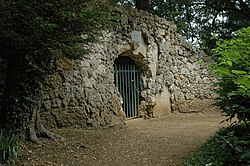


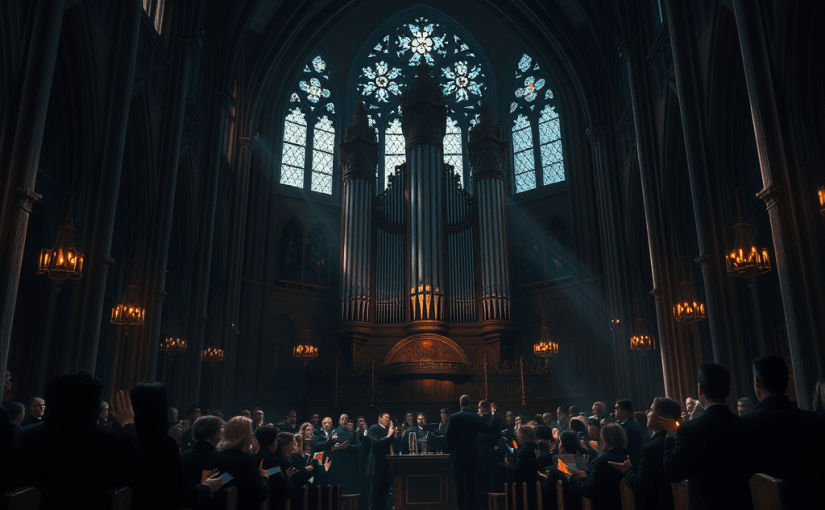



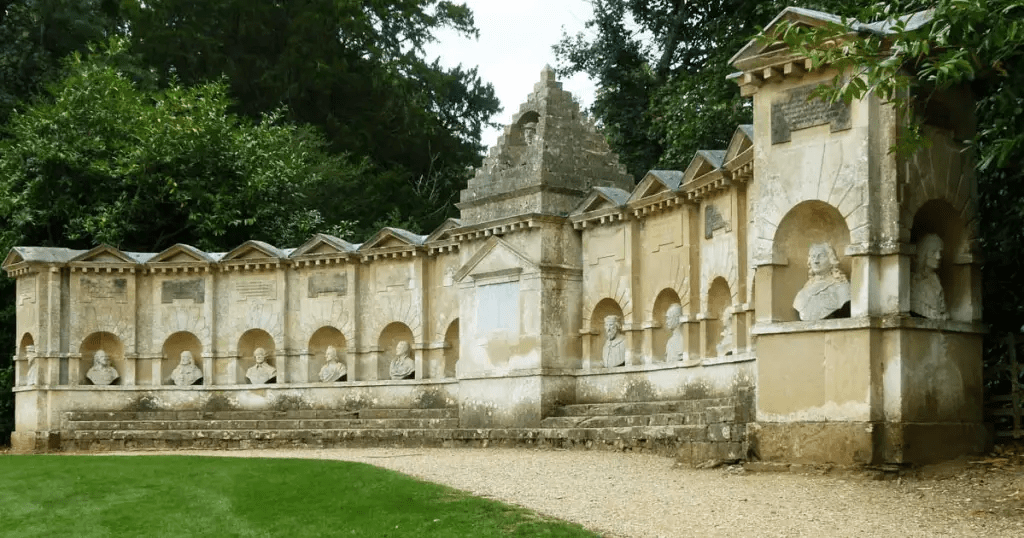



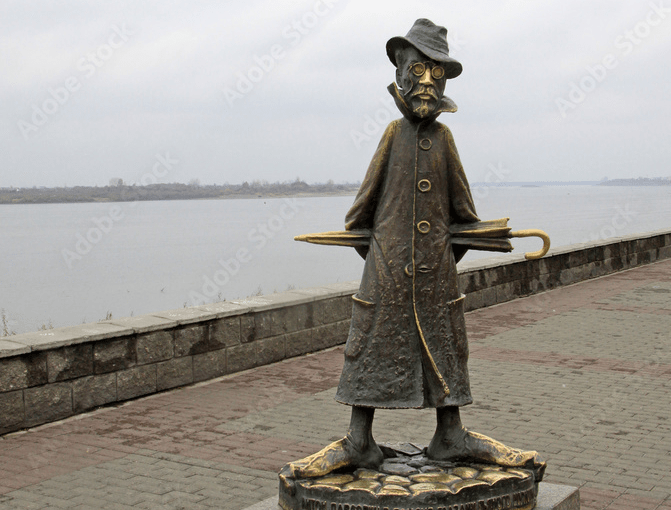


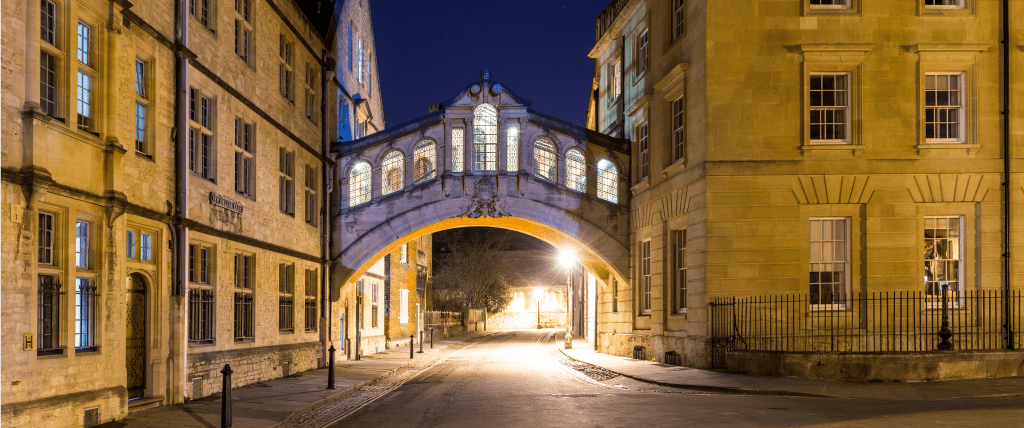


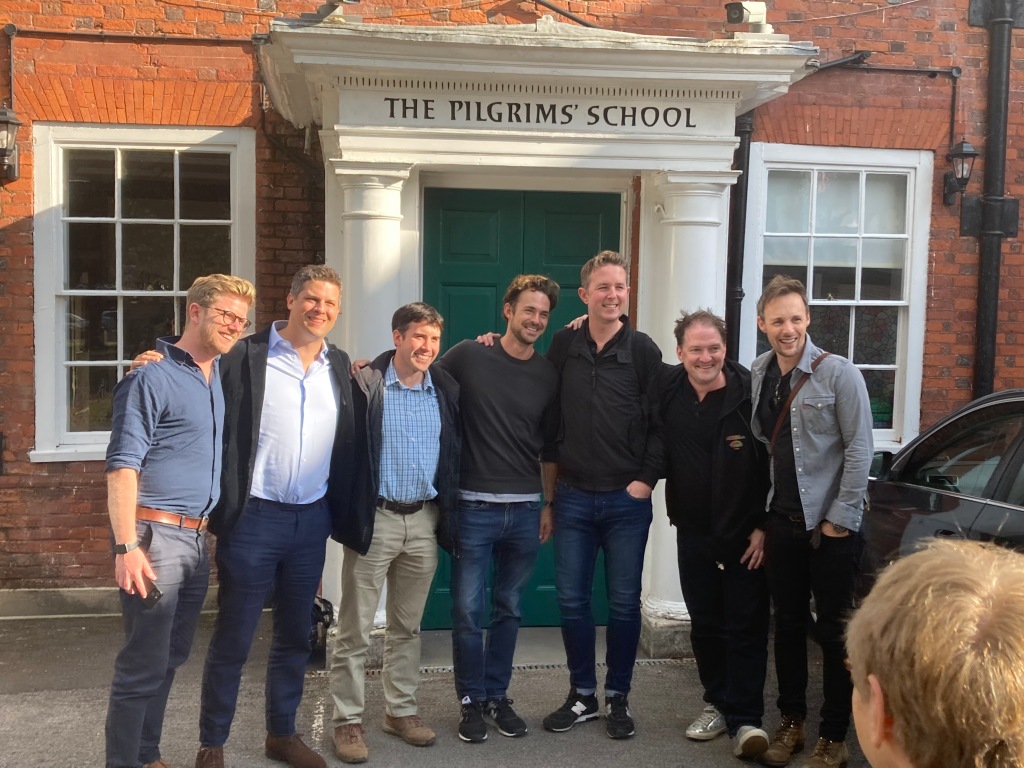




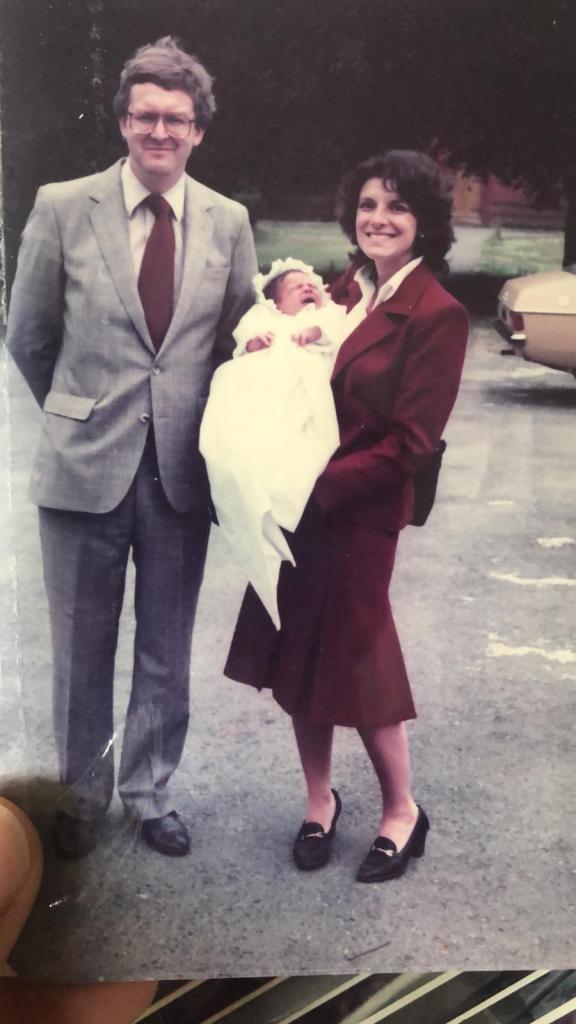


 ad astra per mundum