A new Latin Pitch

The time is fast approaching when my third form (year 9) pupils will have to make their options choices for GCSE. Since Latin is no longer front and centre of the school curriculum in the school at which I work (as it was once upon a time), this means Latin will be up on the market as one among several options the pupils will decide between. And, for me, this means it will be a case of making a pitch for Latin, as a subject, which will enable it to compete with such alternatives as Art, Computer Science, Geography, History, Music, Spanish and plenty more besides.

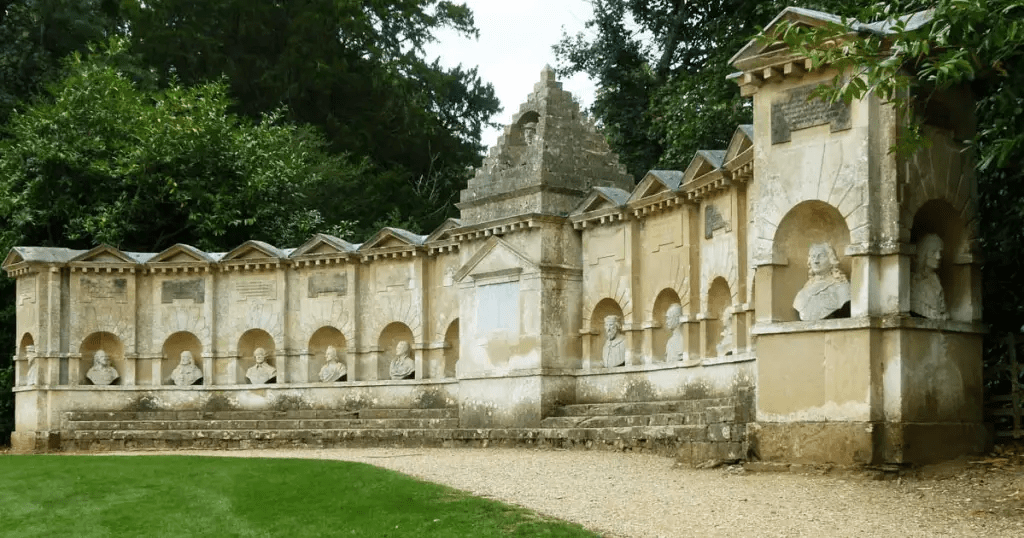
In past years, my pitch for the subject has tended to focus on its broad-ranging fascination – at GCSE you get to study not just language and words, but interesting stories, and plenty of Roman literature and culture. I emphasise that pupils seldom regret choosing Latin; that it is particularly suitable for the academically capable and ambitious; that it allows you to gain access to another world far-removed from our own (yet eerily familiar) in a way few other subjects will. It is, in short, a subject for life, not just the classroom. This has usually gone down well, even if it doesn’t necessarily convince some among the hardline utilitarian or ‘relevance-obsessed’ 13 year olds I sometimes come across. At my current school, with its backdrop of neoclassical architecture and its stunning gardens, replete with classically-themed temples, grottos and sculptures, the ‘relevance’ of the Classics hardly features as a topic for debate, since its presence all around us makes it an obvious source of fascination.
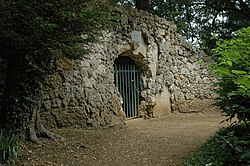
In fact, I have made a point of taking all 40 or so third formers on short walks out to Dido’s Cave and the Temple of Venus (at the edge of the gardens). I have done this partly to ensure that the school’s topography and architecture is very much on their minds as they make their options choices, and partly to dovetail with their initial explorations of the story of Virgil’s Aeneid, in which both Venus and Dido feature prominently.

But the ‘new’ Latin pitch I refer to in this blogpost’s title refers not to these walks, but to a bolder line of approach I have started to adopt in advertising the merits of the classical subjects (not just Latin but Greek also) to students. This pitch aims to address the underlying utilitarian concerns pupils bring into play when weighing up classical study.

It runs something like this: every day of your lives, in whatever line of work you end up going into, and in the context of whatever relationships you go on to form, you are going to be reliant, most likely, on the English language, its use and manipulation, and on your powers of expression. Don’t underestimate the importance of this. Your use of this language will establish the contours of your most valued relationships – with colleagues, friends, family members, and in affairs of the heart. Skill with language – and the ability to see through others’ words – will also allow you to escape the thoughts and linguistic tricks of others when they are being cruel or manipulative. Being able to use language skilfully will be vital, both for enjoyment and success.

What could give you a better grounding in your use of language than a thorough grounding in Greek and Latin? You may think that these languages are incidental to modern life, but the lie of that will become apparent if you just look closely at the words of that very phrase. The fact is that you are already speaking and thinking in Latin and Greek, much of the time, whether you know it or not. Wouldn’t it be ‘useful’ to get to know better this central feature of your ‘toolkit’ for life? To see what’s really going on in your use of words? To enjoy getting to know better how many of these words were used – in their original form – by their most skilled ancient users?

Perhaps this all sounds a tad melodramatic or intense. I had not been in the habit of pitching about the attractions of Latin in this way before the past few months. But as time passes, and as the newspapers carry more and more stories about the gradual and horrifying dawn of a post-literate society, it seems right to turn the focus of any pitch for Classics onto the centrality of words in our lives, their power to enrich us, their charm and magic.

Postmodernity has tended to frown on ‘logocentricity’ (one of its uglier jargonistic neologisms meaning a fixation on the written word as a means of conveying truth) while developing a desperately ugly and unapproachable form of academese. While I take the point that the written word is not, and could never be, the sole measure of truth and meaning, the flight from great writing, and from the ennobling use of language more generally, over recent decades is one Classics teachers are particularly well-placed to start speaking up against.


Toddlers and the Old Masters

Reading was nearly always my de facto leisure activity in the school (and university) holidays. The holidays have always represented a chance to escape deep into the pool of history and literature I have loved to soak myself in since childhood – and until recently only exceptional circumstances could change this.

Now, however, with three young children under the age of 7, I cannot count so readily on time to spare for my love of reading. Reading has to be squeezed in wherever possible; writing even more desperately so. As I type this, a 2 year old is trying to cover me with a blanket, while a 4 year olds is asking where she can find another biscuit. I break away from the screen to tell one to stop, the other that she can’t snack now as dinner will be ready soon. Back, now, to my screen.

As a tired parent of young children, I started early on to find that my capacity for sustained concentration on long sentences of text on page was substantially diminished. I would not – could not – turn to TV as a sort of substitute: I broke decisively with that medium as a vessel of entertainment way back in my early 20s. I still love movies – well, some – but TV I have for some time regarded as something like a cesspit in which I do not wish to spend any time. (As an aside, students I teach – who have often discovered this fact – question me with scrupulous zeal and disbelief when I reveal it; I do not know how successful are my attempts to convince them that life beyond TV is, in fact, rather worthwhile).

What medium, then, to seek when pages of text are too much to cope with after a long day, and the humdrum presentism of the TV screen seems too banal to contemplate? The answer, I have often found, lies in Art – and in my growing collection of Art books. It is a brilliantly relaxing activity to sit and take in great works of art, to glance across page after page of image and artistry, to be sucked into the worlds and scenes that great painters of the past have endeavoured to convey.

And, what’s more, this proves a very lovely opportunity for fun with toddlers (and older children too) – who love looking at the paintings, identifying what’s depicted, naming colours and characters they can spy. Earlier this evening my two year old flicked through 25 pages of Degas and 23 pages of Matisse (OK, not exactly an old master) with me and she delighted in much of what she saw, as did I. Not a bad way to relax after a day of work.

Greek Through Latin

As promised another post for the blog this summer – and further soon to come. This one broaches the subject of the Classics curriculum in my school in Buckinghamshire, where we offer Greek and Latin through GCSE and at A level. The school itself could not be a more natural (and stunning) environment for these subjects, grounded as it is amidst the most splendid classically inspired architecture, where the beauty and personality of ancient culture comes fascinatingly to life in all sorts of ways. Some pictures to illustrate below…

Nonetheless, numbers doing the subject in the school are not at an all time high, since we can no longer rely on the privilege – long ago lost – of being a compulsory subject. Now, Greek and Latin exist very much as an optional choice in the school curriculum, and this is the case from pupils’ first point of entry into the school at age 13. Gone, then, are the days, when a Richard Branson – one of the famous ex-pupils to attend the school – would face compulsory lessons in Greek and Latin as part of his curriculum. More on the changing face of schoolroom Classics and its place in the curriculum another time, no doubt.

My point in the present post is simply that a big aim of mine over the next year is going to be to inject life (and pupil numbers) into Classics at the school. To do this, I plan to tackle the issue of the year 9 curriculum: the first term of year 9 is the point where pupils choose whether they will continue with a classical subject up to GCSE. They need to have a great experience in that term, and to see that the subject(s) are for them. At present numbers are pretty low for Latin, but particularly so for Greek (only 2 or 3 per year). How, though, to fix this?

Well, two ideas. First, any plan to do so must reckon with the fact that pupils enter the school in year 9 with quite varied experiences of the language(s) from their previous schools. Some enter as complete beginners. Some enter having studied Latin (at least) for 3 or so years. So my plan is to create a two-tier experience for the pupils in the subject over my first year with them: for tier 1 pupils, offer a full introduction and grounding in the basics (tier 1 would include not just beginners but pupils who have studied the subject before); for tier 2 pupils, a compendium of additional translations and language work.

And this is where my second idea, which itself has two prongs, comes in: a) introducing them to Greek history/culture through Latin stories – and indeed b) to Greek language itself.

On a): the idea here is to use Latin as a basis to explore Greek stories and myths. Well, not exclusively Greek. What I really want to offer is a survey of some of the most interesting and absorbing short stories in Greek literature – from Herodotus to Thucydides to Xenophon to Homer and other poets. So there will be a booklet of stories which will allow just this. Pupils will build up a sense of how Greek writers tell fascinating stories – and would be even more fascinating to read in their own original language than in Latin. But starting by reading Greek stories in Latin is not a bad way to go. On b): pupils will have access to a basic Greek language booklet, which they can work through if they finish Latin tasks early in class.

On the basis of these experiences, I hope some will opt to take up Greek GCSE, in addition to Latin. We will see how it goes. The beauty of teaching Classics is that the material never fails to come alive: I am very much looking forward to reading lots of fun Greek stories (in Latin, at least initially) with my new pupils next term.

RG Collingwood on Writer’s Block

School holidays bring more than their usual fair share of activity for me these days, with a young family, a new house, and various admin jobs to complete over the break. So the usual habit of being able to slip away into the joys of reading and writing has had to take a back seat. Scrolling idly through twitter earlier in the summer break, I noticed a reference to RG Collingwood’s autobiography – a text I read many years ago now, and enjoyed.

As a graduate student, I had read several of Collingwood’s books, having been led to them by favourable references in the historian Quentin Skinner, whose writing I was also absorbing at that time. Anyway, coming across Collingwood again jolted me to revisit his autobiography, which tells the story of a figure who managed to rebel significantly against many of the leading ideas and orthodoxies of intellectual life in his time. And, luckily for him, to find some decent recognition and praise for doing so.

I have now reached chapter 5 of the autobiography and already several features of the text have jumped out and prompted reflection. Foremost among them: Collingwood notes how, so often in his own time, participants in major intellectual debates prefer to argue with caricature versions of their opponents’ positions, rather than reality. Collingwood reports on how it is easy enough to see where this is happening by simply looking up the arguments for oneself, and reading them, as set out, by their originators. This is a familiar feature of intellectual life, and indeed political life, in our own time.

Probably because of my own lack of productivity of late, I was struck also by Collingwood’s remarks in chapter 3 of the autobiography on ‘why people do not write books’. He knows, he says, of just two reasons: ‘either they are conscious that they have nothing to say, or they are conscious that they are unable to say it’. He adds: ‘if they give any other reason than these it is to throw dust in other people’s eyes or their own’.

Collingwood’s matter-of-fact plainspeak is refreshing at a time when fuzzy fake-warmth permeates so much of our written expression. The candour and precision of the judgment here reminds me of Orwell (among others). The passage made me wonder: in my recent inactivity, do I fall into one of these camps? If I tell myself I don’t, am I simply throwing dust into my eyes?

Having considered the question, I want to argue with Collingwood that feeling rested and well is an important condition for the production of good writing. One might be conscious of having things to say, or indeed conscious that they are still ruminating about how best to say it, without yet being in a position to sit down and write.

So I suppose I dissent from his position, as articulated here. This said, it is equally the case, I find, that, like much else in life, writing is a habit, and if one falls out of a habit, it is hard to pick it back up. On this note, look out for more blogposts from me on here soon. The habit of contributing regularly to adastrapermundum is one I miss and hope to revive.

Story Time

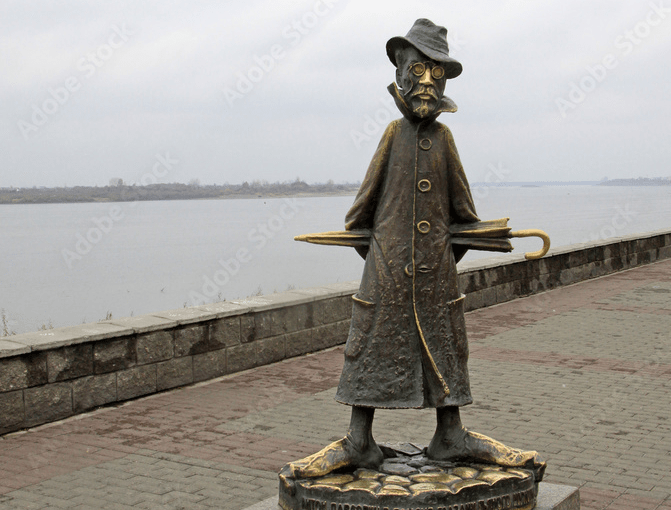
Monument of Chekhov in Taganrog, Russia

The bedtime story routine in recent weeks has become increasingly elaborate. First goes youngest daughter (age 1), who enjoys such classics as ‘Each Peach Pear Plum’ and ‘Peppa Pig goes to the Aquarium’. The older two sometimes sit and listen to these stories, which the little one enjoys hearing time after time, participating with special enthusiasm in the noises the animals make in the stories (among other sound effects). When her story is finished, she is carted off for a short feed, while the other two produce their own choice of stories for the evening.

Usually I accept their first choice, though I refuse to read Christmas stories at the wrong time of year, and occasionally I send them back to their rooms to choose again. I tend to refuse stories that are very long. A five to fifteen minute duration per child is the norm.

After we have finished the children’s choices of story, we move on finally to *my* book – and for the past few weeks, this has been a collection of short stories titled ‘Herodotus for young readers’. It reproduces – candidly, and in places even gorily, and often amusingly – various stories from the fifth century BC ‘Father of History writing’ himself. Most of the stories have enthralled the kids – though a few have caused them to lose interest. I have done my best to simplify the language of the stories in places as I have read, which enables the kids to follow better. Yesterday we completed this book, which touches on such varied topics as the Persian rulers Cyrus, Cambyses and Darius, Egyptian Pharaohs, the battle of Marathon and more.

My 4 year old daughter, in particular, has enjoyed the Herodotus stories: she has developed a habit of asking me earlier in the day: ‘Are we going to read a Herodotus story tonight? However, this evening she was in bed early, too tired for a story – and I was left reading only to my 6 year old son. Since we’d just finished the Herodotus book, I told him I was going to pick something new and different when it came to my story. So I went out and retrieved my copy of Chekhov’s Short Stories off the bookshelf outside my bedroom – before turning straight to a story called ‘Home’, in which a Russian lawyer holds a conversation with his 7 year old son, before telling him a bedtime story.

My son focussed intently on the story as I told it. He seemed to love especially Chekhov’s breaks from the main narrative of the story to depict the interior thoughts of the father as he discussed things with the little boy. ‘Focalisation’ is the clever-sounding literary term one might use to describe this technique. The father’s point in his conversation with his son is to admonish him for taking tobacco and smoking: throughout the conversation he reasons with himself about whether he is doing this effectively, and how he might take one approach or another in how he chooses to communicate with his son. He ends up inventing a bedtime story for his son, which, it seems, accomplishes the goal of conveying the message about the importance of not stealing and not smoking, effectively. This happens at the end of the story itself.

Chekhov’s lawyer father then muses to himself on the strangeness of the discussion he has just had with his young son, and on the strangeness of its apparent success:

“People would tell me it was the influence of beauty, artistic form,” he meditated. “It may be so, but that’s no comfort. It’s not the right way, all the same. . . . Why must morality and truth never be offered in their crude form, but only with embellishments, sweetened and gilded like pills? It’s not normal. . . . It’s falsification . . . deception . . . tricks . . . .” He thought of the jurymen to whom it was absolutely necessary to make a “speech,” of the general public who absorb history only from legends and historical novels, and of himself and how he had gathered an understanding of life not from sermons and laws, but from fables, novels, poems. “Medicine should be sweet, truth beautiful, and man has had this foolish habit since the days of Adam . . . though, indeed, perhaps it is all natural, and ought to be so. . . . There are many deceptions and delusions in nature that serve a purpose.” He set to work – but lazy, intimate thoughts still strayed through his mind for a good while”.

To be introduced in childhood to the writing of a profound author is perhaps a bit like being stung by an imperceptible wound, of which one’s contemporaries are none the wiser. An introduction to penetrative writing naturally enough causes wonder, even as it invites depth of contemplation, while opening the self to doubt and depth. Is it in some sense cruel to cause such a wound? My son’s tired eyes indeed swelled with wonder and tenderness at the end of the story. He had told me he was excited to read a new book when I picked this one off the shelf. The story had lived up to his expectations.

In a world which does so little to reward the sort of sensitivity and insight which exposure to beautiful literature can engender, to carry a love of stories can nonetheless somehow be a very rich blessing to those who love them. I know I am going to be asked to read some more Chekhov soon.

Catching my Breath

The summer holidays have brought welcome respite this year, as they do every year, but this year more than others. Having started a new job as a hod in London in January 2020, there wasn’t much time to settle in before the CAGs process, and all the challenges of online teaching and learning, kicked in. The first challenge of all, though, was moving into a house which was falling apart. Yes, best not to do this, I realise. But anyway: the result was that we needed to find an escape quickly, and only did so come May. Failed central heating in January, in the UK, with a 1 year old, isn’t great fun. Then, of course, there was the madness of the CAGs, and trying to get settled into a new role, to contend with too. We somehow managed!

And then there was this year. More online learning to contend with, and a new – and highly strenuous – process for public exams: TAGs. This time we teachers had to play the role of the exam boards, with all the paper setting, marking and moderating – and quality assurance provision – that that role requires.

It would have helped if all the exam boards had applied just one set of guidelines; if original papers had been made available; if more notice had been given that this is what we’d have to deal with. Delegating to teachers the task of setting and marking public exams (if that’s an acceptable way to describe what happened) had a significant impact on my timetable, as to those of many colleagues, and not just during working hours: countless late nights, mountains of paperwork, and no holidays until July, as work had to continue non-stop through the Spring holiday and Summer half term.

Now that it’s all over, I certainly hope lessons have been learnt from this year’s experience, as they plainly weren’t, really, last year, by those overseeing the process. In my own institution, we have emerged intact: the hard work has produced the intended outcomes, as the pupils – to their great credit – have done spectacularly well in very trying circumstances, and the exam boards are satisfied (the press, predictably, aren’t).

Amidst all the busyness the TAGs process (and the ordinary business of life in a busy school) has involved, my contributions on this blog have appeared with less frequency this year. There simply hasn’t been the time, especially as I’ve been cramming any spare moments I’ve had into family life and parental responsibilities, and the excitement of launching Antigone Journal, a new online forum for Classics, of which I am an editor, these past months.

However, now that I’m able to look ahead with growing excitement to being back in the classroom in September, this will perhaps change. I certainly hope so. For now, though, a quick reflection on what I’ve been up to this summer while attempting to ‘switch off’ (the inverted commas will perhaps seem appropriate enough!).

When the end of the summer term came, it was time to get down to some of the admin jobs I’d wanted to have time for, but hadn’t, over the past year and a half. Sorting out the department’s digital filing system and files; rewriting parts of the departmental handbook; redoing some of the schemes of work; doing various bits of uploading; drafting a document about department processes. All the fun stuff, in other words. That all took a couple of weeks, and involved a couple of hours a day.

My next job was to begin writing. I have been planning for a while now to start work on an accessible history of early Christianity in the period before Constantine. This history would begin its account by sketching a context – Greek, Roman, Jewish; political, religious, social – for Christianity’s first emergence.

Unfortunately this job was pushed off track by a straightforward problem: tiredness. I needed a rest. I was also aware that I had a lot of preparing to get done this summer before the new term begins. So I put the writing on hold, and enjoyed instead some r&r, some more time with family, and some time not writing, but reading.

Over the years I’ve grown increasingly impatient with dull writing, even if it’s on an interesting topic or if I’m sympathetic to the arguments being made, and this trend continued in earnest this summer. I’d read enough dull stuff in all the exam board guidelines and missives I’d received over the previous months to draw a line at the prospect of any more ugly or ponderous or flabby writing, however interesting the topic.

The annual Princeton University Press booksale (50% off all purchases) was a good event and I made a few purchases. But the book which gripped me most in the first part of the summer was the first volume in a series by the not-exactly-fashionable Cambridge historian Maurice Cowling, Religion and Public Doctrine in England. I don’t want to summarise the argument of the book, but its trenchant style, its forthright address of a major topic and major figures, and its willingness to be, well, provocative, for some reason struck a chord this summer. This is not to say I agree with some of what Cowling is up to in the book, though I do find parts of his analysis shrewd and convincing. But, in any case, the big reward of reading this book was to read someone who can really write (however polemically).

Aside from Cowling, I’ve been dipping my toe into some Tacitus and Virgil, and more recently into Plutarch, ahead of the new school year. More about my experience of these writers, perhaps, in a future post. What I will say here is that I haven’t previously spent enough time with Plutarch. His Lives (short biographies of major ancient political figures) are highly readable and interesting, as the 19th century was better at appreciating than have been the 20th and 21st. I have particularly enjoyed his life of Solon and am going to make my way through some others over the next few weeks. They are very accessible and I’d recommend them to any general reader.

A further stand-out among my summer reads has been Anthony Grafton’s New Worlds, Ancient Texts. Grafton is another historian who can really write, as I’ve discovered from reading a number of his books. So that was attraction number one here. But beyond this the topic of the book is itself one of remarkable interest. In essence, what impact did the discovery of the new world in the 15th-16th centuries have on traditions of scholarship and learning based on classical foundations? How did ancient learning now fit in to people’s understanding of the world? The answer to these questions is complex, but fascinating, and Grafton provides it with elegance and clarity. A model to aspire to.

The final components of my summer reading in recent weeks have been three brilliant ancient history books, two of which I’ve read before and have opted to revisit: Martin Goodman’s History of the Roman World from 44BC to AD180 and Elias Bickerman’s History of the Jews in the Greek Age. The first is a masterpiece of careful and acute explanation (as is most of Goodman’s writing); the second is a text I found quite a tricky read first time round a few years back, but which I am now enjoying a lot more (it’s difficult to say why, but I think I am now more willing to follow Bickerman’s sometimes complex layers of assumption and lines of reasoning than I had been previously).

The final book of the 3 is Deborah Kamen’s short book Status in Classical Athens (one of my Princeton UP sale puchases), which provides a thorough and punchy corrective/update to some of my ideas about the nature of social status among the population of fifth century Athens.

I hope to write again soon about the most enjoyable summer reading I have a chance to do. Reading, I have always known, can be such a great pleasure and indeed a privilege. Spending time with brilliant writers writing on important topics makes our lives better, I feel sure. I hope all readers of this blog are enjoying, or have enjoyed, a good break.

Clearing my Shelves

The summer holiday has arrived and it’s time to refresh, relax and (in our case) catch a breath and finish the process of moving in to a new place. One activity that will be very much part of this routine will be the removal of various books from my shelves.

As the years pass and more books accumulate, shelving space is increasingly at a premium. It makes sense, then, to try to pass on to others (either through charity shops or online sales) the books I don’t intend to read or rely upon again.

There’s something cathartic about doing this, deciding what will stay and what will go. Exercising control over what belongs on my shelves feels like an enjoyable assertion of my own free will: I’m not going to be kept in thrall by those books I don’t/didn’t enjoy is the thought, and I can follow the thought with decisive action.

In this post I’ve tried to force myself to reflect pretty candidly on the different reasons why the books I’m selling no longer seem to belong on my shelves. Here below is a picture of the books I currently have available for purchase (as displayed on a shelf I’ve allocated to them in the garage). They cover a whole range of subjects, from ancient philosophy to land law to psychology to an educator’s memoir. Below that is a summary of the various reasons why they’re for sale.

761456CC-9DCA-4534-8122-A7FBA3D5485E

a) Books which served a purpose and are not needed anymore: the primary examples here are the law books – mostly textbooks. In some cases they’re now quite out of date, in a field where new textbooks are published each year, and in most cases they’re available pretty cheap. I do retain some books from my period of legal studies – like Treitel’s classic treatise on the Law of Contract, and a textbook on company law (a nice study aide when I wrote a successful mini-dissertation on minority shareholder remedies), but I don’t envisage an imminent need for detailed reading material on criminal, EU, or tort law. Those, then, can go.

b) Books that excited me at the time but that don’t anymore: in this category I’d include some of the philosophy books – Bernard Williams’ Problems of the Self (a collection of essays) and Bernstein’s Beyond Objectivism and Relativism. Arlie Hochschild’s Commercialisation of Intimate Life, a sociological book with some interesting observations, also falls into this category, as do some history books, for example Mark Bevir’s The Logic of the History of Ideas and RG Collingwood’s classic study, The Idea of History. In each case, these books (or at least parts of them) were enjoyable when I first read them, but I can’t imagine returning to them again anytime soon. Partly, this is because my interest in philosophy itself has dwindled over the years: my reading tastes now focus more on biography and various types of history. Why? I’m not exactly sure but there has certainly been a more general shift from the abstract to the concrete in my choice of reading material over the years (philosophy and theology out; politics, economic history and biography in).

c) Books I didn’t enjoy or couldn’t get into: this is perhaps the biggest single category of book on the shelf. Of course, there are probably a lot of books like this on any avid reader’s shelves – and many such books remain, in fact, on my own ‘not for sale’ shelves, mainly because they could be useful as works of reference, or because I might want to give them a second chance. On this shelf, my recently purchased copy of John Cooper’s Pursuits of Wisdom, a sort of primer of ancient philosophy, which just doesn’t flow, is an example of the type; so too Charles Taylor’s large book on Hegel (Taylor picks fascinating topics in his books – many of which I own – but his prose style can be long-winded and trying); so too David Graeber’s book Debt (which held me for the first 10 or so pages before I found myself getting too frustrated with the assumptions he was making). Graeber is almost the opposite of Taylor in terms of prose style: he’s overly punchy. Others? Edward Said’s book on Humanism and Democratic Criticism was okay, but I have better books of his in my possession (and worse: On Late Style was a particularly disappointing read); John Burrow’s Crisis of Reason: European thought 1848-1914 addresses a fascinating topic but does so in a very stodgy way; Terry Eagleton is usually very readable but Trouble with Strangers: a study of ethics is among the least enjoyable of his books – its argument patchy, its prose not as luminous as that of his other books, and ethics is hardly his special field anyway; as for Galen Strawson’s Real Materialism (a collection of philosophy essays), I found both the writing and the subject matter more or less impenetrable.

d) a subset of c): Classics books that didn’t work for me. Here some examples are Neville Morley’s Antiquity and Modernity (a great topic, but the approach of the book didn’t speak to me at all), Irene de Jong’s Narrators and Focalizers (very dry) and Jonathan Hall’s Hellenicity (an interesting argument about the development of Hellenic identity, but a dense read: too dense for me at any rate). William Harris’ book on the Ideology of Anger Control in Classical Antiquity was another case of an interesting topic that wasn’t a particularly absorbing read (Harris’ other books, which unfortunately are very expensive, read really well, by contrast). Garth Fowden’s Egyptian Hermes – on Hermes the thrice-great – is the definitive treatment of its topic, but again it’s too dense for my tastes and it didn’t feel like an effort was made to bring the subject alive.

e) books it makes commercial sense to sell – I would be quite happy to keep hold of my copy of the collection of essays on Gender and the Body in the Ancient Mediterranean, edited by Maria Wyke, but if I can make £35 for it (and in advertising it for that price, I am the cheapest would-be seller online) I’ll gladly take the money (the book was purchased years back for £7).

f) books whose wisdom I no longer need: Mike Carot’s book of poker tells and Hwang’s book on pot limit omaha fall into this bracket. Read into that what you will… Also Terence Irwin’s book on Plato’s Ethics is surplus to requirements because this subject is fully covered in a different book I own by the same author (The Development of Ethics, volume 1). A further example here is the collection of essays on animal ethics: I’ve been a fully signed up vegetarian for a number of years now and no longer need to be convinced of the ethical case for vegetarianism.

g) Books I reviewed (somewhat ruefully): I spent far too long wondering about how to review two books on the shelf for journals (a book about the theology of Henri de Lubac and one about gender and ancient religion). These books hold particular memories. Influencing my approach to both reviews was the comment of Mary Beard that ‘you shouldn’t write anything in a review that you wouldn’t say to someone’s face’. Well, maybe I’ve grown bolder over the years but I’d certainly review both books quite differently now if I were to do so again. In one of the books, for instance, there were issues with dryness, unshapely sentences, jargon and the ‘so what?’ question (i.e. what does this matter?). None of this was mentioned in the review. With the collection of essays, there was an attempt to tie the essays together under a single banner which didn’t really work (the essays covered different topics in quite distinct ways and bore only the loosest of relations to one another) This is a common complaint of many reviewers of such volumes but it’s one my review didn’t manage to touch upon. I suppose I feel now that life is short and that these are the sorts of things (among others) that should just be said without hesitation if they’re what a reviewer feels – and let the chips fall where they may.

h) Duplicates: I already possess JA Mangan’s excellent book on the Games Ethic and Imperialism – an exploration of the place of sport in British education in the 19th century – so this copy is for sale.

So that’s a rough – and admittedly candid, though hopefully not too curmudgeonly – summary of the reasons these books are for sale. I hope I didn’t put you off making a purchase!

Favourite Reads of 2019 (2)

(Continued from previous)

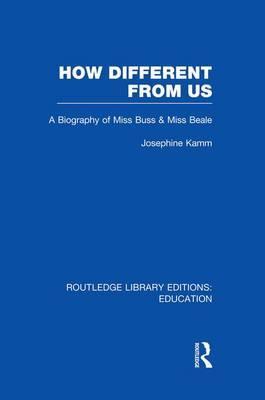
5 Josephine Kamm, How Different from Us: a Biography of Miss Buss and Miss Beale

9781138006454

A fascinating read about the lives of two Victorian educators, Frances Mary Buss and Dorothea Beale. I discuss some of the highlights of the book in another post here.

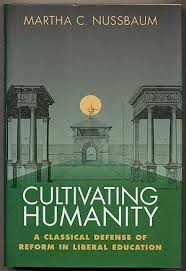
4 Martha Nussbaum, Cultivating Humanity

download

Another book about which I’ve written already (here): Nussbaum, as the title of the book intimates, wants to redirect the focus of education in the humanities back onto the cultivation of humanity itself (and she does so with reference to some of the key arguments in ancient philosophy). The book was written in the 90s but its arguments felt relevant – perhaps even urgent – at a time when the intellectual tenor and human sensitivity of our public discourse isn’t exactly the best it could be.

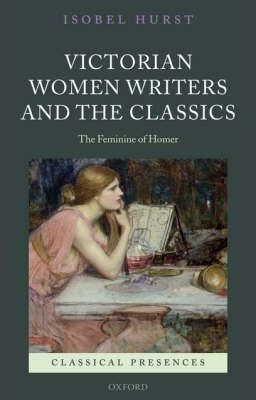
3 Isobel Hurst, Victorian Women Writers and the Classics: the Feminine of Homer

9780199541676

This is a bit of a cheat – as, so far, I’ve only read the first 2 chapters. However, it’s already given me some clear glimpses of a whole area of history and research re: the classical world (19th century women’s reception) that I’ve not thought much about before. It’s also beautifully written.

2 Martial, Epigrams 

889209

I hadn’t previously appreciated just how racy, funny and exuberant Martial’s epigrams are. My (inaccurate) memory of studying a selection of them many years ago was that they offered little more than a pretty unremarkable window into everyday Roman social reality. That selection must have omitted a lot of good stuff – and what sort of ‘social reality’ is it that we get in Martial, anyway? I’m looking forward to reading some of the Epigrams with students over the course of the upcoming term.

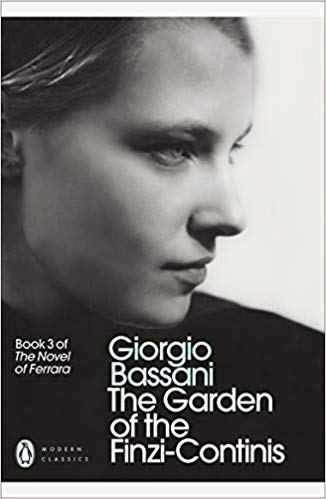
1 Giorgio Bassani, The Garden of the Finzi-Continis

41qehWm7qcL._SX324_BO1,204,203,200_

Another beautifully written book (which I blogged about earlier this year here). I’d first tried to read this novel a couple of years ago, but couldn’t get into it then. This year, however, it stood out as the novel that (for various reasons) it made sense to read to my mother at her bedside during her final illness. She enjoyed it immensely – as did I, and its story (and the memory of reading it) will always hold a profound meaning for me.

Favourite reads of 2019 (1)

As it’s the end of the year, a number of people have started to list their favourite reads of the past 12 months. I thought I’d do the same – mainly because I’ve read some great books this year – though with the caveat that none of these books was actually published in 2019… I will have to do better at staying up to date by this time next year.
10. Christopher Stray, Living Word: WHD Rouse and the Crisis of the Classics in Edwardian England
91Wqa6QLYZL
A fascinating portrayal of the life and career of an Edwardian classicist and headmaster (of the Perse school, Cambridge), it’s a quick read. For me, there was also the interesting connection that Rouse, who pioneered the Direct Method of teaching Latin, worked earlier in his career at Bedford school (where I worked myself until this past term).
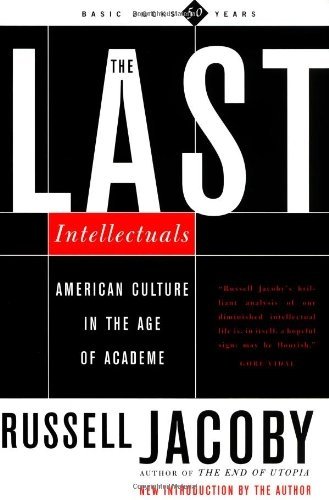
9. Russell Jacoby, The Last intellectuals: American culture in the age of academe
51W0Oa7HKKL
For anyone interested in academic life and campus culture changes (and disputes… I want to avoid the word ‘wars’…) in recent decades, this should prove a thought-provoking read. Jacoby’s is a sane, interesting voice in a debate where all too often the only arguments in town are either from the reactionary corner or the extreme left.
8. Keith Thomas, In Pursuit of Civility: Manners & civilisation in early modern England
71i8TOhlWdL
I’ve tried one of Keith Thomas’ books – Religion and the Decline of Magic – before, but couldn’t get into it. This was a different story altogether. It’s a fascinating glimpse into the moral world of everyday social interactions and ideas of civility (and politeness) in 18th century England. Thomas was made a member of the Order of the Companions of Honour in this year’s new year’s honours list.
7. Horace, Satires 1 (w commentary by Emily Gowers)
31R2YmerECL._SX322_BO1,204,203,200_
I first read Horace as a teenager and it’s been great spending some time with him again in recent months. In the Satires, I like his social commentary and his complex literary persona, but also his humanity. Emily Gowers’ commentary is brilliant and added hugely to my understanding of the text.
6. Noel Annan, The Dons: Mentors, Eccentrics, Geniuses
x298
Another book about the history of university education – and one perhaps worth reading for its clipped, rhythmical prose alone. There are plenty of entertaining anecdotes revealing the eccentric behaviour of dons over the past two centuries. My favourite anecdotes concerned the Victorian scientist William Buckland and his son (who, as a child, collected exotic animals in his college rooms). On one occasion, the dean of the college is reported to have admonished him: ‘Mr Buckland, I hear you keep a bear in college; well, either you or the bear must go’.

Boys and Books

I’m asked fairly often by the boys who visit my classroom about the books they see on its shelves: about whether I myself have read them all (I reply that I certainly haven’t); about what a particular book that catches their eye is about (sometimes this can lead into an interesting conversation); and, perhaps most commonly of all, about whether I myself have a favourite book… and if so, could I recommend it?

As someone who loves books, this last question is not one I find it particularly easy to answer. There are just so many great books to choose from, and I prefer to try to tailor any recommendations I make to individuals, having worked out what they’ve read and enjoyed in the past and/or what they’d like to explore in some new reading.

This all being said, I’ve also been thinking a bit recently about the books that I myself found exciting as a teenager, and in this post I’m going to consider whether these might be good texts to recommend to a teenage reader still today.

424-500x796-415950

Before I start, a necessary admission: my memory of my teenage reading is far from perfect, and I certainly don’t want to misrepresent its true scope and nature. I had been a voracious reader up until about 13/14 years of age, mainly of fiction and history. Standout favourite reads in my pre-teenage years had included Richmal Crompton’s series of Just William books (I seem to remember that the sight of me reading these books would irritate the headmaster of my prep school, who regarded them with scorn for some reason), various animal themed books by Colin Dann, and (when I was about 12) the Redwall series by Brian Jacques. I also remember enjoying both The Great Gatsby and Buchan’s 39 steps when we studied them in English.

gats

However, for 3 or so years after that (until I started my A levels) I found that the tasks of keeping on top of academic work, learning two musical instruments and playing a lot of sport didn’t really leave much time for anything apart from ‘fun’ reading (particularly footballers’ biographies and autobiographies).

download

Nevertheless, one text I did read during this time stands out in my memory for the impression it created: Sophie’s World, by Jostein Gaarder. This book managed to combine a simple storyline about an inquisitive young girl with an introduction to some of the key western philosophers. I greatly enjoyed the book, which I remember as having a thoughtful tone, and I liked especially its exploration of the life and philosophical approach of Socrates.

When I reached the sixth form, I had time and space to do a little more reading, and I was lucky that my parents’ bookshelves had plenty of titles to investigate if/when I was feeling intellectually curious.

russell

Undoubtedly the single most important book I discovered on these shelves was Bertrand Russell’s History of Western Philosophy. From page one, I was gripped – not just by Russell’s prose style, which I still find to be both grand and acute, but by the scope of the book. I realise this is a common experience for those who read Russell for the first time (and I know that reading Russell is not an altogether unheard of formative experience for intellectually minded teenagers).

My honest recollection is that I felt that Russell’s book really did pull the rug out from under much of the learning/studying I had been doing at school. Why weren’t school classes considering what seemed to be the fundamental questions that Russell and these other thinkers had devoted their lives to? And why did so many people around me seem to live without paying much attention to these incredibly important questions? Another abiding memory of reading Russell is that I was completely entranced by his exposition of the thought of the early Greek philosophers. I think the book remains worth reading for those chapters alone.

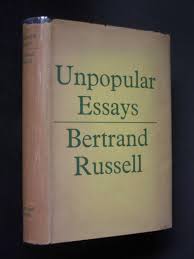
I was compelled to go out and find more Bertrand Russell to read and managed to get hold of two further books, both of which I liked a lot: two essay collections, Unpopular Essays and Why I am not a Christian. For a while, as a 17 year old, my goal in life was to become a modern day Bertrand Russell.

unpop

Studying both Virgil and Horace at school as part of Latin A level had given me a sense that there was a lot of fascinating material waiting to be explored in classical literature – and I was lucky to be presented with an Oxford Classical Dictionary as a Christmas present during the sixth form. I spent quite a lot of time with my nose in this, though I remember struggling to sustain an interest in a number of the minor biographical entries. (For my sins, I also used to enjoy browsing an English Dictionary and learning new words before I went to bed at night).

Perhaps my number one fiction read from this time was Conan Doyle’s Adventures of Sherlock Holmes, which I found to be absorbing and well-written. It was good also that Conan Doyle’s stories were short, as I didn’t have much patience for long drawn-out fictional tales at this point in my life.

9780140437713

So that’s about it: a brief survey of some of the standout reads of my own adolescence. I think I’m still happy to recommend these books to anyone who asks for a recommendation today (well, perhaps not the OCD if a page-turner is what’s required). Strangely, though, I’ve never put any of these books in the hands of pupils who’ve asked me for recommendations to-date (though I have mentioned them). I’m not completely sure why this is: perhaps because I don’t retain my copies of Russell or Conan Doyle any longer on my shelves. There are certainly, though, many other good books to try instead.