The time is fast approaching when my third form (year 9) pupils will have to make their options choices for GCSE. Since Latin is no longer front and centre of the school curriculum in the school at which I work (as it was once upon a time), this means Latin will be up on the market as one among several options the pupils will decide between. And, for me, this means it will be a case of making a pitch for Latin, as a subject, which will enable it to compete with such alternatives as Art, Computer Science, Geography, History, Music, Spanish and plenty more besides.
In past years, my pitch for the subject has tended to focus on its broad-ranging fascination – at GCSE you get to study not just language and words, but interesting stories, and plenty of Roman literature and culture. I emphasise that pupils seldom regret choosing Latin; that it is particularly suitable for the academically capable and ambitious; that it allows you to gain access to another world far-removed from our own (yet eerily familiar) in a way few other subjects will. It is, in short, a subject for life, not just the classroom. This has usually gone down well, even if it doesn’t necessarily convince some among the hardline utilitarian or ‘relevance-obsessed’ 13 year olds I sometimes come across. At my current school, with its backdrop of neoclassical architecture and its stunning gardens, replete with classically-themed temples, grottos and sculptures, the ‘relevance’ of the Classics hardly features as a topic for debate, since its presence all around us makes it an obvious source of fascination.
In fact, I have made a point of taking all 40 or so third formers on short walks out to Dido’s Cave and the Temple of Venus (at the edge of the gardens). I have done this partly to ensure that the school’s topography and architecture is very much on their minds as they make their options choices, and partly to dovetail with their initial explorations of the story of Virgil’s Aeneid, in which both Venus and Dido feature prominently.
But the ‘new’ Latin pitch I refer to in this blogpost’s title refers not to these walks, but to a bolder line of approach I have started to adopt in advertising the merits of the classical subjects (not just Latin but Greek also) to students. This pitch aims to address the underlying utilitarian concerns pupils bring into play when weighing up classical study.
It runs something like this: every day of your lives, in whatever line of work you end up going into, and in the context of whatever relationships you go on to form, you are going to be reliant, most likely, on the English language, its use and manipulation, and on your powers of expression. Don’t underestimate the importance of this. Your use of this language will establish the contours of your most valued relationships – with colleagues, friends, family members, and in affairs of the heart. Skill with language – and the ability to see through others’ words – will also allow you to escape the thoughts and linguistic tricks of others when they are being cruel or manipulative. Being able to use language skilfully will be vital, both for enjoyment and success.
What could give you a better grounding in your use of language than a thorough grounding in Greek and Latin? You may think that these languages are incidental to modern life, but the lie of that will become apparent if you just look closely at the words of that very phrase. The fact is that you are already speaking and thinking in Latin and Greek, much of the time, whether you know it or not. Wouldn’t it be ‘useful’ to get to know better this central feature of your ‘toolkit’ for life? To see what’s really going on in your use of words? To enjoy getting to know better how many of these words were used – in their original form – by their most skilled ancient users?
Perhaps this all sounds a tad melodramatic or intense. I had not been in the habit of pitching about the attractions of Latin in this way before the past few months. But as time passes, and as the newspapers carry more and more stories about the gradual and horrifying dawn of a post-literate society, it seems right to turn the focus of any pitch for Classics onto the centrality of words in our lives, their power to enrich us, their charm and magic.
Postmodernity has tended to frown on ‘logocentricity’ (one of its uglier jargonistic neologisms meaning a fixation on the written word as a means of conveying truth) while developing a desperately ugly and unapproachable form of academese. While I take the point that the written word is not, and could never be, the sole measure of truth and meaning, the flight from great writing, and from the ennobling use of language more generally, over recent decades is one Classics teachers are particularly well-placed to start speaking up against.
As promised another post for the blog this summer – and further soon to come. This one broaches the subject of the Classics curriculum in my school in Buckinghamshire, where we offer Greek and Latin through GCSE and at A level. The school itself could not be a more natural (and stunning) environment for these subjects, grounded as it is amidst the most splendid classically inspired architecture, where the beauty and personality of ancient culture comes fascinatingly to life in all sorts of ways. Some pictures to illustrate below…
Nonetheless, numbers doing the subject in the school are not at an all time high, since we can no longer rely on the privilege – long ago lost – of being a compulsory subject. Now, Greek and Latin exist very much as an optional choice in the school curriculum, and this is the case from pupils’ first point of entry into the school at age 13. Gone, then, are the days, when a Richard Branson – one of the famous ex-pupils to attend the school – would face compulsory lessons in Greek and Latin as part of his curriculum. More on the changing face of schoolroom Classics and its place in the curriculum another time, no doubt.
My point in the present post is simply that a big aim of mine over the next year is going to be to inject life (and pupil numbers) into Classics at the school. To do this, I plan to tackle the issue of the year 9 curriculum: the first term of year 9 is the point where pupils choose whether they will continue with a classical subject up to GCSE. They need to have a great experience in that term, and to see that the subject(s) are for them. At present numbers are pretty low for Latin, but particularly so for Greek (only 2 or 3 per year). How, though, to fix this?
Well, two ideas. First, any plan to do so must reckon with the fact that pupils enter the school in year 9 with quite varied experiences of the language(s) from their previous schools. Some enter as complete beginners. Some enter having studied Latin (at least) for 3 or so years. So my plan is to create a two-tier experience for the pupils in the subject over my first year with them: for tier 1 pupils, offer a full introduction and grounding in the basics (tier 1 would include not just beginners but pupils who have studied the subject before); for tier 2 pupils, a compendium of additional translations and language work.
And this is where my second idea, which itself has two prongs, comes in: a) introducing them to Greek history/culture through Latin stories – and indeed b) to Greek language itself.
On a): the idea here is to use Latin as a basis to explore Greek stories and myths. Well, not exclusively Greek. What I really want to offer is a survey of some of the most interesting and absorbing short stories in Greek literature – from Herodotus to Thucydides to Xenophon to Homer and other poets. So there will be a booklet of stories which will allow just this. Pupils will build up a sense of how Greek writers tell fascinating stories – and would be even more fascinating to read in their own original language than in Latin. But starting by reading Greek stories in Latin is not a bad way to go. On b): pupils will have access to a basic Greek language booklet, which they can work through if they finish Latin tasks early in class.
On the basis of these experiences, I hope some will opt to take up Greek GCSE, in addition to Latin. We will see how it goes. The beauty of teaching Classics is that the material never fails to come alive: I am very much looking forward to reading lots of fun Greek stories (in Latin, at least initially) with my new pupils next term.
Apparently a court case is taking place at the moment on the question of independent schools. More on that, perhaps, another time. In a dreamy moment of holiday-time distraction, I found myself reflecting today on the UK independent schools I’ve known well (6 as an employee, 3 as a pupil). Quite different places entirely, in my experience of them, even as they’re lumped together in the media under the simple umbrella term ‘private schools’.
There are, of course, independent schools and independent schools: some highly academic, some less so, some day, some boarding, some urban, some rural, some big, some small, some famous, some not-so-much.
But what really matters most, I think, when forming an assessment of a given school is something very simple: is it a happy place to be? Do human beings flourish within its walls? Or, at least, do the vast majority flourish (since, I guess, it would be unrealistic to imagine every single person could do so at a given point in time)?Everything else flows from that point of principle. Pupils thrive when they’re happy, genuinely so, and able to be themselves, find challenge, find recognition. And, as a wise colleague once commented to me: ‘everything in a school hinges on positive culture. Everything’.
This is where school websites can make things difficult. Every school website puts its own best foot forward. Glossy photos, lovely grounds, impressive-sounding achievements. But what school league table measures ‘culture’? What objective measure could there be of something so inherently nebulous? And why trust any website with the gall to champion anything so intangible? Positive culture, it is fair to say, must simply be lived out – and if it translates onto a website, then so be it.
But clues as to the presence of a really positive school culture may just be traceable, I believe, for those with eyes keen enough to do so. That, at least, is my argument here. So then: how might one identify a flourishing school culture, using a website alone?
Well, for one: does the website give a clear sense of a flourishing human community? All school websites single out exceptional achievements and events, as well as noteworthy occasions in the school calendar. But the best websites – and the best schools – do more. They give a sense of whole communities being enriched. Pupils from across different year groups joining together in shared activities and initiatives; staff linking up with students to join together in positive endeavours; elements of teamwork, creativity and fun being in clear evidence. And, above all, a sense that everyone is in some way involved: not just a small group, but a whole community. Culture, after all, is born of community.
Another (perhaps more-self centred) clue: does the website convey key information about subject teachers: who they are, what they’re about? Many school websites do little to nothing here. If the website is the public face of a school, why should it be interested in giving you only a small list of names, or – in some cases – the name of the headteacher, alone? Senior leaders spend relatively little time teaching and – although they are unquestionably important figures – most contact time for pupils will happen with subject teachers. If a school website doesn’t take the trouble to disclose the identities of its staff, it’s in my view a strange omission. The best websites give a sense of who the staff throughout the school are, and of what they’re contributing to the life of the place.
A further point. Does the website give a flavour of how pupils spend their time each day and week? Of what sort of life a pupil will lead in the school? Of how the school day is organised? Of how much time will be spent in lessons? Of what else will form part of the daily experience? Taking the trouble to spell this all out shows that careful thought has gone into what’s being delivered, and how, and that clarity about how things work, and clarity of communication with the world at large, counts. Those are good indicators of a positive culture.
Point number 4. Does the website pay more than mere lip-service to the idea that the school wants pupils to develop in the round, not just in terms of their capacity to pass public exams? What extra-curricular offerings are there? What sorts of choices do pupils have? How are they encouraged/celebrated in their non-academic pursuits? And what trouble is the school taking to ensure that each individual is known, nurtured and developed into a rounded human being? Good websites (and good schools) manage to convey answers to these questions, not simply a platitude or two about ‘wide-ranging extra-curriculars’.
A fifth point – and it seems strange to write it, but this feels an acutely important one. How is the school striving to develop individuals who think freely and openly? Does a sense come through on the website that individuality, and uniqueness of thought and perspective, and, for that matter, creativity, really matter? Schools have to do with human beings. They should therefore aim to excel in finding, nurturing and celebrating what makes human beings human – and, for that matter, humane. If, then, a school website resembles that of a bluechip corporation (on one hand), or that of an organisation for chippy activism (on the other), or some odd combination of both, then it’s perhaps questionable whether humanity, individuality, and liberality hold pride of place within that school’s walls. Doubtless there is a case for seeming businesslike, and a case for seeming alert to injustice. But if these things turn into a dominating ethos, which takes pride of place above (or to the exclusion of) academic values, the cart is preceding the horse.
And, perhaps more subtly, if the only place for the ‘Arts’ on a school website is as a sort of adornment, or occasional activity, then this too might provoke a sense of caution. The one time I went to see the Head to air a slightly critical thought in one of my previous jobs (at an excellent school) was to share the view that all pupils passing through the school ought to gain some experience of what it feels like to act on stage, at some point in their school career. It saddened me that that wasn’t (at that point) happening for a fair number. A school which recognises the vitality of the Arts for human flourishing is likely to be a flourishing place more generally, I think.
So, that’s it in this instalment of the dreamy ramblings of a career educator. I wonder what others will make of the above. Doubtless it betrays not a few prejudices. I am glad to report, though, that I write as a member of staff in a school which ticks all of the above boxes.
Last week the Labour government released news of their plans to cut back the Latin Excellence Programme, which was introduced under the Conservative Education Secretary Gavin Williamson, and dedicated £4m per annum to helping state school students learn Latin. There have been plenty of upset responses to this decision, and a particularly forceful and readable piece was published on the topic on Antigone a few days ago. Meanwhile, a few jubilant philistines on twitter (most of whom announced themselves in their profiles with dreary predictability as ‘CEO of XYZ’, or ‘lifelong socialist’ etc) welcomed the news.
A particularly regrettable feature of Labour’s plan to cut the programme is their decision to do so midway through an academic year, leaving a big group of pupils readying themselves for summer exams suddenly bereft of instruction. As with so much that the new Education Secretary, Bridget Phillipson, has overseen in the past few months, the plan smacks of busybody ideological interference rather than patient wheel greasing based on close familiarity with complex facts and fundamentals.
But for a clearer understanding of the Education Secretary’s matter-of-fact dismissal (and cutting) of the Latin Excellence Programme, it makes good sense to look at what happened to the Classics degree programme at Hertford College, Oxford while she herself was a student there. That programme had been overseen for many years by the formidable Stephanie West, wife of the late Oxford Classicist Martin West. Upon West’s retirement in 2005, Hertford elected not to appoint a replacement: Classics would no longer be taught at the college.
Similar things were happening at this time at certain other Oxford colleges: Keble and Lincoln, for example, had not replaced their retiring Classicists – a diminishing number of applicants for some years being one reason. Something similar had happened at my own college, Brasenose, in the 90s, with Theology. My internal DPhil examiner, now at Christ Church, wryly mentioned to me that he himself had been the last Director of Studies in Theology at Brasenose. The BNC governing body of the early 90s, apparently guided by Francis Fukuyama’s notion that history had indeed ended in their own contemporary age, decided that the victory of Liberal Democracy meant an end to the necessity of theological learning. Anything that had been worthwhile in Theology could be safely encountered in the context of an undergraduate History, Languages or Classics degree vel sim (or so the whiggish fellowship appear to have decided).
Anyway, back to Hertford. When Classics was jettisoned there back in 2005, Phillipson was resident at the college, studying for a BA in History and French. Doubtless she will have noted the discontinuation of Classics at the college. Perhaps she will even have welcomed the news as evidence that her college was ‘moving with the times’. I have no knowledge of what the atmosphere in the college was like at this time, nor of how the news itself was met.
What is plain enough, however, is that the governing body of Hertford College, Oxford (if you glance at the college’s statutes) have as their object the task of ‘advancing public learning by the provision of a college within the university of Oxford’. Does cutting Classics present a barrier to ‘advancing public learning’? Not, apparently, at Hertford. And so it seems not very difficult to imagine a ripple effect between the behaviour of this college’s governing body, on the one hand, and the behaviour of an Education secretary who, emerging from such a college, decides it is ‘progressive’ to withdraw funding from state school kids who wish to study Latin, on the other.
There’d be no honorary fellowship awaiting Phillipson if she’d tried this on at a Classics-proud Oxford college (or so I’d hope). Perhaps the same is true at her alma mater? The apple here, alas, has probably not fallen far from the tree.
Armand D’Angour published an interesting short post yesterday (link here) on the topic of education. The post touched on a couple of points which ring familiar and true – the sense that some pupils (the very best, at any rate) don’t require a great deal of instruction; the notion that the best sort of education involves the (successful) cultivation of habits of mind, rather than the imparting of specific information.
The first point clashes with some of the familiar depictions of education in popular culture: as Armand writes, ‘popular films like Dead Poets’ Society, The History Boys, and most recently The Holdovers present the experiences of schoolteacher and students, emphasising the effect of instructors (inspiring or otherwise) on young minds’. In some of these settings, educators are depicted as heroes, as figures of inspiration, who command the wonder of their students. This is something, perhaps, which good teachers might consciously guard against.
That they should is something which is explicitly flagged, for instance, by one of the great pioneers of girls’ education in the Victorian period – Frances Mary Buss. Although she aimed to have an energising impact on her pupils, Buss was entirely opposed to ‘hero-worship’ (something she thought might nevertheless happen naturally enough in children). To this end she offered the following common sense advice to a young teacher who was struggling to deal with being idolised by a pupil: ‘the quickest way to stop that sort of behaviour’, she counselled, ‘is to let the girls get to know you. Once they see you as you really are, they will stop idolising you’. Pupils don’t need idols, one might surmise. What they do benefit from, though, is real life, down-to-earth role models who can help them imagine themselves into the adult world.
The sense that, as an educator, you are providing not just an academic training but a training in what it is (and might soon be, for pupils) to live as an adult was something that struck me powerfully (and that surprised me) when I first started working in schools. The ‘socialising’ role of the educator had been something I had more or less overlooked. Perhaps I had been entirely taken in by the utilitarian spirit of our age, in that my governing assumption had been that teachers – and lecturers – are there to impart skills and information. I had not given much thought to the question how, if at all, they might accomplish these tasks in a way much dissimilar from how a robot might.
As the years have gone by, I have become a bit more reflective. I have thought a lot – in particular – about some of my own teachers. Most recently, I have thought especially about two of my Sixth Form teachers – Gill Hall, who was Head of Classics at my school as well as my Sixth Form tutor, and Rupert Smith, who came in to replace her when she was diagnosed with (what turned out to be terminal) cancer. My mind has turned to these figures precisely because of the tragedies they both faced when I knew them in the classroom – and of how, in each case, their handling of this provided a certain sort of quiet inspiration.
It cannot have been at all easy, in Mrs Hall’s case, to come in to teach a full timetable of classes when facing a serious cancer diagnosis. The summer before she stopped teaching our Latin class, she was busy happily commending to our small A level set the pleasures and rewards of studying Classics at university. I was particularly moved that she saw potential in me that year, as I had notably underperformed in our summer exams across the board, having succumbed to the temptations of football, football and more football outside school in the weeks before the exam. I had given my teachers very little evidence that I was a high calibre student. Mrs Hall nonetheless thrust a copy of an Oxford prospectus into my hand, and even signed me up for an open day at the college she herself had attended, while telling me that I had the makings of a good Classicist. She had seen something in me that I had not seen in myself. And she was, without doubt, the only teacher who showed any optimism whatsoever about my academic potential that summer. That faith galvanised me – and I worked very hard over the next year (and beyond) to try to repay it. Alas, though, her illness worsened, and she tragically passed away later that very year at a terribly young age. It was an awful loss for all who knew her. I remember being speechless with grief and shock on hearing the news. Because of her untimely passing, I was never able to thank her for her belief in me at a particularly low academic ebb. But I have thought often of our interactions that summer – and of how, in the midst of what was certainly a time of increasingly acute suffering for her, she was still looking to bring the best out of others, including me – and to show faith in the potential of those who might not deserve it all that much.
When Mr Smith came in to replace Mrs Hall the following term, he immediately struck a chord. Immaculately turned out, with a polished and polite demeanour, he came across more as country gent than seasoned classroom practitioner. I still remember his brown suede boots: I had not seen another teacher in our ex-grammar wear shoes like those. Mr Smith was a part-time fixed term appointment, and I knew nothing about the circumstances of his being at the school – save one: he was now the sole parent of a young daughter, as he had recently lost his wife. Mr Smith’s job was to teach us to translate Latin prose authors – especially Caesar – and he did it with a smooth confidence and gentleness. He was utterly unflappable, in fact, and when the typical mischief of missed or incomplete homework surfaced in our lessons, he was smilingly pragmatic about what to do about it. I believe he went on to work at a nearby school in Winchester, and I heard reports of his being much loved there.
I have thought a lot about Mrs Hall and Mr Smith – their bravery, their devotion to their subject, their smiles in the classroom even in times of horrific adversity – in recent months. Both of them have been with me as silent companions as I have taught my own classes at a time of grave personal loss and turmoil. They are not ‘heroes’ in the sense of being awe-inspiring educational gurus, though both were excellent teachers – but as quiet yet resplendent role models for their humanity.
In a noisy and often rather shallow world, where ‘impacts’ and ‘objective measures’ are the order for the day in educational settings, it is the unmeasurable humanity of real teachers, simply acting as good human beings in (for instance) their handling of adversity, moving ahead with their lives in spite of the presence of darkness, which can give a sense of what can matter most in an educational encounter. The best schools, I think, know this, and know that they have to try to fill their classrooms with the likes of Mrs Hall and Mr Smith.
My supervisor’s book had just come out and had been reviewed that week in the TLS. It had been a mixed review. The reviewer had been Fergus Millar, Professor of Ancient History and a major name in the field. Chippy Masters student that I was, I asked my supervisor what he thought of the review. Typical of the supervisor in question, whom I remember as an excellent teacher and mentor, he offered what seemed an honest response. Somewhat surprised by the question, he remarked tersely and directly: ‘Fergus doesn’t understand power’ (the book’s topic had been the workings of power in the bureaucratic class of the later Roman empire). He explained no further – and I did not ask for detail. Nearly twenty years later, I still remember this comment and I still wonder about it. Did Fergus Millar really ‘not understand power’?
There are figures in life whom we get to know well, and who touch us on a personal basis – for their kindness, for their warmth, perhaps. There are other figures who might guide or influence us professionally and have a real say over our careers – for whose input or influence we might be profoundly grateful. Fergus Millar wasn’t exactly either of these things to me – although I did indeed benefit in a small way from his kindness, and he did in some small sense have an influence on me. Or maybe, in fact, this influence wasn’t all that small.
Many people have written about Fergus Millar since he passed away in 2019. I am probably the least well-equipped to do so of anyone who has – so I should put everything I will go on to write in this post very firmly into the category of the (very) limited impressions of a passing, and very junior, acquaintance of a great scholar. And yet something compels me to write. Perhaps it can be interesting for a passing acquaintance, not just a great companion, of an interesting or important figure to set out some thoughts?
I think of Fergus Millar as someone who embodied a tradition of learning and thinking which has real intellectual integrity, depth and power. It is a sadness that this tradition is one which seems to have to struggle for air in contemporary educational institutions, even top ones – even ones which should know better. It is a tradition I try to keep in mind in what I do as a teacher, but also in how I live and respond to the world.
Mary Beard has written admiringly of how Fergus Millar, when a recent victim of a trenchant review of his largest and perhaps his boldest book, ‘The Emperor in the Roman World’, had engaged in robust conversation with his reviewer (Professor Keith Hopkins) in a memorable intellectual exchange. When it was all over, having expressed some profound disagreements, they headed to the bar together and shared a drink. What an example for the young people present (including Beard herself), she reflected. And this in spite of the fact that the review Hopkins had written had at times overcooked its pudding: it is ‘as though a sea-voyager had painfully constructed a Rolls–Royce motor car in order to cross the Atlantic Ocean’, Hopkins wrote of Millar’s modus operandi in the book. Others might have given him the cold shoulder for far less a statement than this.
An unflinching approach to intellectual exchange, combined with a respect for those with whom you argue (so long as they do indeed wish to argue, rather than assert or crush), even as you maintain, refine and negotiate your position, is indeed an attractive modus operandi. In the world at large, conversational exchange doesn’t always function like this (to say the least): considerations of power, wealth, status, etiquette and other things (no doubt) do crush out of the picture the possibility of robust yet fruitful conversation on an interpersonal level all too often. Often it is just too awkward or dangerous to deal, straightforwardly, with the true facts of a situation – and so we resort to deal only with what is ‘sayable’. Real intellectual exchange can’t function like this, though: it relies on brute honesty, brute statement of issues. Maybe we could do more to integrate real intellectual exchange of this nature into our human affairs in general?
Everything I saw in Fergus Millar’s activities at seminars I attended where he was a regular fixture suggested his clear commitment to a readily identifiable sort of deep intellectual honesty. I remember his frustration at a visiting speaker’s clumsy handling of ancient Biblical evidence in a seminar on Green’ and environmental issues (as these were labelled) in the Bible at the Oxford Oriental Studies faculty. I remember his desire to flesh out – and frustration with – the problems with the Gospel of Matthew’s (to his mind clearly unhistorical) presentation of ‘scribes and Pharisees’ as though these represented a single category of person in the Biblical text itself. He was impatient of inexactness and clumsiness both in modern contexts and in ancient ones. Perhaps this could all be seen as just a case of a typically scrupulous Classicist in action, but Millar was obviously an unusually formidable case study of the type.
Outside of the seminar room, in coffee in the downstairs cafeteria, he was genteel to a fault – and I noticed how he had no affectation at all (in common, in fact, with many of his academic colleagues). He would sit and talk quietly with colleagues, visiting speakers and students alike – and all the time it would be plain that he would soon be back to work, compiling materials for his next article or book. There was no sense of holding court or being the centre of attention. The whole approach was to model something quite different. Others have written of how Millar was an incredibly industrious reader and writer, and this much was plain from only limited time in his company. I warmed to the combination of modesty, lack of pretension, thoroughness and lightly worn industry. It offered a clear if implicit rejection of ostentation, with a heavy emphasis on substance over style (which is not to say that Millar lacked style, only that it clearly wasn’t a preoccupation of his). Unlike some I came across in the university world, Millar was plainly not into the self-promotion business.
A big moment for me came when Millar came to hear me speak at an Oriental Studies faculty seminar (to a grand audience of just 5), listening to me talk on Eusebius and his late antique continuators for 45 minutes or so, before offering 10 or 15 minutes worth of thoughts and questions at the end. I do not remember having any nerves during the exchange, and partly, or mainly, this must have been a function (again) of Millar’s warm and encouraging approach. He simply wanted to encourage people to get on and say and write sensible things about important topics. I remember his mentioning to me at the end that no one had really done very much at all on the details of a couple of Eusebius’ writings, and perhaps a project worth thinking about would be to write a commentary on them. It was a small thought but one which gave me a great sense of confidence – though my commentary on a Eusebian text remains to be written, even now, many years later. Be fruitful, get on with it, let the work speak for itself. That seemed to be the idea.
Fergus Millar’s own writing itself offered an interesting sort of inspiration. He was what one might call an omnivorous historian – keen to write on politics, the military, religion, culture, literature and much else in between. He didn’t delve much into the world of the ancient Greeks, except to consider Greeks living under Rome, but as far as Rome itself was concerned he cast his net extremely wide – writing on everything from the Roman Republic up until the Arab conquests. A big theme of his writing was the interconnectedness of different groups and ethnicities, of cultural variety and exchange, of surprising cross-fertilisations and of the sense of the big picture across the vast expanse of territory which could be called ‘Roman’. I remember him commenting to me outside one seminar I attended that ‘still no one has really explained the origins of Islam properly’. He seemed to believe a yet more brilliant work of historical writing might lie just around the corner which might do this. I was not sure at the time that I shared what I took to be Millar’s optimism, but I did notice – and like – his sense of excitement about the prospect of what a future piece of historical writing might yet achieve.
The omnivorous streak in Millar manifested itself not just in choice of subject matter but in the way he presented his material. The Emperor in the Roman World, for instance, is a vast compendium of source materials, a huge synthesis of learning, bringing together insights but also masses of documentation on the activity of the emperors across more than 3 centuries. Another of Millar’s books, Religion and Community in the Roman Near East, spends many pages setting out and exploring the state of our surviving evidence for different religious communities and groups. In a great deal of Millar’s writing, the preoccupation is with showing readers what the evidence is, and what the shape of it looks like, so that a clear picture of what we can and can’t say is achieved. This does not always make for the most scintillating prose, but it gives a real sense of the spread of what there is. So often, with other ancient historians, one simply has to follow the thread of what that historian has chosen to do with the body of evidence they have worked from, with no deep sense of what that body of evidence really looks like, and no sense of where (and whether) they might have proceeded in a different sort of way. In this sense, Millar’s writing in Religion and Community operates on a quite different level. Its approach is one that can be found also in his revision of the great work of synthesis by Schurer, The History of the Jewish People in the Age of Jesus Christ, which Millar co-produced alongside several colleagues. This monumental study itself aims to set out and clarify what a big body of evidence looks like, and to show what can and can’t be said on all sorts of topics – evidential, geographic, demographic and, of course, in terms of events.
One characteristic of Millar’s approach was to place clear and deep familiarity with primary reading of sources ‘front and centre’ of his work as a historian. One does not read Millar’s writing with any sense that he is letting his imagination roam very free, or that he is sticking only loosely to a source, or to a limited subset of evidence. An empiricist, he wants to study all of the evidence carefully and follow it ‘where it leads’. But he knows this is often hard – and the struggle to do it is one he wants to try to convey to the reader. To put the point another way: some facts which matter are easy to come by; others which matter require close discussion, and even then we may not be in a position to know them.
One result of Millar’s omnivorous appetite, and indeed his panoptic way of seeing things, is that a rich and compelling picture can emerge where a different sort of writer would have produced a more narrowly focussed, if possibly more tightly argued, sort of account. Millar wants also to let complexity, ambiguity, and holes in the evidence speak clearly for themselves, and to do so without the guiding hand of any jargon, or of any overarching theory – whether implicitly held or explicitly stated. ‘But all writers cleave on some level to a theory’, goes the inevitable retort. Well, yes, but that doesn’t mean that this is what matters most, or deserves heavy articulation in a piece of scholarship. Some assumptions can be left unstated or unexplored, surely, especially if the aim of a piece of work is the rather defensible one of building up a thorough and intellectually honest picture of a topic or time period in plain language.
Millar worked, like my father did, in a university system which was becoming less and less able to sustain scholarly values in a thoroughgoing way, and more and more spartan and dominated by the diktats of the market and a growing bureaucracy. This clearly distressed and unsettled him, and I remember noticing how a few letters he penned found their way into the press to express discontent about the general direction of travel in the university sector. A determined democrat within the very democratic Oxford system, and (I believe) an opponent of the tendency of the ‘modernisers’ to build power and hierarchy at the centre of the university, he was a regular attendee at meetings of the university congregation. I remember seeing him excitedly heading off to a vote at one such meeting after one seminar I attended. The chance to speak in opposition to some damaging measure was clearly animating him.
Millar’s whole mode of approach – as scholarly democrat, as denizen of a community where simple human decency undergirded what intellectual life was about – was transparent in all of my limited interactions with him. We never so much as exchanged an email, and I doubt he would have remembered my name after I left the university. But he was an example of a great person I have come across who really did live up to expectations – and more. And in the end, what mattered was not just Millar’s approach to his work, but the clarity with which his approach to scholarhip (robustness, intellectual honesty, clarity, omnivorous interests with a panoptic sense of perspective, a sense of excitement about what still might be possible) was espoused, and the sense of excitement which flowed (to me, and to others) from it. It had a huge influence, and it is something I try to convey to my own students at school level, and in my writing too.
I knew Millar briefly when he was in his 70s. I have no idea whether the character I saw at this stage of his life had been the same as that of his younger years. But it seemed to me to bespeak a tradition of university learning which had had every reason to value dearly the things Millar himself had stood for. This tradition of learning had come to value thoroughness and fact-finding empiricism because it had known firsthand the profound dangers of lies and confusions, and the devastation these had caused. Humane scholarship would have to stand for the truth of things, and to have the sense of overview, as well as the mastery of detail, that would enable – where relevant – sloppiness, and indeed charlatans, to be exposed. Intellectual frauds, including those of the politically dangerous sort, love to make use of detail, just as they love to make sweeping claims, after all. The old school don in Millar would have specialised in spotting and confuting nonsense, and his style would have been to do this with understatement yet with piercing effect. The message of his writing is to let others see things, in the big picture, for themselves, and to show them how the big picture gets created through the available evidence – so that they can doubt, and follow their doubts, if they wish to. It is a deeply democratic project, but one which grants a very great measure of respect to the individual reader – or, to put it more grandly, to the individual human mind.
It’s been a lively and fast-moving start to the new term. The reality of the covid pandemic has meant that everyone has been kept very busy with ‘hybrid’ teaching, observing various protocols, teaching with masks or visors on, and adjusting to a pretty different new routine. Thankfully there’s been plenty of fun and learning going on alongside all the covid-related adjustments.
I’ve been meaning for a few days to write up a little account of a couple of fun lessons I’ve had with my sixth form Class Civ classes over the past couple of weeks. Here it is.
‘The Democratic Battle’, by the contemporary artist Muvindu Binoy
The pupils have this term begun to study the emergence of democracy in ancient Athens. We began by reflecting on the nature of democracy as a form of government over the course of world history, about its unpredictable career – both as an idea and as a reality – over time, and about some of its varied forms; how it first appeared in the ancient world, before (largely) disappearing out of sight for many centuries, only to re-emerge rather recently (and in new and different forms), and with spectacular and far-reaching results that touch all our lives.*
The first part of the course involves learning about the reforms of Solon in the early 6th century BC, reforms which – so it appears through hindsight – put in place some of the key building blocks (economic, political, legal, ideological) of the fully-fledged democracy that would later emerge in the city of Athens and its surrounding territory.
My approach in teaching this material has been to see it as an opportunity not just to learn some interesting and important facts about the past, but to try to encourage pupils to develop their own ‘democratic’ temperaments and skillsets. To study a political reformer like Solon, to appreciate what he seems to have done (the record of our sources is not unambiguous) and what he seems to have stood for, should not – I think – just be about learning to write good essays or enhancing one’s picture of history. It can also be about building life skills and a sense of self and other.
With this in mind, among other tasks the pupils have attempted over the past weeks, they have been asked – each in turn – to play the part of Solon (as pairs), speaking and acting as the man himself as he delivers his proposals for reform.
An image of the Areopagus rock, where the council met, today
The setting in which they were asked to do this was the Areopagus council (a council consisting of influential aristocrats who – in various ways – presided over the city). This council had itself chosen Solon (as one of their own) to introduce some reforms in Athens, in order to allay the possibility of political revolution and the setting up of a tyranny.
But being chosen for the task wouldn’t necessarily make Solon’s job easy.
Pupils, playing the part of Solon, had to justify the reforms they wished to see enacted to some rather frosty council members (played by other pupils in the class, and me). We gave them some pretty robust opposition. Why these reforms? Why such radicalism? What, moreover, if anything, do the city’s aristocrats stand to gain?
More specifically: why should the debts of those who haven’t been able to repay them be, just, forgiven? Why should enslavement of the hopelessly indebted now be made impossible? Why should legal decisions which were made by wise Areopagus council members now be open to challenge in a court made up of ordinary rank-and-file Athenian citizens? Think of the dangers this might present!
Why, for that matter, should a new way of structuring society (around 4 different property classes), all of a sudden, be introduced? How would this pave the way for harmonious co-existence? And why, now, should anyone – in theory, provided they can earn enough money – have access to Athens’ prestigious archonships (i.e. magistracies)? These had previously been open only to the nobly born.
Pupils had to deal with some tough cross-examining from their colleagues on questions such as these. To help deal with this, they were encouraged to frame the news of the proposed reforms in a way that they felt would be most likely to appeal to the sensibilities of the Areopagus council. This, I wanted them to see, was a chance to develop their skills of diplomacy and persuasion, not just their public speaking.
Once they had done this, and after having just about persuaded a pretty nonplussed Areopagus council to go along with their proposals for reform, they were then asked – still in character as Solon – to head down to the agora, the Athenian marketplace.
A view of the Athenian agora today
Here they would deliver the news of the reforms, in person, to a crowd of ordinary Athenians. What sort of reaction might they expect now? What sorts of doubts, questions and responses would these ordinary Athenians be likely to have? How might they deal with different sorts of responses from different individuals? What might need to be different about addressing the agora, as opposed to addressing the Areopagus?
These were the sorts of questions I wanted pupils to think about – and they did an excellent job of exploring and responding to them. I don’t think anyone succumbed to full-on Machiavellianism, or to brusque dismissal.
These lessons, then, were fun occasions (I think for all concerned, even those who were a bit apprehensive about the ‘public speaking’ requirement). The chance to get into character, to do something fun with a role, was part of the reason for this. It was also good to have the opportunity to play the part of a difficult interlocutor, either as a member of the Areopagus or as an ordinary citizen, when quizzing one’s classmates as they played Solon.
But beyond mere fun, I think the experience of ‘being Solon’, of ‘doing politics’ in the classroom in this way, can feed (as mentioned above) into a developing sense of self, a growing confidence to speak and address an audience in a thoughtful and appropriate way, and a capacity to argue imaginatively and respectfully, but also directly with one’s peers about some weighty questions.
At a time when our public discourse can seem a bit thin on the ground when it comes to some of these qualities, it’s been good to see them put into practice.
* Two good books on democracy over the longue duree are John Dunn’s Setting the People Free and Paul Cartledge’s Democracy: a life.
The featured image is ‘Solon before Croesus’ by Nikolaus Knuepfer (c. 1650).
You’re ambling along one of the main thoroughfares of ancient Rome, minding your own business, with not a lot on your mind. It’s a route you know well and, despite being a pretty important figure round these parts, you’re blending fairly well into your surroundings: no one is really noticing you.
Though of course someone does. Oh dear. A pest, a bore, a social climber, a wannabe literary type strides up. He peppers you with conversation, having grabbed your hand with a note of urgency, and he insists on addressing you with an uncomfortably over-familiar greeting: ‘Dahhhhhling’. The campness of the greeting doesn’t offend but the presumption does.
So what can you do here? Naturally, you must do your best to deflect him: you suggest (not perfectly) politely that you really must be getting on now, that you’re due on the other side of town, that you need to see someone who’s not very well and whom he definitely doesn’t know. Your implication is that there won’t be a welcome for him at the end of it if he follows you on your journey.
The truth is that this bore, this try-hard, this nobody wants you not for your conversation, but for your contacts. He doesn’t seem to care sincerely for your everyday affairs, nor for your welfare more generally… still less does he show any sign of caring to praise or discuss your poetic genius! Hmmph.
Let’s be clear, then: it’s influence, introductions, and a route upward he’s after. And you represent a nice networking opportunity. Which is to say you’re a cog in a machine here: not a figure of veneration, nor – frankly – any kind of inspiration.
This might just be an example of the cost of your literary celebrity: dealing with people who care about your connections, not your talent. Well, sort of. In a way – and let’s admit this very quietly – this whole interaction is in fact a nice reminder that you matter. That you know important people and that important people care about your work.
But shhhh. Back to what an ordeal this whole thing is. That feels safe and modest. And yes, it’s awkward being you, right now, in this situation. But then again: you’re good at doing awkward. It is, in fact, one of your talents (if you do say so yourself!).
Now, before you rejoin the conversation, consider this: doesn’t this pest remind you of someone? Well, ummm yes. Because of course there was a time not too long ago when you yourself weren’t exactly flavour of the month among the Roman cognoscenti. Could this be the reason, then, why you’re not quite able to summon the brusqueness his impudent outpourings deserve? Why you’re (just about) prepared to indulge him where others would have given him a brisk dismissal?
See, this is why you’re good at awkwardness: you like finding yourself in your adversaries.
And so there you have it, maybe. Now: allow yourself to be peppered! And don’t pretend there’s nothing of creative interest here for you. Because, actually, this might just be the scene of a poem for a talented poet like you. A walk down the Via Sacra with this character might well titillate your regular readers, if skilfully done. And if you go to print, then future pests will have a way to know what you’re really thinking!
******
Looking back on 3 weeks of reading Horace’s Satire 1.9 with my sixth form classes, I thought it might be fun to try to give a sense of the scene we’ve been looking at together. Above was my hasty attempt to do just this. In it, I wanted to try to capture something of the delicate sensibility and subjective awareness I think we encounter in the poem, but also to bring to light a few further ideas and issues that may simmer beneath the surface of the poem in a way Horace himself does not.
While we’ve been looking at the satire together, I’ve been trying to put my finger on the full range of experiences that pupils (and teachers) might hope to have when reading it.
A big focus when looking at the poem has been on its stylistic and literary features: the way words and phrases are used and manipulated, the way the writer creates effects. There is a subtle genius to the way Horace presents his account of the encounter with the literary pest that is made manifest through close study of his Latin.
One feature of the poem I’ve tried to emphasise is that it’s useful to think in terms of 3 voices being in play in the poem: the voice of the narrator (Horace) when he’s speaking with the pest, the voice of the pest himself, and then the voice of the narrator when he’s not speaking with the pest (that is, when he’s relaying to the reader his inner thoughts about their encounter).
I stressed the interest of thinking about these different voices, about how Horace plays them off against each other – but also about how we get a very interesting (and uncannily contemporary-feeling) sense of the narrator’s subjective consciousness as a result of this style of writing.
On this latter point, it strikes me that the poem calls to mind something of what it’s like dealing with everyday interactions for us, still today. For it shows an example of a context in which we might say one thing and think another, and it gives an example of how and why a person might be led to do this.
Its central theme, maybe, is the subtlety and complexity that can be at stake when dealing with everyday human interactions of the kind we might find tricky or awkward, as we try to negotiate them. Rather than trying neatly to dissolve (or resolve) any of this trickiness, Horace just takes us into one such situation, and shares an account of dealing with it (or not dealing with it). It’s an invitation, perhaps, to reflection.
And so maybe, then, I should have asked pupils to think in terms of 4 voices being important for their reading of the poem: the fourth being their own. Because there is an implicit invitation from Horace to join him in the poem, to try to wrestle with the situation involving the pest, with him. I suppose this post has been my attempt to take part (just a little) in this very process, and to give an expression to my own ‘fourth voice’.
I began my journey in teaching soon after leaving school, working initially in my old primary school providing some classroom assistance, before going off to teach at a farm school on a gap year in South Africa. These initial experiences were enormously uplifting ones. So much of what I found out about teaching then continues to be central to my enjoyment of the job today… the chance to combine learning and fun in the classroom; the satisfaction of managing to convey things to pupils that they might find tricky; the feeling of somehow being able to bring a subject alive, of helping others come to see things in new ways; and the chance to watch children grow in confidence and develop toward adulthood before your very eyes. All these things are not just enjoyable: they are privileges of a job I love.
For the past 10 terms I’ve been enjoying doing these things at Bedford school. It is a special environment in which to work, and a place in which life beyond the classroom really matters: out on the sports field, in musical or artistic activities, extra-curricular clubs and societies, in the theatre, and in the chapel. The food and scenery are great too.
I had a clear sense when I was a teenager that I didn’t want a job that involved seeing the same 4 walls of an office every day. I briefly considered joining the marines, and would have loved to have tried professional football (but wasn’t good enough). I also liked the idea of life as an academic or in the church, but ended up feeling neither was for me for various reasons. Teaching was also in my mind.
In teaching, and certainly in teaching at Bedford, life is never dull: there are opportunities to get involved in multiple pursuits at school every day and there is always something new to try, something interesting to experience. That is something I’ve valued immensely and it informs my sense that it’s really important to show pupils that living something like a rounded existence – with interests in different areas of endeavour – is important (and possible!).
A happy moment: winning the staff general knowledge quiz!
I will miss the school, my colleagues and pupils. I have some great memories from my time there – of coaching teams, of assemblies and lessons, of breakthroughs in the classroom, and of lots of laughter.
I will also look back on my time at the school with some sadness, because it was while I was working there that I lost my mother: I know that she was happy to see me happy at the school, and indeed the senior staff at the school were wonderful in making it possible for me to spend time with her during her final illness. I will always be grateful for that.
So it’s a fond farewell to Bedford school and to Bedford the town, which has been our home for the past 3 and a half years. It’s been nice knowing you.
I’m asked fairly often by the boys who visit my classroom about the books they see on its shelves: about whether I myself have read them all (I reply that I certainly haven’t); about what a particular book that catches their eye is about (sometimes this can lead into an interesting conversation); and, perhaps most commonly of all, about whether I myself have a favourite book… and if so, could I recommend it?
As someone who loves books, this last question is not one I find it particularly easy to answer. There are just so many great books to choose from, and I prefer to try to tailor any recommendations I make to individuals, having worked out what they’ve read and enjoyed in the past and/or what they’d like to explore in some new reading.
This all being said, I’ve also been thinking a bit recently about the books that I myself found exciting as a teenager, and in this post I’m going to consider whether these might be good texts to recommend to a teenage reader still today.
Before I start, a necessary admission: my memory of my teenage reading is far from perfect, and I certainly don’t want to misrepresent its true scope and nature. I had been a voracious reader up until about 13/14 years of age, mainly of fiction and history. Standout favourite reads in my pre-teenage years had included Richmal Crompton’s series of Just William books (I seem to remember that the sight of me reading these books would irritate the headmaster of my prep school, who regarded them with scorn for some reason), various animal themed books by Colin Dann, and (when I was about 12) the Redwall series by Brian Jacques. I also remember enjoying both The Great Gatsby and Buchan’s 39 steps when we studied them in English.
However, for 3 or so years after that (until I started my A levels) I found that the tasks of keeping on top of academic work, learning two musical instruments and playing a lot of sport didn’t really leave much time for anything apart from ‘fun’ reading (particularly footballers’ biographies and autobiographies).
Nevertheless, one text I did read during this time stands out in my memory for the impression it created: Sophie’s World, by Jostein Gaarder. This book managed to combine a simple storyline about an inquisitive young girl with an introduction to some of the key western philosophers. I greatly enjoyed the book, which I remember as having a thoughtful tone, and I liked especially its exploration of the life and philosophical approach of Socrates.
When I reached the sixth form, I had time and space to do a little more reading, and I was lucky that my parents’ bookshelves had plenty of titles to investigate if/when I was feeling intellectually curious.
Undoubtedly the single most important book I discovered on these shelves was Bertrand Russell’s History of Western Philosophy. From page one, I was gripped – not just by Russell’s prose style, which I still find to be both grand and acute, but by the scope of the book. I realise this is a common experience for those who read Russell for the first time (and I know that reading Russell is not an altogether unheard of formative experience for intellectually minded teenagers).
My honest recollection is that I felt that Russell’s book really did pull the rug out from under much of the learning/studying I had been doing at school. Why weren’t school classes considering what seemed to be the fundamental questions that Russell and these other thinkers had devoted their lives to? And why did so many people around me seem to live without paying much attention to these incredibly important questions? Another abiding memory of reading Russell is that I was completely entranced by his exposition of the thought of the early Greek philosophers. I think the book remains worth reading for those chapters alone.
I was compelled to go out and find more Bertrand Russell to read and managed to get hold of two further books, both of which I liked a lot: two essay collections, Unpopular Essays and Why I am not a Christian. For a while, as a 17 year old, my goal in life was to become a modern day Bertrand Russell.
Studying both Virgil and Horace at school as part of Latin A level had given me a sense that there was a lot of fascinating material waiting to be explored in classical literature – and I was lucky to be presented with an Oxford Classical Dictionary as a Christmas present during the sixth form. I spent quite a lot of time with my nose in this, though I remember struggling to sustain an interest in a number of the minor biographical entries. (For my sins, I also used to enjoy browsing an English Dictionary and learning new words before I went to bed at night).
Perhaps my number one fiction read from this time was Conan Doyle’s Adventures of Sherlock Holmes, which I found to be absorbing and well-written. It was good also that Conan Doyle’s stories were short, as I didn’t have much patience for long drawn-out fictional tales at this point in my life.
So that’s about it: a brief survey of some of the standout reads of my own adolescence. I think I’m still happy to recommend these books to anyone who asks for a recommendation today (well, perhaps not the OCD if a page-turner is what’s required). Strangely, though, I’ve never put any of these books in the hands of pupils who’ve asked me for recommendations to-date (though I have mentioned them). I’m not completely sure why this is: perhaps because I don’t retain my copies of Russell or Conan Doyle any longer on my shelves. There are certainly, though, many other good books to try instead.
What is it, above all, that a good teacher of history is aiming to do? Is it mainly a question of successfully imparting correct or relevant information? Most, I imagine, would say that more – much more – is at stake than this. Is it, then, primarily about developing in pupils a capacity to see patterns of cause and effect, thus enabling them to isolate the important influence or set of factors which lies behind a significant event or occurrence?
What, though, about the interrogation of source materials and the development of a sense of the shape of the surviving documentary record: is it a focus on this, and the development of a keen awareness of its nature, scope and deficiencies – together with an ability to probe and analyse the evidence – that should constitute the key focus of a good teacher’s activity? The chief aim of the teacher, from this point of view, might be to produce pupils with a keen eye for detail, and an ability to shoot down overly-ambitious theories which claim too much on the basis of what’s (not) there.
Maybe the good teacher will emphasise also that reconstruction is the historian’s primary goal. If so, then their main focus is likely be on developing pupils’ capacity to make excellent use of the medium of prose; on knowing what it is to communicate details about the past attractively and cogently, certainly; but with a sense also, perhaps, that a big aim of historical writing might be to perform something like a necromancy. For the historian as necromancer, successful writing will somehow manage to bring back into being for readers things that have died and disappeared. (Why, after all, should this be an aim only of historical novelists?).
But perhaps the truth is that history teaching that really hits the mark, and indeed much of the best historical writing too, will contain something of all of these elements.
I’ve been thinking about these issues over the last couple of days chiefly because I’ve been re-reading the autobiography of RG Collingwood. Collingwood was a renowned philosopher and Roman historian. His autobiography is a subtle and amiable account of its author’s experiences of learning, teaching and writing in Oxford in the first half of the twentieth century. Collingwood was fully aware of the idiosyncratic character of many of his philosophical views, as seen in contrast with prevailing trends among his philosophical and Oxford contemporaries. This only adds to the book’s interest.
One area in which Collingwood’s views became well-known was his philosophy of history – an area of philosophical enquiry neglected by many of his colleagues.* And Collingwood is particularly interesting, I think, on the topic of historical method, on what it is that historians should try to do when they approach the past.
For Collingwood, it is all a matter of asking the right questions. In short, the idea is that dealing well with historical evidence – Collingwood uses the example of an archaeological dig – is all about refining the questions one poses in relation to it. At a dig, you might begin with a question like ‘was there a Flavian occupation on this site?’ That question can then be divided into sub-questions, like: ‘are these Flavian sherds and coins mere strays, or were they deposited in the period to which they belong?’ And so on.
In Collingwood’s discussion, the intellectual activity of the historian in formulating problems and solutions is crucial: the historian must pose good questions, and refine them and answer them well, while making due allowance for any problems presented by the evidence, at the same time as they offer their argument.
What I particularly like about this way of seeing the business of historical research is that the onus is very much on the historian to generate their own avenues of approach, their own web of questions (and – hopefully good – answers). It is a way, that is, to cultivate subjectivity and a habit of free enquiry, informed by one’s own growing sense of how to approach the material.
This, I think, is what successful history teaching can be about. Pupils should find that they have been invited into a world of free-spirited debate and enquiry, in which individuals can begin to form and articulate their own ideas about matters of interest and substance. The centrality of posing, refining and answering one’s own questions in that process matters.
At the same time, Collingwood’s approach isn’t in the slightest complacently presentist, in the sense that it requires the historian actually to engage with the thoughts and ideas of past people seriously. The historian should try to see these ideas in context and make sense of them in their own right. It simply won’t do, he thinks, to dismiss past thoughts on the basis of contemporary opinion or prejudice and (thus) to rule out their importance for understanding past action and behaviour.
For Collingwood, then, doing history is a fundamentally dialogical activity. He sees the process of posing and refining questions in relation to the past as an important ongoing activity, not only for the writing of good history, but also for the ongoing development of the historian as a rational being. This is a point of principle I find myself happy to agree with.
*Many, though not all. Collingwood acknowledges the influence of the philosopher TH Green in this area. He mentions too how many of Green’s pupils – including politicians such as Asquith and the social reformer and historian Arnold Toynbee – made a point of applying the ideas they had learned from their university philosophy tutor in the context of their future careers. Green was known to many as a Hegelian, though Collingwood does not call him this. Collingwood does however describe the widespread opposition to Green’s work among Oxford philosophers of his own time (‘Hegelian’ ideas were, for the most part, successfully repelled at Oxford). He also indicates his own more sympathetic view of Green and some of his disciples. These descriptions feel measured and patient, and perhaps overly so. I suspect Collingwood is culpable of characteristically English understatement at times.
Yesterday’s lesson with my twelve year olds involved a few interesting moments. At one point, I found myself explaining to the class that the Latin language is not unlike other languages (including English) in that it had a number of ancestor languages out of which it developed. This seemed to surprise most, if not all, members of the class: I think their assumption had been that Latin was something like a primordial language, or, at least, one which somehow hadn’t been subject to a process of development of comparable complexity to modern English and Romance languages.
Correcting this misapprehension was one thing, but having done so I quickly ran up against some rather large grey areas (ok – gaps) in my own subject knowledge when I was asked to elaborate. ‘So which languages fed into Latin then?’ came the inevitable question.
My answer to this (in hindsight, pretty much inevitable, if entirely appropriate, question) started with a classic hedge, though one which I *think* does approximate justice to the state of research in the field: ‘Well, this is an interesting question and scholars aren’t *entirely* clear on it’, I began. I hope this is fair!
I then mumbled something about how we have only a quite incomplete picture of a number of languages which are close relatives of Latin – like Oscan and Umbrian – before mentioning that the linguistic relative of Latin that we know best is Ancient Greek and that Latin adopted a number of words from Greek.
An inscription in Oscan
I then talked briefly (and, if truth be told, quite unconfidently) about Proto-Indo-European, the hypothetical ancestor language of Latin and a whole group of other ancient languages (including Greek), before mentioning Linear B as the oldest known linguistic relative of Latin that we have evidence of.
The Linear B script
So what did my mercifully brief and very scratchy attempt at philological exposition miss? Well, one obvious thing I didn’t mention at all is that the Latin language can itself be periodised and seen as a socially varied linguistic form. I think I am right in saying that classical philologists divide it (roughly) into early, middle and late forms** – and of course its character could vary profoundly depending on who was speaking it and where they were speaking. So an obvious example of what fed into Latin was, well, older, or socially varied forms of Latin itself.
Beyond this perhaps rather pedestrian-seeming (though important) point, there’s quite a lot more to say. And, from the cursory glance I’ve had tonight at a few pieces of research in this area, I realise my current knowledge-base is not even remotely close to where it would need to be to try to write any further with anything approaching conviction. So I’ve resolved to try to find time this summer to address this with some remedial reading (my intended purchase is James Clackson and Geoffrey Horrocks’ History of the Latin Language). More to come on this, perhaps, in a future post…
For the time being, I am going to present my 12 year olds with an extension task challenge: can they find any brief, interesting, accessible and reliable reading materials on the languages which influenced the development of Latin to share with their classmates (and me) to teach us all something new? I have no doubt that some of them are resourceful enough to succeed in this endeavour and I am looking forward to seeing their findings. This isn’t the first time a set of twelve year olds has led me to learn something new and it’s of course a teacher’s privilege that a good question from a pupil (however young) can help both fellow pupils *and teachers* find out new and interesting things.
*The featured image is of a Linear B inscription.
**I am referring here to Latin in antiquity, NOT to medieval and subsequent forms of the language.
There has come into being a widely held view, writes the philosopher Raymond Geuss, that ‘merely negative’ criticism is somehow defective or inappropriate. It’s not so much that I constantly come across enjoinders about the need to be constructive in my life as an educator. It’s more that I sense it’s just generally pretty well assumed – both by myself and my colleagues – that if we’re going to be critical of a pupil’s behaviour or work, then constructive criticism (insofar as this is possible, and in whatever way we care to offer it) is the best way to go.
What, after all, is the alternative? For any educator to refer to a ‘non-constructive’, ‘deconstructive’, or ‘destructive’ criticism they had just made of a pupil or their work would likely provoke misgivings. Aside from being rather unlovely phrases (is ‘non-constructive’ perhaps the least worst?), each of them suggests the kind of negativity whose supposed defectiveness Geuss highlights. For teachers, being negative might involve offering the sort of comment that is not calculated to build up, inspire or encourage; that does not aim to offer any kind of praise at all; and that is concerned only to illustrate shortcomings or problems.
I want to suggest three possible contexts in which, contrary to popular wisdom, criticism of a negative sort can make good sense. The first two will, I think, seem reasonably uncontroversial; the third, perhaps, less so. In each context it would be a mistake to assume (despite appearances) that the negative framing of a criticism – and its consequent lack of ‘constructive’ emphasis – is the end of the story. Behind any given ‘non-constructive’ criticism (at least, that is, along the lines considered here) lies a hidden positive intent.
First, simple rule enforcement. The tie is not on; the shirt is untucked; the mobile phone is out; the teacher is being talked over; the chair is being rocked on. And so forth. Simple negative direct commands in such cases can be just that: negative. There’s nothing encouraging, uplifting or inspirational about telling a child to stop pushing into the lunch queue. Aside, that is, from a hidden positive intent: everyone will likely stand to benefit in some way from the relevant rule being followed; the child needs to learn about how to behave respectfully within a community. This point stands also in respect of more serious disciplinary matters.
Second, a sustained lack of effort. I think there must come a point when an alternative to positive encouragement and gentle supportiveness (most teachers’ default setting) is required in such a scenario. This need not take the form of the old-fashioned rollicking, but it could certainly involve pointing out repeated sloppy mistakes, false promises, opportunities missed, or a generally poor attitude – and doing so pretty pointedly. The general intention behind the criticism here will of course be to make clear that the individual in question could and should be doing a lot better. It needn’t follow, though, that an explicit statement to this effect is required. Leaving the point implicit might in fact have more of an effect.
Third, and finally, in the context of a given piece of written work that just doesn’t measure up (even though some effort may have been made and at least some marks have been awarded). This might seem controversial territory. Shouldn’t the point here be to build on what’s gone well and to suggest ways to address the less good bits? I wouldn’t at all wish to rule out the validity of approaching things in this way a good deal of the time – not least because I do just this myself! At the same time, however, I think something can also be said for adopting a more steadfastly negative line.
Sloppy errors of fact, culled from a notoriously unreliable source, that are presented without much care or thought in the context of an essay might deserve a negative response. So too might an assignment which has clearly been completed in a rushed or haphazard manner. So also work which simply sets down on paper a collection of irrelevant comments (or, for that matter, a slapdash summary of what a pupil happens to know already about a particular topic) which don’t engage with an essay question that’s been posed.
In each of these cases, a resolutely negative response often seems to me justified. I hope this doesn’t just show that I’m making good headway on the path toward an increasingly irascible old age. As already mentioned, the motivation underlying a negative criticism, even in this third category, can remain a positive one. Albeit implicitly, such criticism can make the point that better work could and should have been produced; that high standards need to be met and are attainable. Better this, surely, than airy comments that don’t take the trouble to pinpoint the clear shortcomings in a poor piece of work. Or a saccharine avoidance of any kind of reprimand. As long as praise is (or is known to be) forthcoming when exacting standards are met, it makes sense to employ the judicious use of negative feedback when they aren’t.
Completing any challenging assignment (particularly in arts and humanities subjects) ought to be, at least in part, about helping pupils to find their own voice, to wrestle with tricky and even intractable questions, and to read and write with clarity and insight. Negative criticism is a way of trying to jump-start this process. If a pupil is producing work that doesn’t offer anything by way of critical questioning, thinking outside the box, or self-aware thoughtfulness, the jolt of some negative criticism can offer a useful means of redress.
In his 1975 essay, ‘The Place of Learning’, the conservative political philosopher Michael Oakeshott describes the character and influence of the study of Classical antiquity in the Renaissance (and thereafter) in the following terms: learning, he says, came to be ‘identified with coming to understand the intimations of a human life in a historic culture…[and] with the invitation to recognise oneself in terms of this culture. This was an education which promised and afforded liberation from the here and now of current engagements, from the muddle, the crudity, the sentimentality, the intellectual poverty and the emotional morass of ordinary life’. Oakeshott then adds: ‘And so it continues to this day…the torch is still alight and there are still some hands to grasp it’.
To state the obvious, there is a rather negative tone to this summary (not least in its rather glum final image of a dying torch being passed among a few dwindling hands: I hope this image, in particular, is quite wrong). Oakeshott’s words seem to betoken, above all, a profound disappointment with the present: indeed, the need for ‘liberation’ from the present seems, for him, to be the very thing that most underscores the benefits of a Classical education. And Oakeshott seems to assume that, when encountering Classical antiquity, pupils will inevitably find ‘a culture’ which produced the very opposite of muddled thought, crudeness, sentimentality, intellectual poverty and so on.
This is too optimistic. While it is true that the best of ancient writing can indeed offer much that is lucid and intellectually fascinating, this is by no means always the case: moreover, ancient writing can certainly be both crude and sentimental! There is also the issue of Oakeshott’s collapse of the markedly different (and internally diverse and ever-evolving) civilisations of Greece and Rome into the simple phrase, ‘a historic culture’. Certainly, this is a phrase that could – should – have been formulated more judiciously.
And yet. There is nevertheless, I think, an important truth which Oakeshott manages to give voice to in the words quoted above, even if he does so in a muffled way. The truth in question concerns the vital role of Classical study in opening up space for perspective – perspective which may allow ‘liberation from the here and now of current engagements’, as he puts it. This sort of perspective, argues Oakeshott, is important not only for students, but for the ‘civilisations’ of which they are members. It is a crucial ingredient, as Oakeshott saw it, of liberal learning.
As he puts it in his 1965 essay, ‘Learning and Teaching’, ‘to initiate a pupil into the world of human achievement is to make available much that does not lie upon the surface of his present world….much that may not be in current use, much that has come to be neglected and even something that for the time being is forgotten. To know only the dominant is to become acquainted with only an attenuated version of this inheritance’.
Here Oakeshott is unquestionably on strong ground and he builds toward a provocative, if perhaps somewhat melodramatic, conclusion: ‘To see oneself reflected in the mirror of the present modish world is to see a sadly distorted image of a human being; for there is nothing to encourage us to believe that what has captured current fancy is the most valuable part of our inheritance, or that the better survives more readily than the worse’. In a number of respects, I think, this must be right.
The implications for teaching, he suggests, are clear: ‘the business of the teacher is to release pupils from servitude to the current dominant feelings, emotions, images, ideas, beliefs and even skills’. Doing so is not about ‘inventing alternatives’ but about ‘making available something which approximates more closely to a whole inheritance’.
The point being made here, then, is that a major aim – maybe the major aim – of teaching should be about allowing pupils space to gain a sense of perspective on their contemporary situation by allowing them to get to know the past (interestingly he is keen to exclude any kind of futurology from this process). In getting to know surprising or even mundane truths about what was, what could plausibly have been, and (by implication) what could still be, pupils are better able to appreciate contingencies and to think freely.
Nonetheless, Oakeshott is wary of offering unguarded optimism about the consequences of developing this sort of capacity. Learning of the sort he recommends does not, he insists, deliver a ‘clear or unambiguous message; it often speaks in riddles; it offers us advice and suggestion, recommendations, aids to reflection, rather than directives’.
Elsewhere he writes that ‘the engagement of liberal learning involves becoming aware of one’s intellectual and cultural inheritance not as a stock of information or knowledge to be absorbed and applied, but as living traditions of intellectual inquiry and understanding to which the learner is invited to contribute’. Liberal learning, he maintains, is about ‘learning to speak with intelligence the great languages of human understanding—science, philosophy, history, and art—in order to gain greater self-knowledge as well as to participate in the ongoing “conversation of mankind’.*
This perspective chimes directly with quite a lot of what I try to achieve and emphasise in my classroom. In a number of ways, I think, it neatly summarises what studying Classics – and, from what I can see, the humanities more generally – is like.**
*For a fuller outline of Oakeshott’s views on liberal education, there is a useful discussion here.
**Having said this, I find much of Oakeshott’s writing on the subject of education (collected together in a book, The voice of Liberal Learning, edited by Timothy Fuller) quite opaque. His analysis is often expressed in pretty general terms: for example, in relation to the above, the reader is left to wonder to what extent he thinks study in different fields like poetry, history, art, philosophy and so on succeeds in delivering his desired outcomes. The whole discussion proceeds at quite an abstract remove. And, as mentioned above, his tone can be pretty pessimistic, while his prose is sometimes quite dense. In spite of all this, he can be refreshing to read, not least because he is prepared to make unfashionable arguments.
One feature of the history of Classics that I sometimes allude to in my classes is the crucial contribution which the stories of Classical myth made to the development of modern psychology through their influence on Freudian psychoanalysis. On hearing about this, pupils’ ears tend to prick up. Perhaps before anything else, it may be the very mention of the word ‘psychology’ that piques their interest. I sense that many of them have a clear notion that Psychology is the discipline, before any other, that can explain how people’s minds work. If I am correct about this, I would probably appear a bit unusual, if not something of a sceptic, to them, since I take it as an uncontroversial given that, alongside psychology, literature, philosophy, anthropology and the history of ideas (among other disciplines) all have equally important things to impart about the workings of people’s minds. I think this is the case because, rather than in spite of, the fact that my mother was for many years a practising child psychologist. Any temptation to assume a great deal about the overarching or ‘meta-‘ significance of her academic discipline and its methodologies was one to which she did not yield. My general picture of her approach to psychological research is one in which data and experiment can present interesting and important information, but that wider generalities need to be arrived at only tentatively – and provisionally.
A similar approach to psychological research to that espoused by my mother was evident yesterday, over the course of a day of training at the Quarry theatre in Bedford. Some recent findings in cognitive psychology were presented and its relevance for school education discussed. The presenters go by the moniker ‘The Learning Scientists’ and they had travelled from the US to speak to about 200 of us (which they did, very engagingly). The Learning Scientists introduced cognitive psychology as a relatively new field of research with roots in cognitive science (by no means an ancient discipline itself!). My familiarity with the latter field is pretty much limited to my having read a couple of Daniel Dennett and Steven Pinker books (one of which – The Blank Slate – I particularly enjoyed), and to the fact that the philosopher Bernard Williams expressed severe misgivings about some of the bolder claims made by cognitive scientists like Pinker before he died. It was safe to say, in any event, that Cognitive Psychology was pretty unfamiliar territory for me.
The emphasis of the day’s session was on enabling pupils to retain information better, and we were introduced to a series of techniques which can be used over the course of a period of study (a school year seemed to be the model we were working with) to achieve this aim. The big three techniques were Spacing, Interleaving and Retrieval Practice, to use the appropriate terminology. By contrast with these, ‘Mass Learning’ was introduced as a technique which different studies have shown leads to comparatively poorer pupil memory retention.
Massed Teaching was the first concept to attract my attention: this is where pupils are presented with information, all in one go, or over a strictly delimited time period and then tested on it. They will only encounter it again in the context of the exam room at the end of the year. I asked if this style of learning, which we were assured has serious drawbacks, in fact works best for some learners: from the limited data available, I was assured, it doesn’t! It was impossible not to reflect as I found this out that my own preparation for exams in the past has very likely been sub-optimal in just this way – particularly in the context of my legal training, where short-term ‘memory dumping’ was the norm (at least for me).
Happily the technique of Spacing – which involves returning to topics already covered on an occasional basis, and reaffirming what has been learnt – is one I already employ in my classroom. I cannot claim any great insight here: it’s more a matter of necessity. I find it difficult to imagine a version of effective language teaching which does not involve returning periodically to grammatical concepts and vocabulary that have already been introduced. Still, it was interesting to learn that this is a technique that seems to hold clear benefits in other settings.
Interleaving has a similar underlying idea. It involves incorporating material that has already been covered alongside material that is currently being covered as part of the learning process. So, in Maths, it might mean putting a simultaneous equation next to a differential equation as part of the same piece of classwork, even if the two are covered formally as separate topics. This again is something that language learning more or less necessarily involves as a matter of course: however, I came away with some thoughts about how I might try to incorporate this technique into my teaching of historical subject matter.
Retrieval Practice is buttressed by the finding that the more pupils are asked to attempt the task of ‘retrieving’ information they have encountered over the course of a given time period, the more likely they are to remember it. This has implications for testing. Lots of small periods of study and practice testing leads to better memorisation than do long periods of study and only very few tests. Long periods of reading, or taking notes on exactly what is written in a textbook, is also not an effective approach. ‘Retrieving’ effectively entails picking out core ideas, which involves having done this multiple times previously and (ideally) in a range of ways.
A key overall aim of the session was to enable teachers to help pupils remember more of what they’re taught, so that they are more likely to perform well in their end of year exams. This is surely a laudable aim, given how many children struggle to do just this. At the same time, however, I think there is room to question the extent to which certain kinds of memorisation (particularly rote-learning) are being required by our current exam systems.
In some subjects, there may be a perfectly good argument that a lot *more* rote learning might be desirable (the geography pupil who can score top grades without knowing their capital cities comes to mind here). In others (and here I think primarily of the sciences, given that cutting edge science is increasingly focussed on niche areas), less memorisation might be an attractive way forward.
More might be done, perhaps, to test general knowledge across broad areas of a whole academic field (and this necessarily involves at least some rote learning), rather than focus exclusively on a few key topics, at school level. It might be that school pupils would be more enthusiastic about their studies if more *general* knowledge of this sort, and less memorisation and testing of applied understanding of specific topics, were required for their exams. I wonder how far this sort of proposal might find wider support in the UK.
Certainly, the extent to which children (and university students) should be – and are – expected to remember detailed compendia of information for their exams is an area of debate which is not going to disappear from sight. Within this debate, the kind of remembering pupils are doing (and the Learning Scientists made clear that we see very different *types* of remembering happening in our schools) surely matters a great deal. It matters, for example, whether students are remembering in a certain way (like the brain-dump, in which they are primarily learning in order to leap hurdles, and then forgetting), or whether they are learning to retain information more permanently with a view – eventually – to becoming members of an informed adult population. I anticipate that the insights of Cognitive psychology may help pave the way toward a more satisfactory future status quo in this regard.


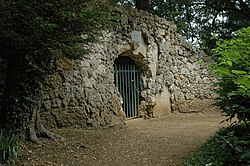




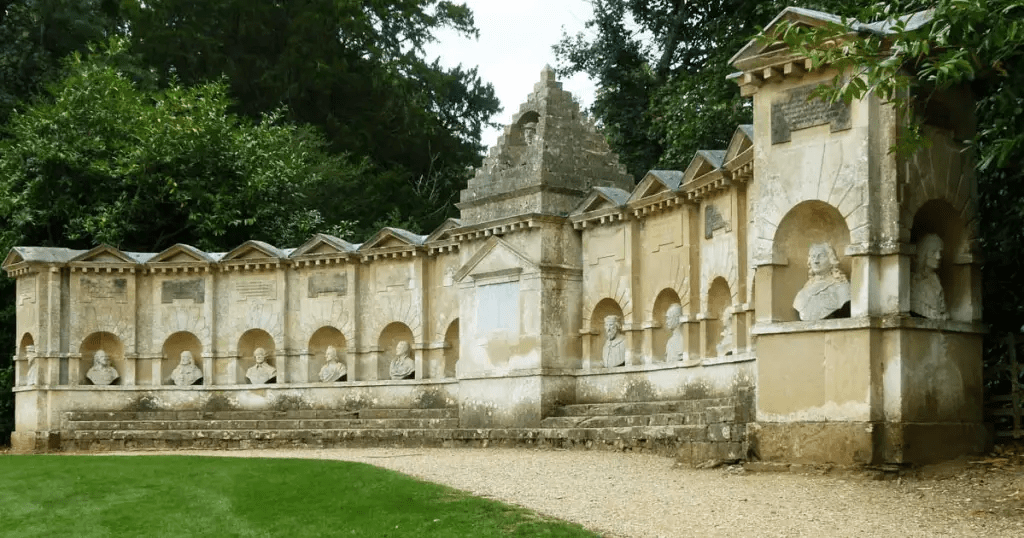


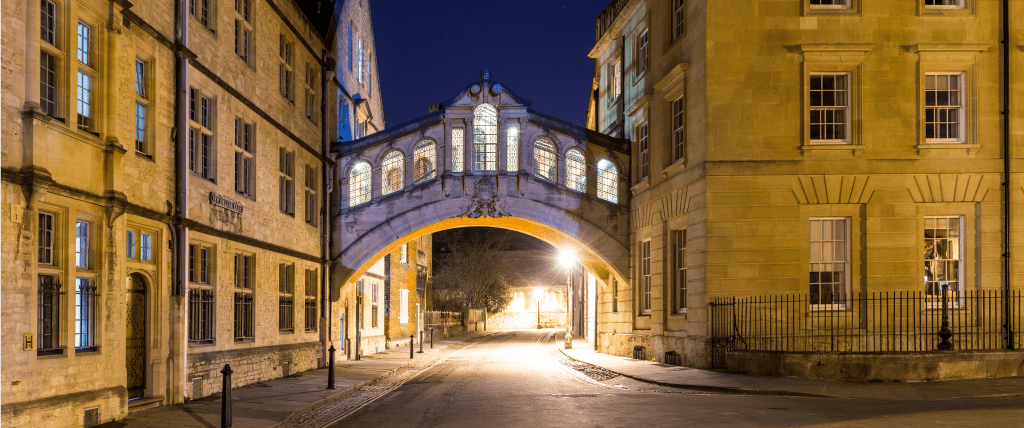



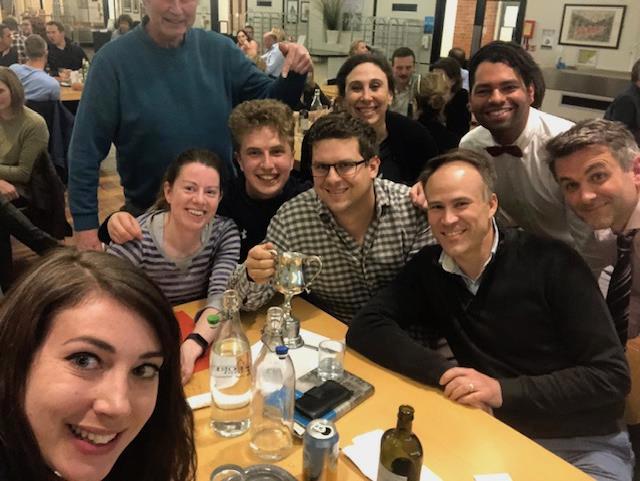



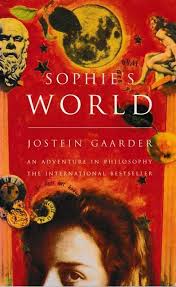



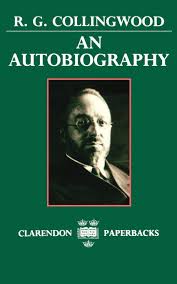


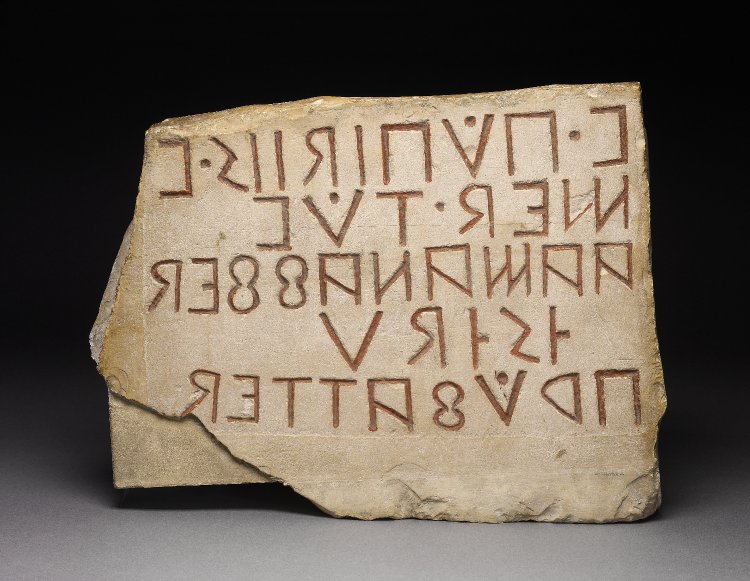
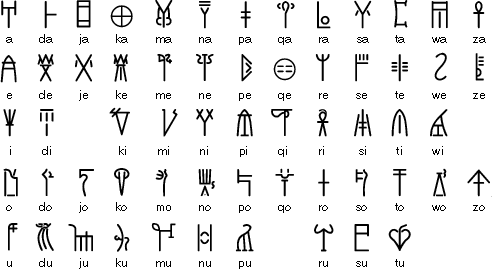



 ad astra per mundum